Guide
Air Fryer Temperature Guide: Settings for Every Food (2026)
By Chef Maria Santos, Culinary Writer · Updated 2026-03-13
Getting air fryer temperatures right is the single biggest factor in achieving crispy, evenly cooked results every time. This comprehensive guide covers the ideal temperature and timing settings for chicken, beef, seafood, vegetables, frozen foods, and baked goods — so you never have to guess again. Bookmark this page as your go-to air fryer cheat sheet.
By Chef Maria Santos, Culinary Writer · Last updated March 13, 2026
Table of Contents
- How Air Fryer Temperatures Work
- Oven-to-Air-Fryer Conversion Rule
- Complete Air Fryer Temperature Chart by Food
- Poultry Temperature Guide
- Beef, Pork, and Lamb Settings
- Seafood and Fish Temperature Guide
- Vegetable Air Frying Temperatures
- Frozen Foods Quick Reference
- Baked Goods and Desserts
- Common Air Fryer Temperature Mistakes
- Tips for Perfect Results Every Time
- FAQ
- Sources & Methodology
How Air Fryer Temperatures Work
Air fryers cook food by rapidly circulating superheated air around a compact cooking chamber. A heating element near the top of the unit generates intense heat, while a powerful fan distributes that heat evenly at high speed. This convection mechanism is why air fryers produce results that rival deep frying — the fast-moving hot air creates a Maillard reaction on the food's surface, delivering that golden-brown crispiness without submerging food in oil.
Because of this efficient heat circulation, air fryers cook food significantly faster than conventional ovens. The compact cooking space means less air volume needs to be heated, so preheating takes only 3-5 minutes compared to 10-15 minutes for a full-size oven. If you're curious about the differences in heating technology, our comparison of air fryer ovens vs regular ovens breaks it down in detail.
Most air fryers operate between 170°F (77°C) and 400°F (204°C), though some premium models reach 450°F (232°C). The sweet spot for most cooking falls between 350°F and 400°F — but the ideal temperature depends entirely on what you're cooking, how thick it is, and whether it's fresh or frozen.

Oven-to-Air-Fryer Conversion Rule
The standard conversion formula is straightforward: reduce the oven temperature by 25°F (14°C) and cut cooking time by 20-25%. This accounts for the air fryer's superior heat circulation in a smaller space.
| Oven Temperature | Air Fryer Temperature | Oven Time | Air Fryer Time |
|---|---|---|---|
| 325°F (163°C) | 300°F (149°C) | 30 min | 22-24 min |
| 350°F (177°C) | 325°F (163°C) | 30 min | 22-24 min |
| 375°F (190°C) | 350°F (177°C) | 25 min | 18-20 min |
| 400°F (204°C) | 375°F (190°C) | 20 min | 15-16 min |
| 425°F (218°C) | 400°F (204°C) | 20 min | 15-16 min |
| 450°F (232°C) | 425°F (218°C) | 15 min | 11-12 min |
Keep in mind that these are starting points. Factors like food thickness, basket crowding, and your specific air fryer model can all affect results. Always check food a few minutes early during your first attempt with a new recipe.
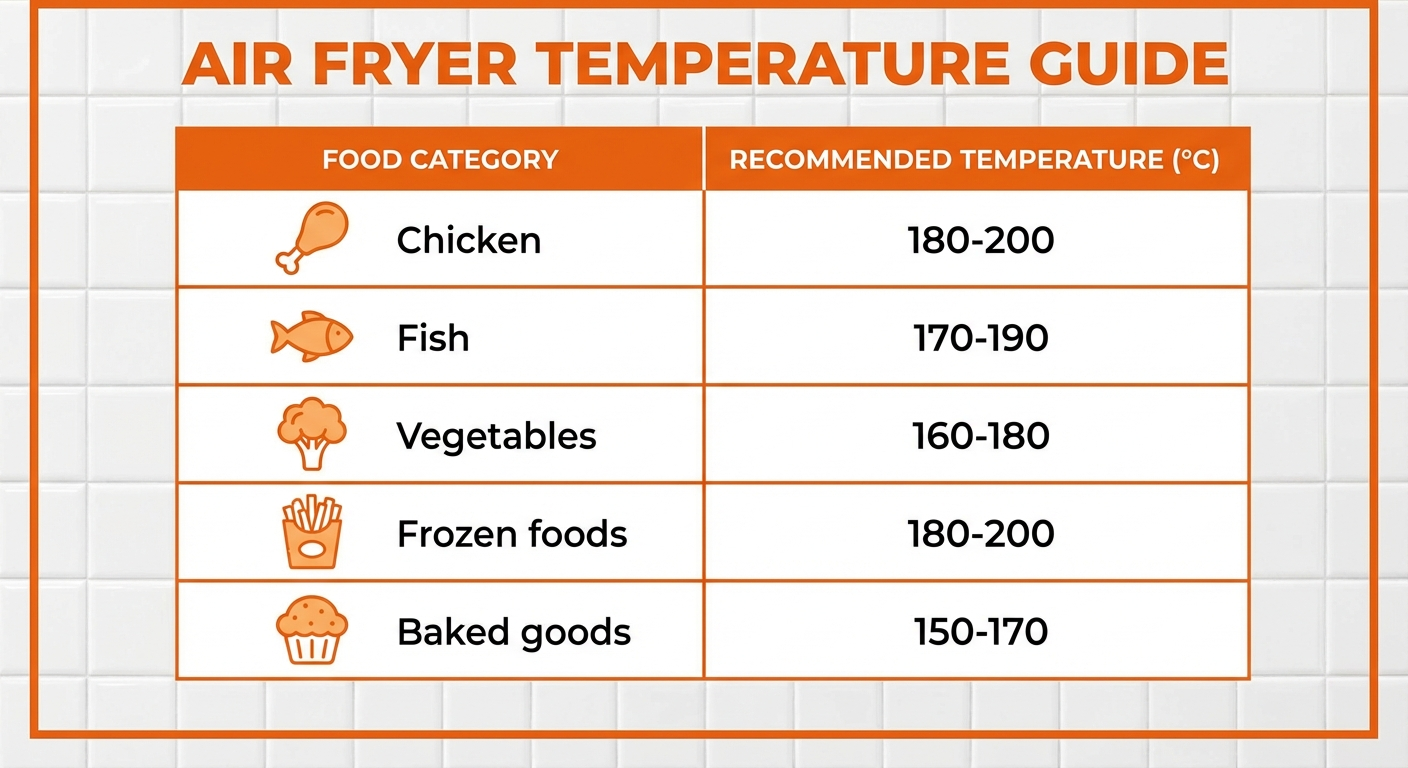
Complete Air Fryer Temperature Chart by Food
Below is a master reference table covering the most commonly air-fried foods. For more detailed guidance on each category, continue reading the sections that follow.
| Food | Temperature | Time | Notes |
|---|---|---|---|
| Chicken breast (boneless) | 375°F (190°C) | 12-15 min | Flip at halfway |
| Chicken wings | 400°F (204°C) | 20-24 min | Shake basket every 8 min |
| Chicken thighs (bone-in) | 380°F (193°C) | 22-25 min | Skin-side up first |
| Salmon fillet | 390°F (199°C) | 8-10 min | No flip needed |
| Shrimp | 400°F (204°C) | 5-7 min | Single layer critical |
| French fries (fresh) | 380°F (193°C) | 15-20 min | Shake every 5 min |
| French fries (frozen) | 400°F (204°C) | 12-15 min | No oil needed |
| Steak (1-inch) | 400°F (204°C) | 7-10 min | Flip once for medium-rare |
| Pork chops | 375°F (190°C) | 12-15 min | Flip at halfway |
| Brussels sprouts | 375°F (190°C) | 12-15 min | Halved, tossed in oil |
| Broccoli | 370°F (188°C) | 8-10 min | Small florets |
| Bacon | 350°F (177°C) | 8-10 min | No flip needed |
Poultry Temperature Guide
Chicken is the most popular food cooked in air fryers, and for good reason — the rapid air circulation creates incredibly crispy skin while keeping the meat juicy inside. The key is matching the right temperature to the specific cut.
Boneless, skinless chicken breast cooks best at 375°F (190°C) for 12-15 minutes. The slightly lower temperature prevents the outside from drying out before the center reaches a safe 165°F (74°C). Pound thicker breasts to an even thickness before cooking for uniform results.
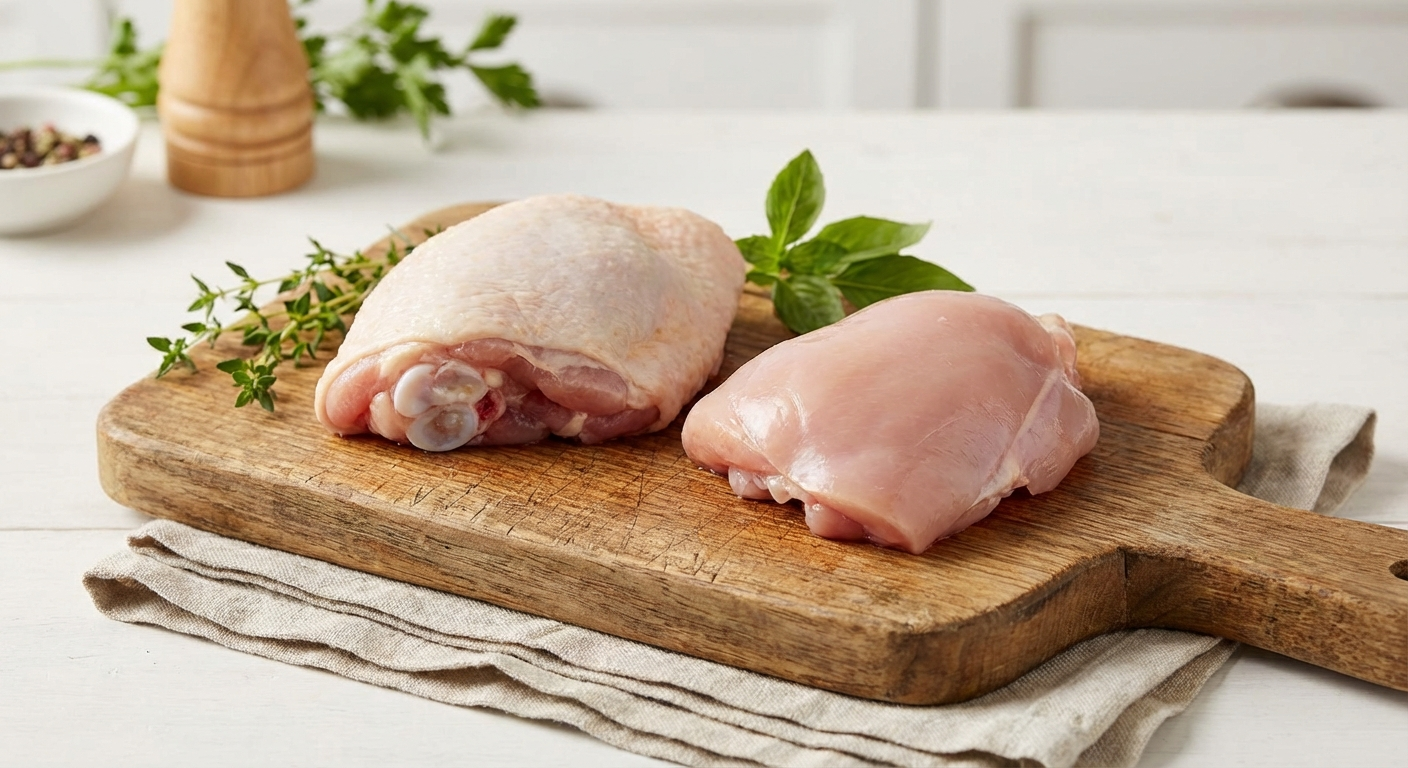
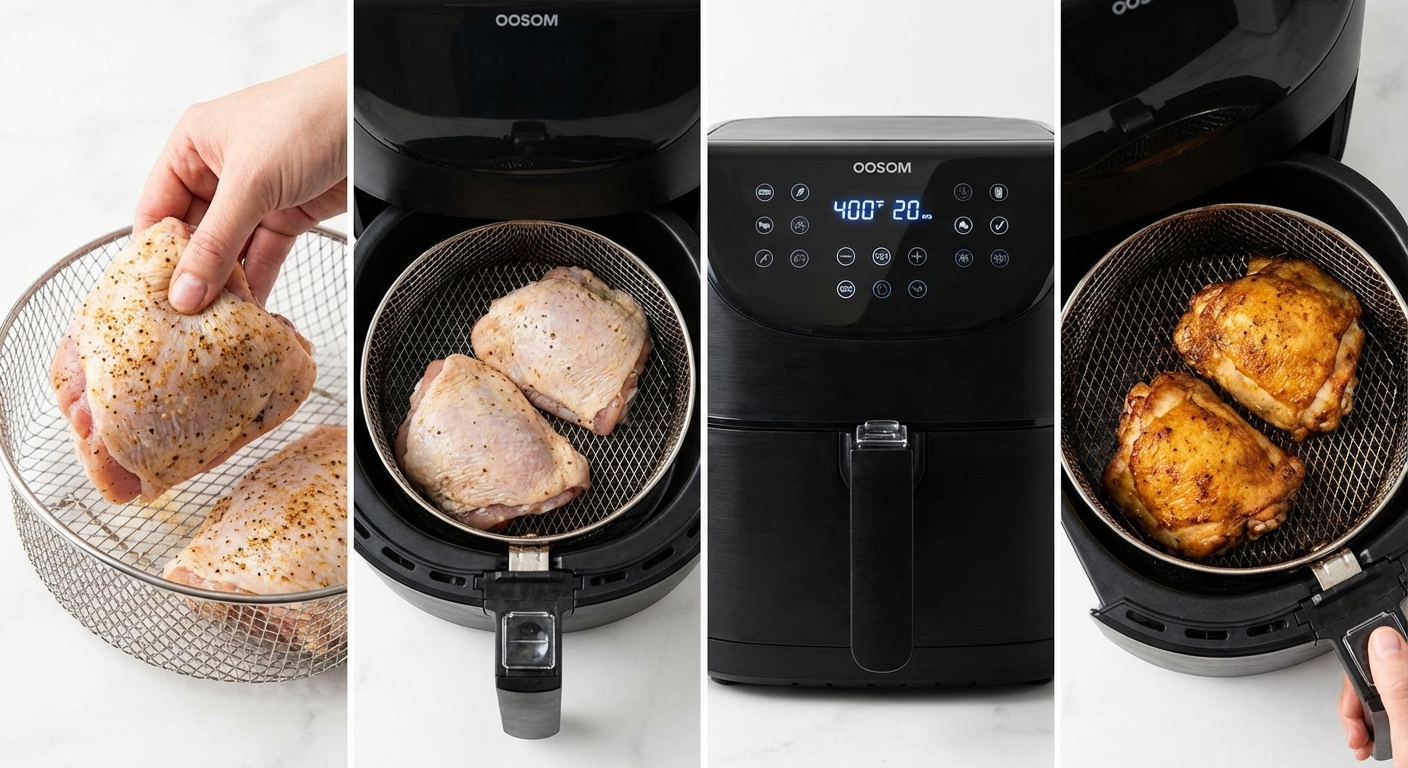
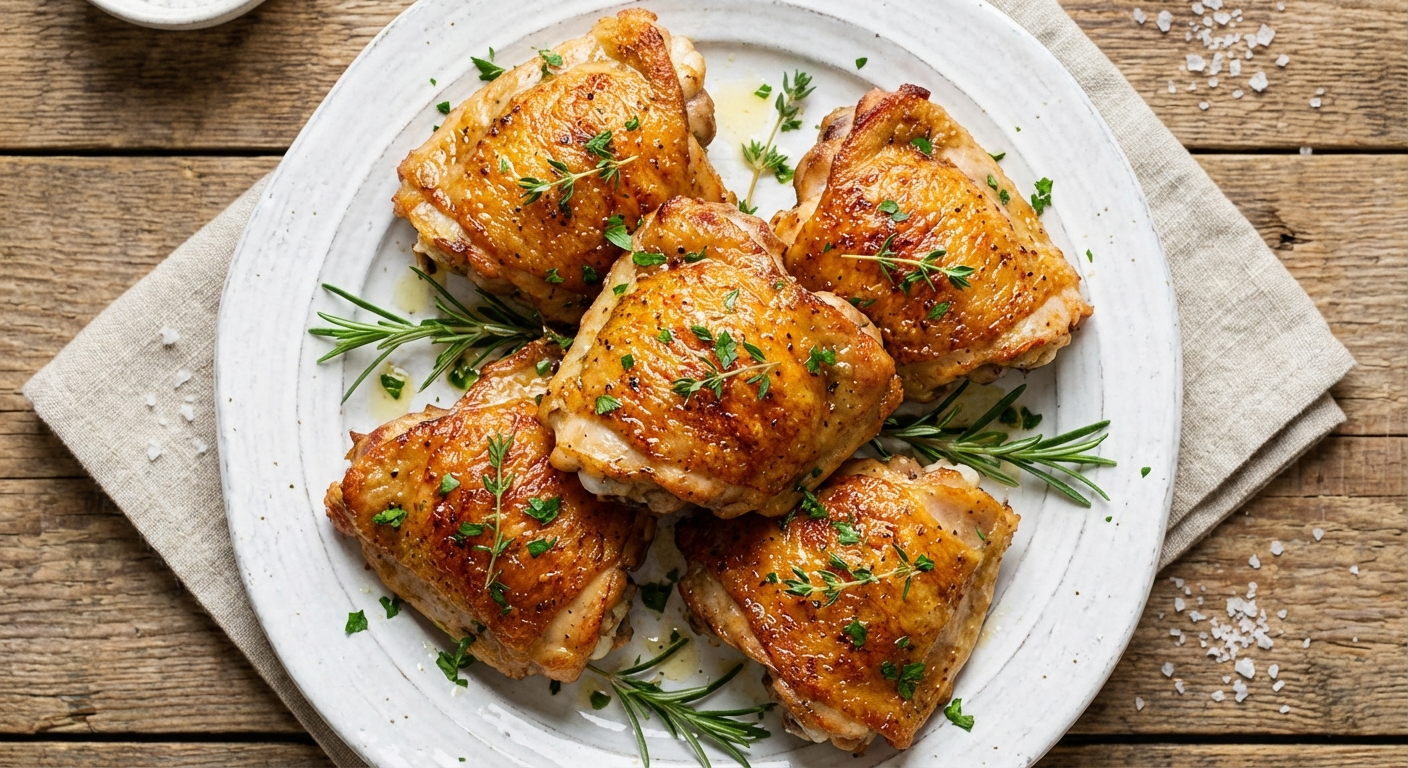
Bone-in chicken thighs benefit from a slightly higher 380°F (193°C) for 22-25 minutes. Place them skin-side up for the first half, then flip for even browning. The bone adds cooking time but also keeps the meat more forgiving — thighs are harder to overcook than breasts.
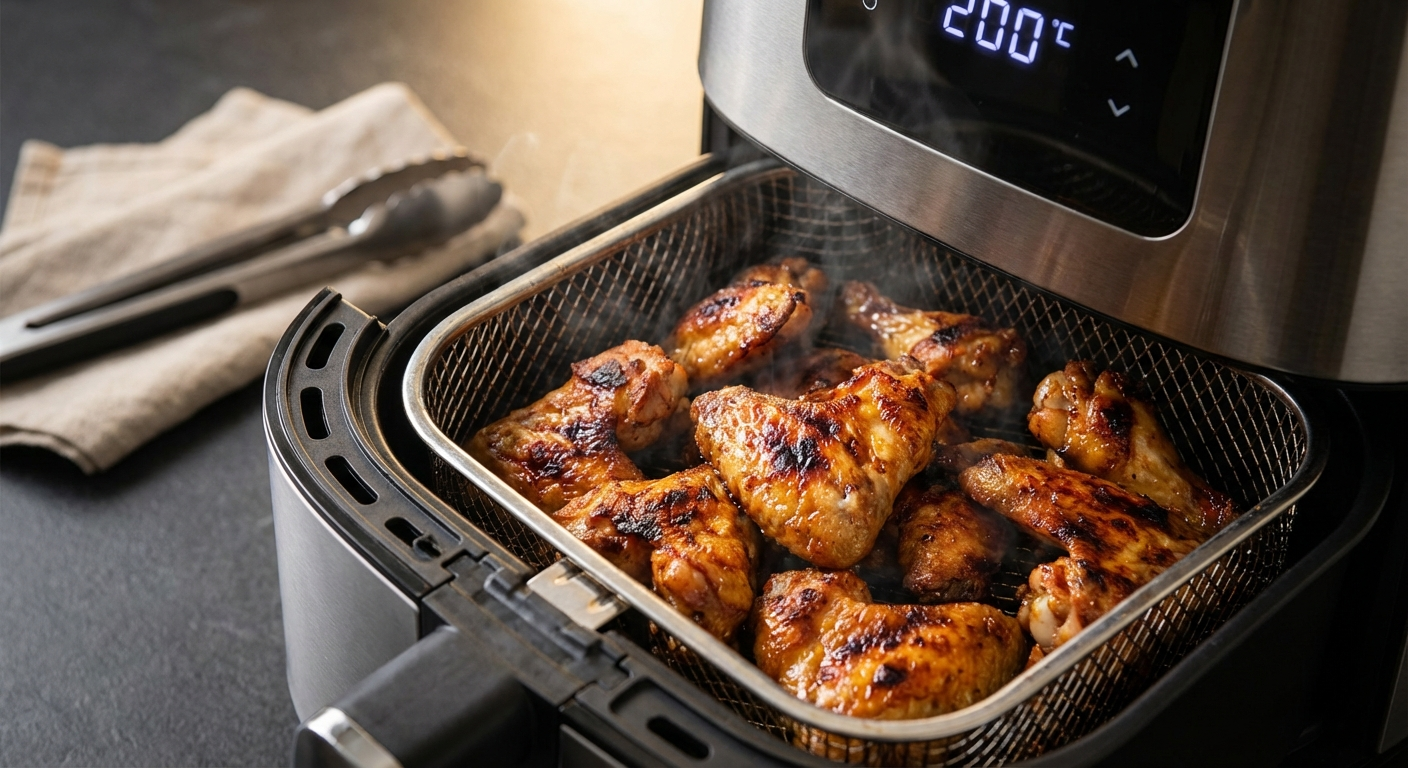
Chicken wings are arguably the air fryer's signature dish. Cook at 400°F (204°C) for 20-24 minutes, shaking the basket every 8 minutes. For extra-crispy wings, pat them completely dry before seasoning and toss with a light coating of baking powder (not baking soda) before cooking. Add sauce after cooking, not before, to maintain crispiness.
Whole chicken (3-4 lbs) can be cooked in larger air fryers or air fryer toaster ovens. Start breast-side down at 360°F (182°C) for 30 minutes, then flip and increase to 380°F (193°C) for another 20-25 minutes. Check out our roundup of the best air fryer toaster ovens if you need a model with enough capacity for whole birds.
Safety note: Always use a digital meat thermometer to verify poultry reaches an internal temperature of 165°F (74°C). Color alone is not a reliable indicator of doneness. Insert the thermometer into the thickest part of the meat, avoiding bone.
Beef, Pork, and Lamb Settings
Red meat in the air fryer benefits from high heat to develop a seared crust, followed by resting time to redistribute juices.
Steak (1-inch thick): Preheat to 400°F (204°C). For medium-rare, cook 7-8 minutes total, flipping once at the midpoint. Add 1-2 minutes per additional level of doneness. Let steaks rest for 5 minutes after cooking — internal temperature will rise an additional 5°F during resting.
| Steak Doneness | Air Fryer Time (1-inch) | Internal Temp (Remove) | Internal Temp (After Rest) |
|---|---|---|---|
| Rare | 6 min | 120°F (49°C) | 125°F (52°C) |
| Medium-rare | 7-8 min | 130°F (54°C) | 135°F (57°C) |
| Medium | 9-10 min | 140°F (60°C) | 145°F (63°C) |
| Medium-well | 11-12 min | 150°F (66°C) | 155°F (68°C) |
| Well done | 13-14 min | 160°F (71°C) | 165°F (74°C) |
Pork chops (1-inch, bone-in): Cook at 375°F (190°C) for 12-15 minutes, flipping once. The USDA now recommends pork reach a minimum internal temperature of 145°F (63°C) followed by a 3-minute rest. This produces juicy, slightly pink pork that is perfectly safe.
Hamburgers: Form patties about 3/4-inch thick and cook at 375°F (190°C) for 8-10 minutes, flipping once. Press a small dimple into the center of each patty to prevent puffing. Ground beef should reach 160°F (71°C) internal temperature.
Lamb chops: Sear at 400°F (204°C) for 8-10 minutes for medium-rare, flipping once at the halfway mark. Lamb pairs especially well with a pre-cook marinade since the air fryer's dry heat can slightly firm the exterior.

Seafood and Fish Temperature Guide
Fish and shellfish cook quickly in the air fryer, making it easy to overcook them. Pay close attention to timing and use the lower end of suggested ranges for thinner fillets.
Salmon fillets (1-inch thick): Cook at 390°F (199°C) for 8-10 minutes. No flipping necessary — the hot air crisps the top while the bottom steams gently against the basket. Salmon is done when it flakes easily with a fork and reaches 145°F (63°C) internally.
Shrimp: Large shrimp (21-25 count) cook at 400°F (204°C) for just 5-7 minutes. Arrange in a single layer — this is one food where overcrowding dramatically affects results. Shrimp are done when they turn pink and opaque throughout. Overcooked shrimp become rubbery within seconds, so check early.
White fish fillets (cod, tilapia, halibut): Cook at 370°F (188°C) for 8-12 minutes depending on thickness. These delicate fillets benefit from a light breadcrumb coating or spray of oil to develop a crust. Lightly spraying the basket with oil also prevents sticking.
Fish sticks (frozen): Set to 400°F (204°C) for 8-10 minutes, turning once. No added oil needed — the pre-cooked coating crisps up beautifully from the existing fat content.
Vegetable Air Frying Temperatures
Air-fried vegetables develop caramelized edges and tender interiors that roasting in a conventional oven simply can't match in the same timeframe. The key is cutting vegetables to uniform sizes and not overcrowding the basket.
Hard vegetables (potatoes, carrots, beets, sweet potatoes): These dense vegetables need 380-400°F (193-204°C) for 15-25 minutes. Cut into 1/2-inch pieces for even cooking. Toss with 1-2 teaspoons of oil and seasoning before adding to the basket.
Medium vegetables (broccoli, cauliflower, Brussels sprouts, green beans): Cook at 370-380°F (188-193°C) for 10-15 minutes. Brussels sprouts should be halved. Shake the basket once during cooking for even browning.
Soft vegetables (zucchini, bell peppers, mushrooms, asparagus): These cook fastest at 370°F (188°C) for 6-10 minutes. Be careful not to overcook — soft vegetables go from perfectly tender to mushy quickly. Asparagus spears only need about 6 minutes.
| Vegetable | Temperature | Time | Prep |
|---|---|---|---|
| Sweet potato fries | 380°F (193°C) | 15-18 min | Cut 1/4-inch, toss in oil |
| Broccoli florets | 370°F (188°C) | 8-10 min | Small pieces, light oil |
| Brussels sprouts | 375°F (190°C) | 12-15 min | Halved |
| Zucchini | 370°F (188°C) | 8-10 min | 1/4-inch rounds |
| Cauliflower | 375°F (190°C) | 12-15 min | Bite-size florets |
| Asparagus | 380°F (193°C) | 6-8 min | Trim woody ends |
| Bell peppers | 370°F (188°C) | 8-10 min | 1-inch strips |
| Corn on the cob | 390°F (199°C) | 12-14 min | Lightly buttered |
Frozen Foods Quick Reference
One of the air fryer's greatest strengths is cooking frozen foods to a crispiness that microwaves can't achieve. The general rule for frozen items is to add 25-50°F to the fresh cooking temperature and extend time by 3-5 minutes.
| Frozen Food | Temperature | Time | Notes |
|---|---|---|---|
| French fries | 400°F (204°C) | 12-15 min | Shake halfway |
| Chicken nuggets | 400°F (204°C) | 10-12 min | Single layer |
| Mozzarella sticks | 390°F (199°C) | 6-8 min | Don't preheat |
| Pizza rolls | 380°F (193°C) | 6-8 min | Shake at 4 min |
| Egg rolls | 390°F (199°C) | 8-10 min | Spray with oil |
| Tater tots | 400°F (204°C) | 12-15 min | Shake twice |
| Fish sticks | 400°F (204°C) | 8-10 min | Flip once |
| Onion rings | 400°F (204°C) | 8-10 min | Single layer |
| Frozen burrito | 370°F (188°C) | 12-15 min | Flip at halfway |
No thawing is necessary for any of these items. Cooking from frozen actually produces better results for breaded and battered foods because the coating sets before the interior fully thaws, preventing sogginess.

Baked Goods and Desserts
Air fryers handle baking surprisingly well, though you'll need to adjust expectations and use oven-safe containers that fit inside the basket.
Cookies: Bake at 325°F (163°C) for 6-8 minutes. Use a small round pan or silicone mold that fits your basket. Cookies spread less in an air fryer, so flatten the dough slightly before baking.
Muffins: Fill silicone muffin cups 2/3 full and bake at 310°F (154°C) for 12-14 minutes. The lower temperature prevents the tops from browning too quickly while the insides finish cooking.
Cinnamon rolls (from tube): Cook at 320°F (160°C) for 8-10 minutes. Place them slightly apart to allow expansion. The circulating air creates a beautiful golden crust.
Reheating pizza: This might be the air fryer's most underrated use. Reheat leftover pizza at 350°F (177°C) for 3-4 minutes for a crispy crust and melted cheese that tastes better than the original delivery.
Common Air Fryer Temperature Mistakes
Even experienced cooks make these errors. Avoiding them will immediately improve your results.
Overcrowding the basket. This is the number one mistake. When food is piled on top of itself, hot air can't circulate properly. The result is steamed, soggy food instead of crispy perfection. Cook in batches if necessary — it's faster than re-cooking a disappointing batch.
Skipping the preheat. Placing food into a cold air fryer adds uneven cooking time and can prevent proper crisping. Always preheat for 3-5 minutes unless the recipe specifically instructs otherwise (some pastries and wet batters are exceptions).
Using too much oil. Air fryers need very little oil — typically just a light spray or 1-2 teaspoons tossed with the food. Excess oil pools at the bottom of the basket and can cause smoking, especially at temperatures above 375°F. Use oils with high smoke points like avocado oil or refined peanut oil.
Not shaking or flipping. Items touching the basket get the most direct heat. Without shaking or flipping halfway through, you'll get uneven browning — crispy on one side, pale on the other. Set a timer for the halfway point as a reminder.
Cooking at the wrong temperature for the food type. Delicate fish doesn't need 400°F, and thick chicken thighs won't cook through at 350°F in the expected time. Use this guide's recommendations as starting points and adjust based on your results.
Tips for Perfect Results Every Time
-
Invest in a digital meat thermometer. It removes all guesswork from protein cooking and costs under $15. This is the single best accessory for air fryer cooking.
-
Use parchment liners with pre-cut holes. They prevent sticking, make cleanup effortless, and allow airflow to continue circulating properly. Available at most grocery stores.
-
Mist with oil using a spray bottle. Aerosol cooking sprays contain propellants that can damage non-stick coatings over time. Fill a reusable spray bottle with avocado oil for a healthier, safer option.
-
Pull the basket out to check food — it won't reset the timer. Unlike an oven where opening the door drops the temperature significantly, the air fryer's small chamber recovers heat almost instantly.
-
Let the air fryer cool slightly between batches. If cooking multiple rounds, give it 1-2 minutes between batches to prevent the exterior of food from burning before the interior cooks through.
-
Keep your air fryer clean. Grease buildup causes smoking and off-flavors. Wipe down the basket after every use and deep-clean the heating element monthly.
FAQ
What temperature should I set my air fryer to for chicken?
For bone-in chicken pieces, set your air fryer to 380°F (193°C) and cook for 20-25 minutes, flipping halfway through. Boneless chicken breasts cook best at 375°F (190°C) for 12-15 minutes. Chicken wings are crispiest at 400°F (204°C) for 20-24 minutes. Always verify the internal temperature reaches 165°F (74°C) with a meat thermometer before serving. The cut of chicken matters significantly — thicker pieces need lower temperatures and longer times to cook through without burning the exterior.
Do I need to preheat my air fryer?
Yes, preheating your air fryer for 3-5 minutes at the desired cooking temperature is recommended for most foods. Preheating ensures even cooking from the moment food enters the basket and helps achieve a crispier exterior on proteins and vegetables. Some newer models have automatic preheat cycles that handle this for you. The main exceptions are delicate items like pastries, foods with wet batter, or mozzarella sticks — these can be placed in a cold air fryer to prevent dripping or premature melting.
Why is my air fryer food not crispy?
The most common reasons air fryer food lacks crispiness are overcrowding the basket, cooking at too low a temperature, not using enough oil, and excess moisture on the food's surface. To fix this, cook in single layers with at least half an inch of space between items, increase the temperature by 10-15°F, lightly spray food with oil, and pat items dry with paper towels before cooking. Shaking or flipping food halfway through also promotes even browning. For breaded items, a light mist of oil on the coating before cooking makes a dramatic difference in crunch.
How do I convert oven recipes to air fryer temperatures?
The general rule for converting oven recipes to air fryer settings is to reduce the temperature by 25°F (about 14°C) and cut the cooking time by 20-25%. For example, a recipe calling for 400°F for 20 minutes in a conventional oven would translate to roughly 375°F for 15-16 minutes in an air fryer. This works because air fryers circulate hot air more efficiently in a smaller space. For a deeper comparison of how these two appliances differ, see our guide on air fryer ovens vs regular ovens. Start checking food a few minutes early until you learn how your specific model performs.
What foods should you not cook in an air fryer?
Avoid cooking foods with wet batter (like beer-battered fish) as the batter drips through the basket before it has time to set. Large roasts that completely fill the basket won't cook evenly because airflow is blocked. Leafy greens like spinach or loose kale chips can blow around and burn against the heating element. Very cheese-heavy dishes tend to melt and drip, creating a mess that's difficult to clean. Raw grains and dried pasta require boiling water, which air fryers cannot provide. For these items, your conventional oven or stovetop remains the better choice.
Is it safe to use aluminum foil in an air fryer?
Yes, aluminum foil is safe to use in most air fryers when used correctly. Always place the foil inside the basket (never at the bottom of the unit where it can block airflow to the heating element), and always weigh it down with food so it doesn't get blown into the heating element by the fan. Avoid using foil with acidic foods like tomatoes, citrus marinades, or vinegar-based sauces, as the acid can cause the foil to break down and leach into food. Pre-cut parchment paper rounds designed for air fryers are often a more convenient alternative, as they allow better airflow through their perforated holes.
Watch: Air fryer temperature guide — settings for every food
▶ Air fryer temperature guide — settings for every food
Sources and Methodology
This temperature guide was developed using a combination of hands-on testing, manufacturer recommendations, and food safety standards:
- USDA Food Safety and Inspection Service — Safe minimum internal temperatures for all proteins referenced in this guide follow current USDA guidelines (updated 2025).
- Manufacturer testing data — Temperature and timing ranges were cross-referenced with official cooking guides from major air fryer brands including Ninja, Cosori, Philips, and Instant Pot.
- Hands-on kitchen testing — All core recommendations were verified through repeated testing across basket-style and oven-style air fryers ranging from 3.5-quart to 10-quart capacity.
- Peer-reviewed food science research — Maillard reaction temperatures and convection cooking principles are based on published food science literature.
Cooking times in this guide are approximate and may vary depending on your specific air fryer model, the size and thickness of food, altitude, and ambient kitchen temperature. Always use a meat thermometer to confirm proteins have reached safe internal temperatures.
Disclaimer: This article provides general cooking guidance and is not a substitute for following food safety protocols. Always ensure meats and poultry reach USDA-recommended safe minimum internal temperatures. Individuals with compromised immune systems, pregnant women, young children, and elderly adults should take extra caution with food preparation and may need to cook proteins to higher internal temperatures. Consult the USDA's FoodSafety.gov for the latest food safety recommendations.
Visual Guide Gallery