Guide
Air Fryer vs Convection Oven: Which Is Better?
By Rachel M., Food Appliance Writer · Updated 2026-03-20
Air fryers and convection ovens both use circulating hot air to cook food, but they differ in size, speed, energy efficiency, and results. An air fryer excels at fast, crispy single-serve portions, while a convection oven handles larger meals and baking with more versatility. This guide breaks down every difference so you can choose the right appliance for your kitchen.
By Rachel M., Food Appliance Writer | Last updated: March 2026
Table of Contents
- How Each Appliance Works
- Key Differences at a Glance
- Cooking Performance Compared
- Energy Efficiency and Running Costs
- Size, Capacity, and Kitchen Space
- Price and Long-Term Value
- Health and Nutrition
- Ease of Use and Cleaning
- Who Should Buy an Air Fryer
- Who Should Buy a Convection Oven
- Can You Own Both?
- Our Top Picks
- Frequently Asked Questions
- Sources and Methodology
How Each Appliance Works
Understanding the mechanics behind each appliance explains why they produce different results — even though the underlying technology is remarkably similar.
Air Fryers
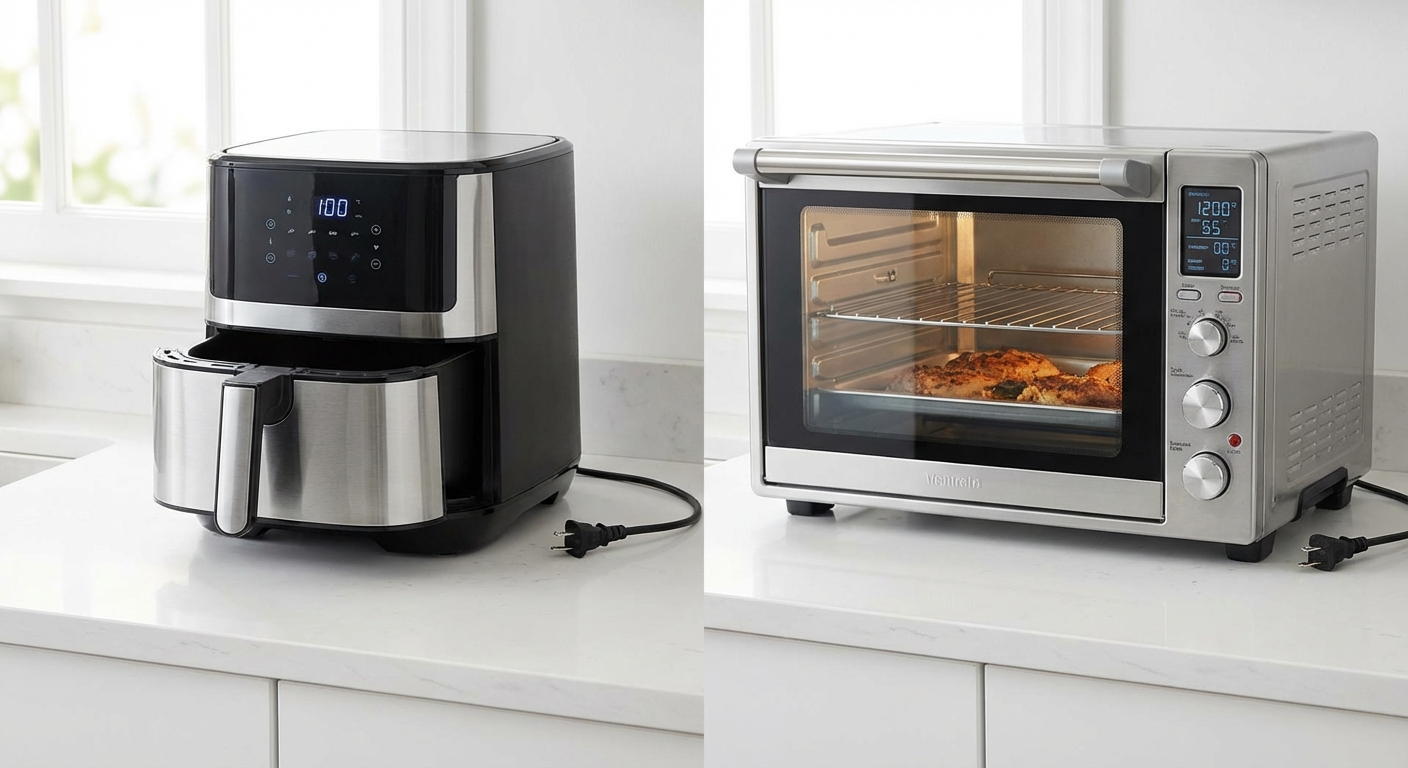
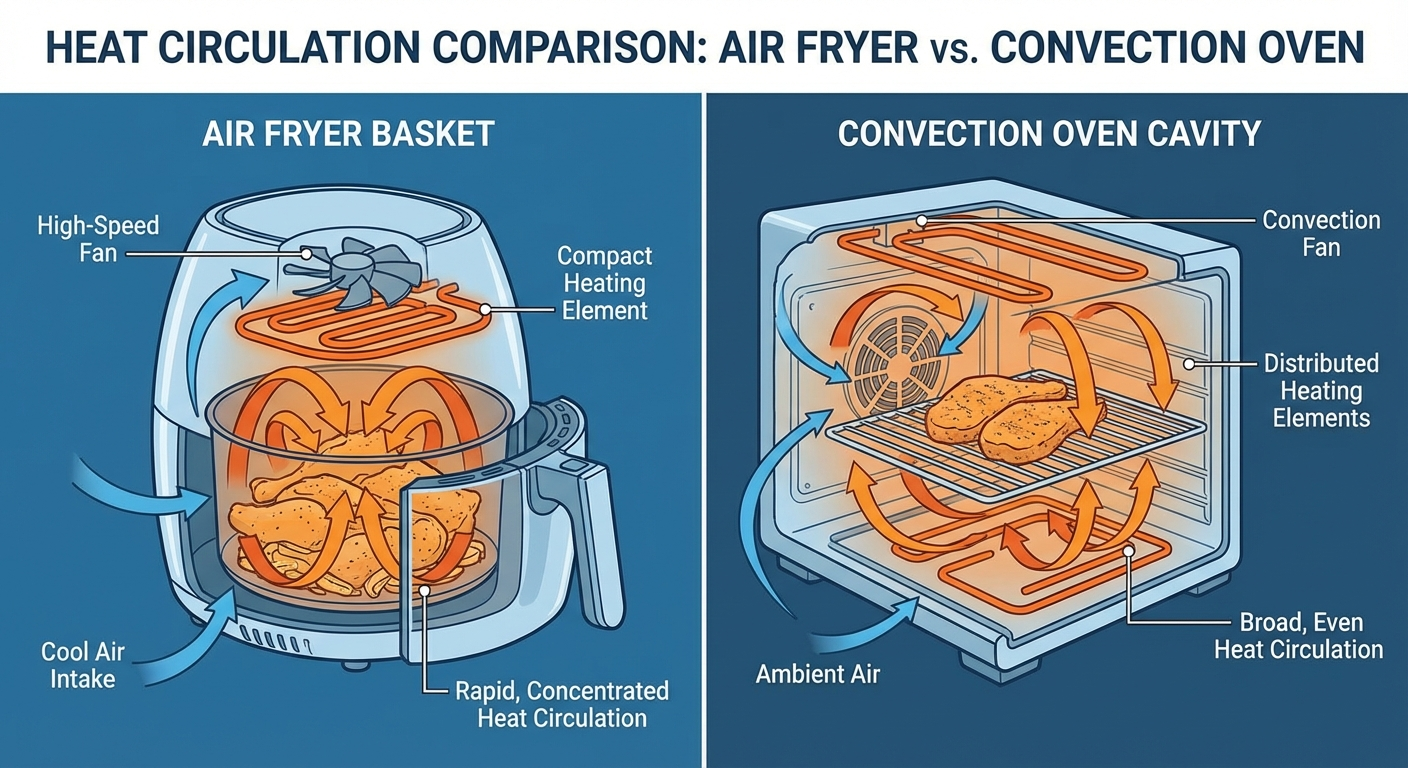
An air fryer is essentially a compact, countertop convection device with one critical advantage: a tightly enclosed cooking chamber. A heating element sits near the top, and a powerful fan rapidly pushes hot air downward and around the food at high speed. The small chamber means air reaches every surface of your food quickly and intensely.
Most basket-style air fryers hold between 3 and 8 quarts. The perforated basket elevates food above the base, allowing hot air to circulate underneath as well. This 360-degree airflow is what produces that satisfying crunch on french fries, chicken wings, and breaded items — without submerging them in oil.
Convection Ovens
A convection oven works on the same principle — a fan circulates heated air around the cooking cavity — but at a much larger scale. Whether it is a full-size wall oven with a convection setting or a countertop convection toaster oven, the cooking chamber is significantly bigger than an air fryer's basket.
That larger space means airflow is less concentrated. The fan still improves cooking compared to a conventional (non-fan) oven, reducing hot spots and cutting cook times by roughly 15–25%. But the air velocity around each piece of food is lower than what you get in an air fryer's tight chamber.
This difference in airflow intensity is the single biggest factor separating the two appliances in everyday cooking.
Key Differences at a Glance
| Option | Best For | Price Range | Rating |
|---|---|---|---|
| Basket-Style Air Fryer | Fast, crispy single portions (fries, wings, nuggets) | $40–$250 | ⭐⭐⭐⭐⭐ |
| Countertop Convection Oven | Baking, roasting, and family-sized meals | $80–$500+ | ⭐⭐⭐⭐½ |
| Air Fryer Oven (Hybrid) | Versatility — air frying + baking in one unit | $150–$400 | ⭐⭐⭐⭐½ |
| Built-In Convection Oven | Large households, serious bakers | $800–$3,000+ | ⭐⭐⭐⭐ |
| Dual-Basket Air Fryer | Cooking two items at different temps simultaneously | $100–$250 | ⭐⭐⭐⭐ |
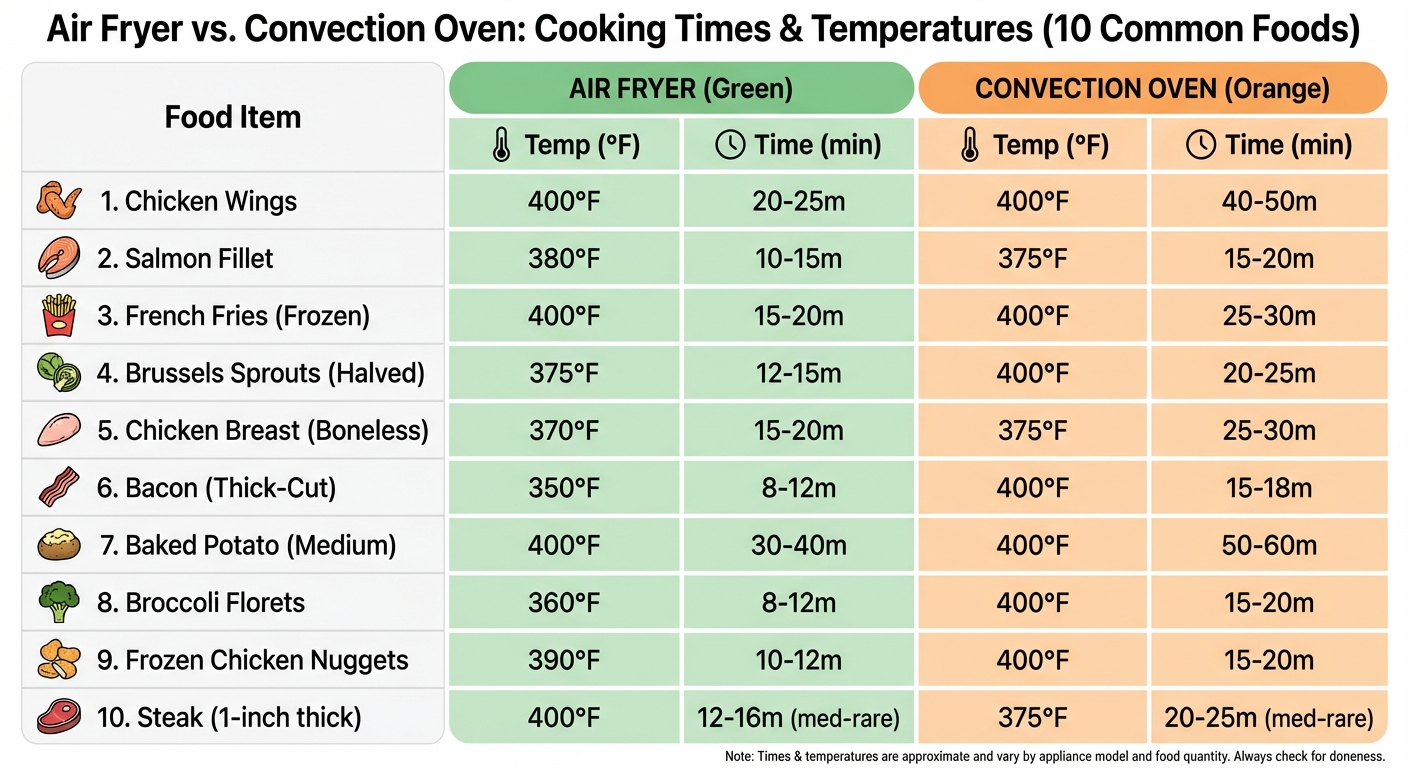
Visual guide: Side-by-side cooking comparison between an air fryer and convection oven
Air Fryer
- Capacity: 3–8 quarts (suits 1–3 people)
- Preheat time: 2–3 minutes
- Cook speed: Up to 30% faster than conventional ovens
- Energy use: 800–1,800 watts
- Crispiness: Excellent on small portions
- Best for: Fries, wings, nuggets, reheating leftovers
- Price range: $40–$250
- Lifespan: 3–5 years typical
Convection Oven
- Capacity: 12–30+ quarts (countertop) or full oven size
- Preheat time: 8–15 minutes
- Cook speed: 15–25% faster than conventional ovens
- Energy use: 1,200–5,000 watts
- Crispiness: Good, but less intense than air fryer
- Best for: Baking, roasting, large meals, casseroles
- Price range: $80–$500+ (countertop); $800–$3,000+ (built-in)
- Lifespan: 5–15 years typical
Cooking Performance Compared
This is where the decision gets practical. Let's look at how each appliance handles the foods people actually cook.
Crispy Foods (Fries, Wings, Nuggets)
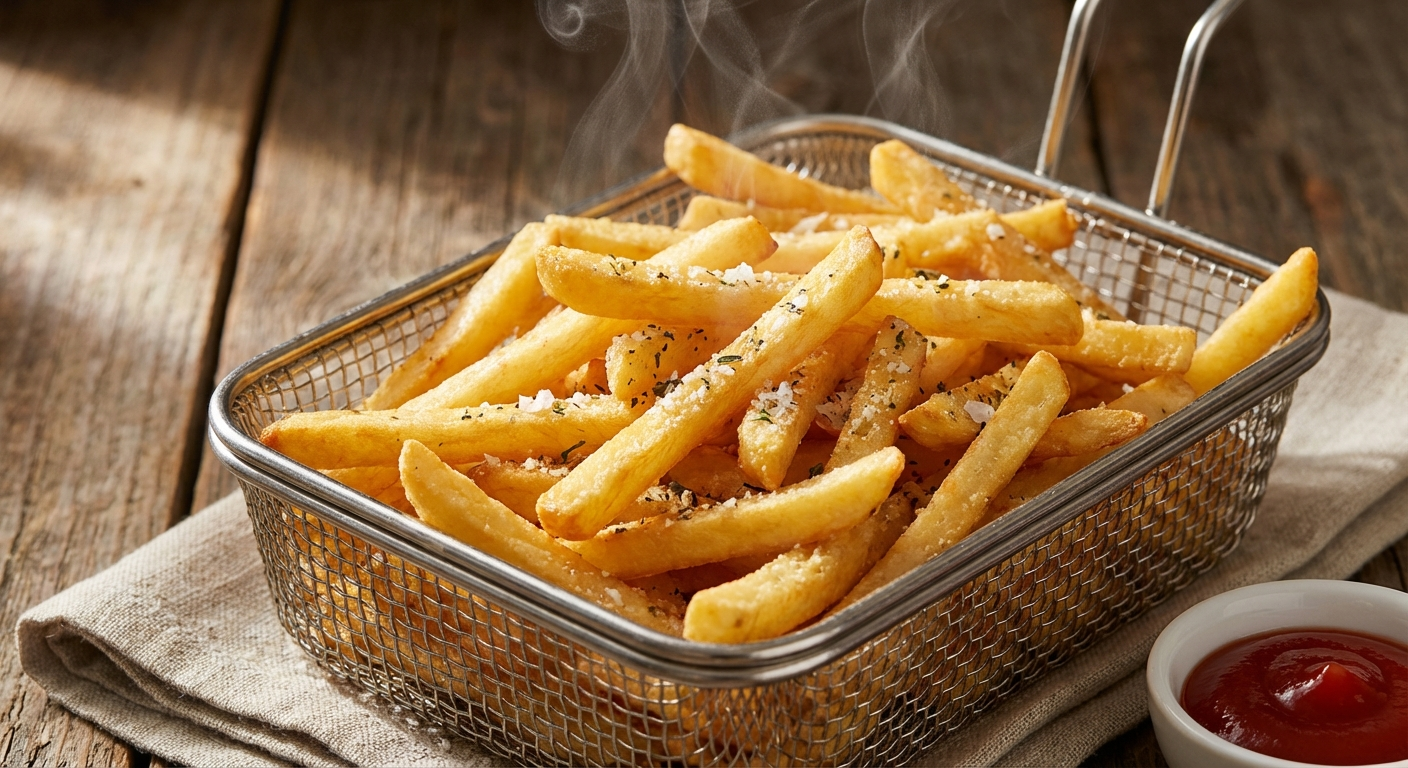
The air fryer wins this category convincingly. The concentrated airflow in a small basket produces an exterior crunch that closely mimics deep frying. Frozen french fries come out golden and crispy in 12–15 minutes. Chicken wings develop rendered, crackling skin in about 20 minutes.
A convection oven can produce decent fries and wings, but you will typically need to flip items halfway through, cook for 5–10 minutes longer, and may still find softer spots where pieces were crowded on the tray. The results are good — just not air-fryer good.
Baking (Bread, Cakes, Cookies)
The convection oven takes this one. Its larger, more evenly heated chamber produces consistent results for baked goods. Cookies brown uniformly. Cakes rise evenly. Bread develops a proper crust.
Air fryers can handle small-batch baking — a few cookies, a personal-sized cake, muffins — but the compact chamber limits batch sizes and can create uneven browning if items are too close to the heating element. If baking is a regular activity, the convection oven is the clear choice.
Roasting Meat
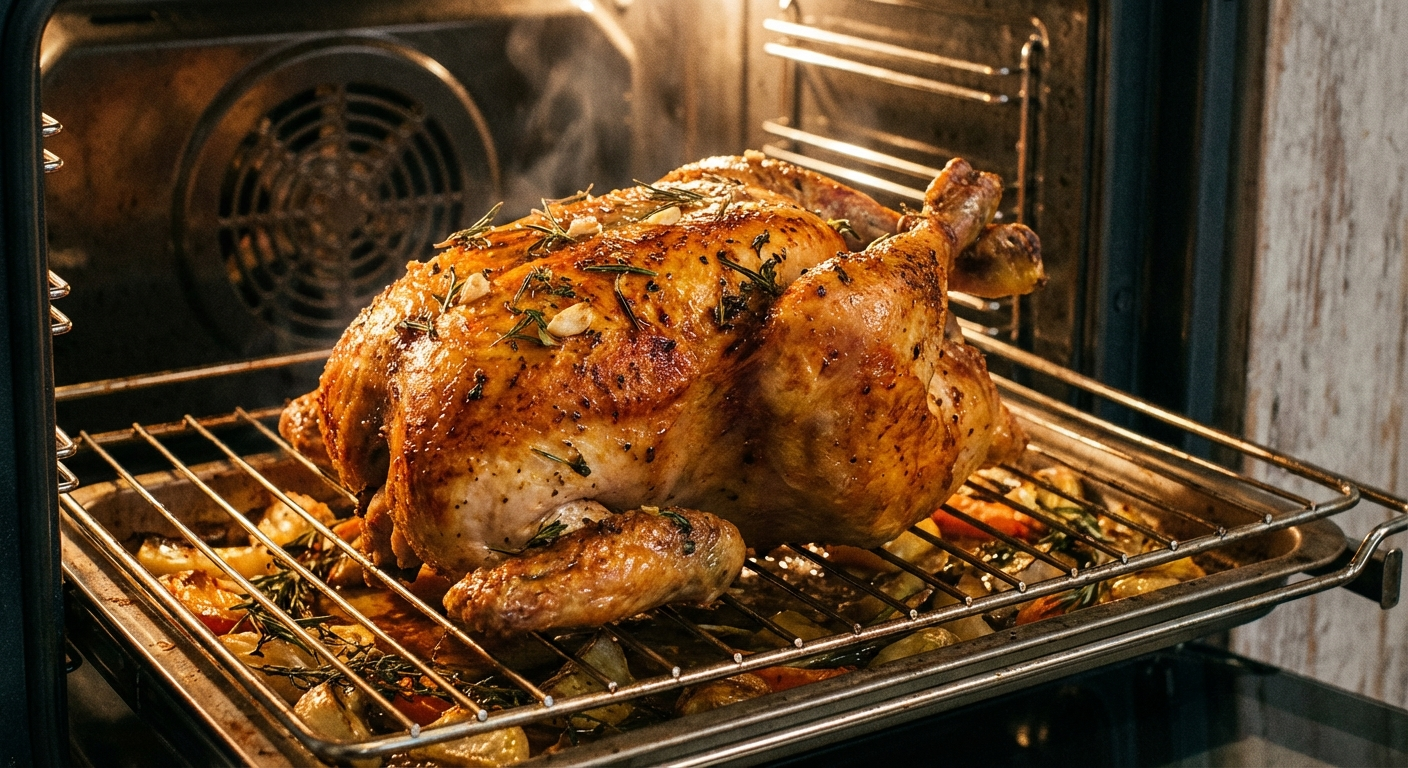
For a whole chicken, a pork loin, or a large roast, the convection oven's capacity is essential. You simply cannot fit a full chicken into most air fryer baskets.
However, for smaller cuts — chicken thighs, pork chops, salmon fillets — the air fryer delivers excellent results faster. The intense heat sears the exterior while keeping the interior juicy. Many air fryer users report that chicken thighs are the single best thing they have ever cooked in the appliance.
Reheating Leftovers
Air fryers have become the go-to for reheating pizza, fries, fried chicken, and other leftovers that turn soggy in a microwave. Three to five minutes in an air fryer restores crispiness remarkably well. A convection oven can do the same job, but takes longer to preheat and heat through.
For anyone who regularly reheats takeaway or last night's dinner, the air fryer is a genuine quality-of-life upgrade. You can learn more about getting the most from your appliance in our guide to air fryer tips and tricks every beginner should know.
Energy Efficiency and Running Costs
With electricity prices rising across Australia, the US, and the UK through 2025 and into 2026, energy efficiency matters more than ever.
Power Draw
A typical air fryer draws between 800 and 1,800 watts. A countertop convection oven draws 1,200 to 1,800 watts. A full-size built-in convection oven draws 2,000 to 5,000 watts.
But wattage alone does not tell the full story. What matters is total energy consumed per meal — and that is where the air fryer pulls ahead.
Total Energy Per Meal
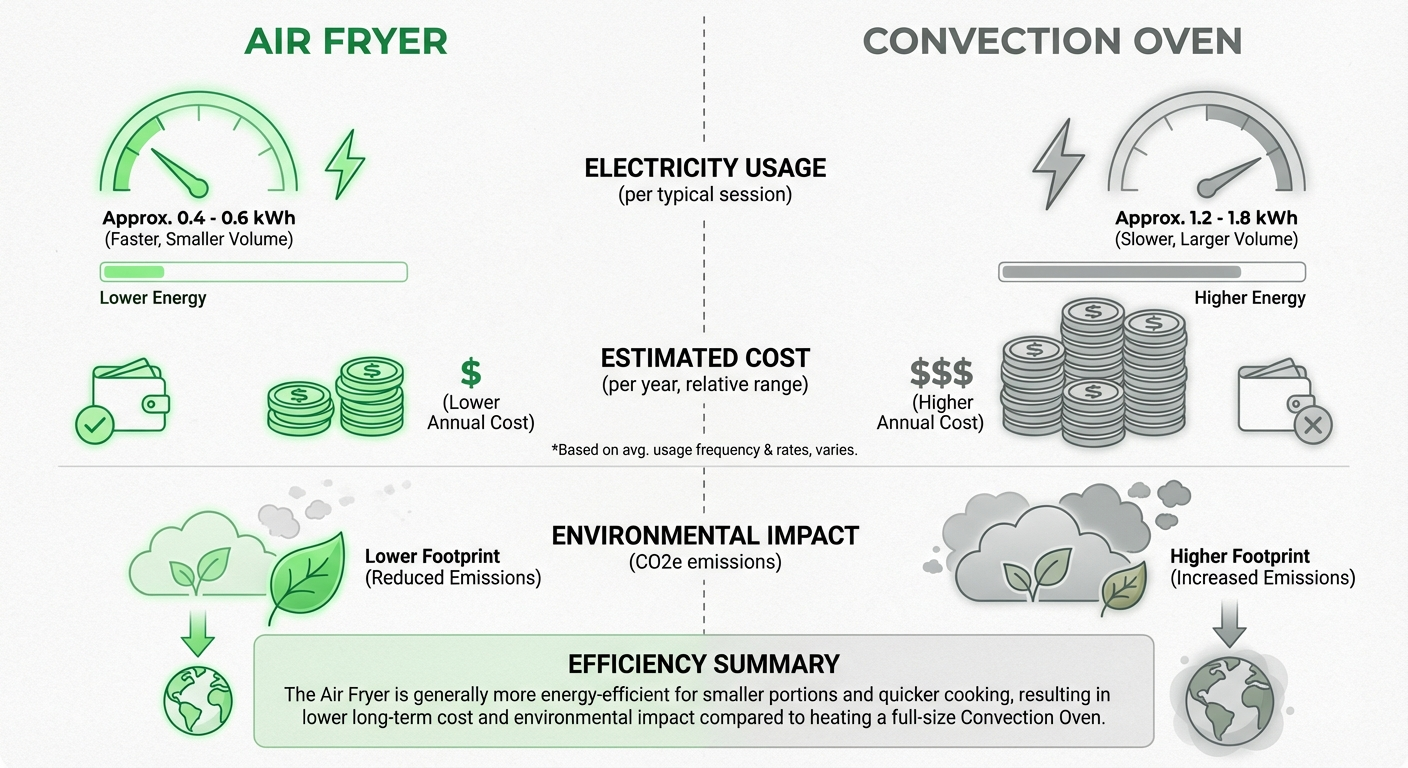
Because an air fryer preheats in 2–3 minutes (versus 10–15 for a convection oven) and cooks faster, the total energy consumed for a typical meal is significantly lower. Research from consumer testing organisations suggests an air fryer uses roughly 50–70% less energy than a full-size convection oven for equivalent portions.
For a household cooking with an air fryer four to five times per week, the annual energy savings can amount to $30–$80 depending on local electricity rates. That is not life-changing money, but over the 3–5 year life of an air fryer, it adds up — and partially offsets the purchase price.
The Catch
These savings only apply when cooking portions that fit in the air fryer. If you are regularly cooking for a family of five and need to run the air fryer in multiple batches, the efficiency advantage disappears. For large-volume cooking, a single convection oven cycle is more efficient than three air fryer batches.
Size, Capacity, and Kitchen Space
Counter space is precious. This is a practical consideration that matters as much as cooking performance for many households.
Air Fryer Footprint
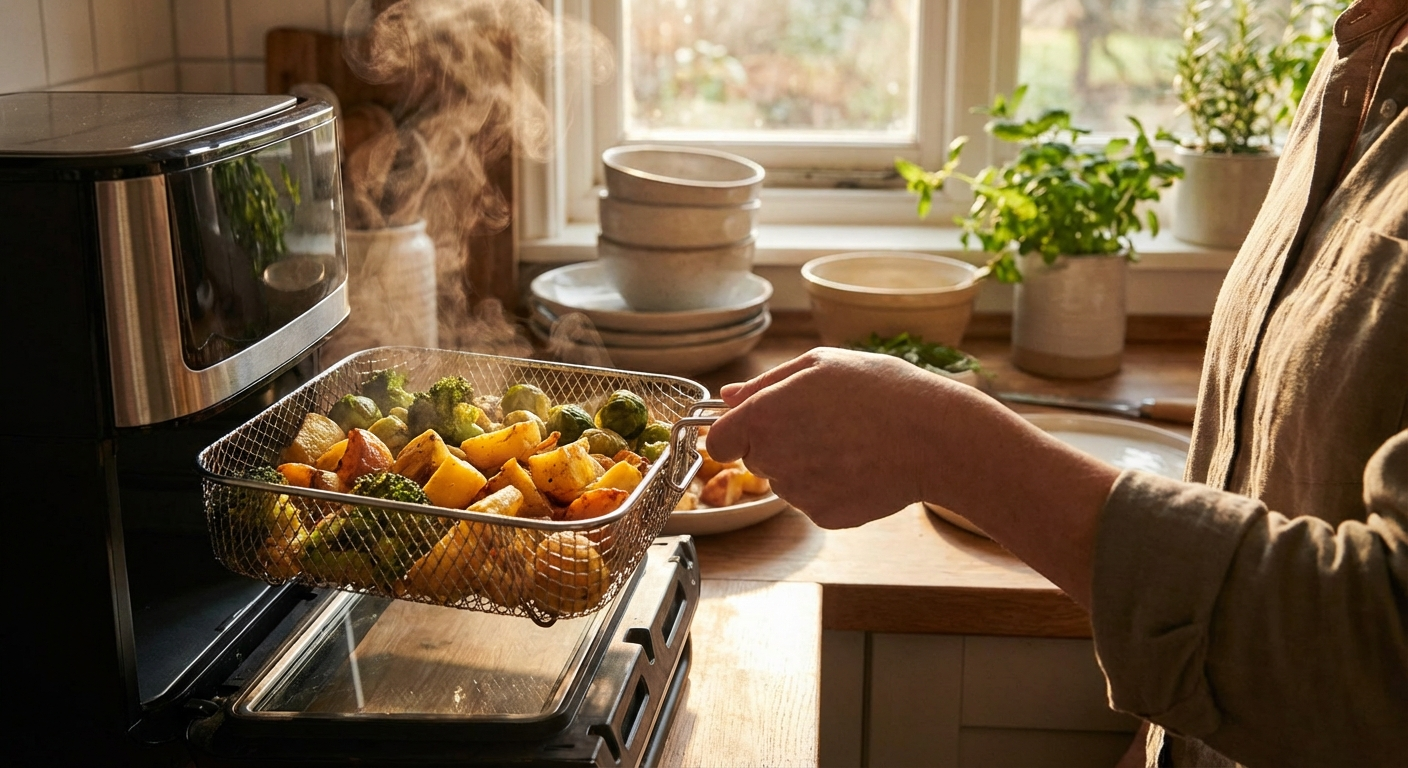
A standard basket-style air fryer occupies roughly 30 × 30 cm (12 × 12 inches) of counter space and stands about 30–35 cm tall. Compact models are smaller; dual-basket models are larger. Most can be stored in a cupboard between uses, though many users keep them on the counter permanently because of how often they reach for them.
Convection Oven Footprint
A countertop convection toaster oven is larger — typically 45–55 cm wide and 30–40 cm deep. It takes up significantly more counter real estate and is heavy enough that moving it in and out of storage is not practical.
If you have a built-in convection oven, this is a non-issue since it is integrated into your kitchen cabinetry.
Capacity Trade-Off
The air fryer's compact size is both its greatest strength and its most significant limitation. A 5.5-quart basket comfortably serves one to two people. A family of four will often need to cook in batches, which adds time and reduces the speed advantage.
If you are cooking for three or more people regularly, consider either a large-capacity air fryer (8+ quarts) or an air fryer oven — a hybrid appliance that combines air frying capability with the larger capacity of a countertop oven. For our recommendations, see our best air fryers guide.
Price and Long-Term Value
Let's talk money — upfront cost, ongoing costs, and what you actually get for your investment.
Upfront Cost
Budget air fryers start around $40 and deliver perfectly good results for basic air frying. Mid-range models ($80–$150) from brands like Cosori, Ninja, and Philips add features like digital controls, preset programs, and larger baskets. Premium models reach $200–$250 and often include dual baskets or smart connectivity.
Countertop convection ovens range from about $80 for a basic model to $300–$500 for premium options like the Breville Smart Oven Air Fryer Pro. Full-size built-in convection ovens start around $800 and go well beyond $3,000 for premium brands.
Replacement Costs
Air fryer baskets and non-stick coatings wear over time. Budget for a replacement basket ($15–$40) every 12–18 months if you use the air fryer daily. Some users also invest in silicone liners ($8–$15) to extend basket life.
Convection ovens generally do not have consumable parts beyond the occasional light bulb or door seal. Their longer lifespan means lower replacement costs over time.
Value Calculation
For a single person or couple who primarily wants crispy, fast weeknight meals, a $60–$100 air fryer offers extraordinary value. The cost per use drops to pennies within a few months.
For a household that bakes regularly, cooks for four or more, or needs an appliance to handle everything from pizza to roast dinners, a quality countertop convection oven at $150–$300 is a better investment despite the higher upfront cost.
Health and Nutrition
Both appliances are marketed as healthier alternatives to deep frying — and that claim holds up.
Oil Reduction
Deep frying submerges food in oil, typically adding 100–200 extra calories per serving from absorbed fat. Both air fryers and convection ovens can produce crispy results with just a light spray of oil — roughly one teaspoon compared to several cups for deep frying.
For items like frozen fries and pre-breaded nuggets, no additional oil is needed in either appliance. The fat already present in the food is sufficient for browning.
Acrylamide and High-Heat Cooking
Acrylamide is a chemical that forms when starchy foods are cooked at high temperatures. Both air fryers and convection ovens produce some acrylamide in foods like fries and toast. There is no significant difference between the two appliances in this regard.
To minimise acrylamide formation, avoid over-browning starchy foods and aim for a golden yellow colour rather than dark brown — regardless of which appliance you use.
The Verdict on Health
Neither appliance is meaningfully healthier than the other. Both are significantly healthier than deep frying. The health benefit comes from the cooking method (circulating hot air with minimal oil), not from the specific appliance.
If you are looking for other ways to keep your kitchen organised while building healthier cooking habits, the team at Home Organization Guide has excellent tips on setting up a functional kitchen layout.
Ease of Use and Cleaning

Daily Use
Air fryers are remarkably simple. Set the temperature, set the time, press start. Most models have presets for common foods. The learning curve is almost non-existent — within a few uses, most people feel completely confident.
Convection ovens have a slightly steeper learning curve. You need to understand temperature adjustments (most recipes recommend reducing conventional oven temperatures by 10–15°C / 25°F for convection), rack positioning, and when to use convection mode versus conventional mode.
Cleaning
Air fryer baskets are generally dishwasher-safe and easy to hand wash. The compact size means cleaning takes a minute or two. The main maintenance issue is grease buildup in the base and around the heating element, which should be wiped down every few uses.
Convection ovens are more work to clean. Crumbs, grease splatter, and baked-on food accumulate in a larger chamber with more surfaces. A removable crumb tray helps, but expect to spend more time on oven maintenance.
For ease of cleaning, the air fryer wins clearly.
Who Should Buy an Air Fryer
An air fryer is the right choice if you:
- Cook primarily for one or two people
- Love crispy foods — fries, wings, nuggets, reheated pizza
- Want fast weeknight meals with minimal prep and cleanup
- Have limited counter space and want a compact appliance
- Are looking for an affordable entry point ($50–$150)
- Want to reduce oil and deep-frying in your diet
- Value speed — most meals are done in 15–25 minutes
The air fryer is not trying to replace your oven. It is a specialist tool that does a specific set of things exceptionally well. If those things align with how you cook, it is one of the best kitchen investments you can make.
Who Should Buy a Convection Oven
A convection oven is the right choice if you:
- Cook for a family of three or more regularly
- Bake frequently — bread, cakes, cookies, pastries
- Need to roast whole chickens, large cuts of meat, or sheet-pan dinners
- Want a single appliance that handles air frying, baking, toasting, and roasting
- Prefer a longer-lasting appliance with a 10–15 year lifespan
- Already have counter space allocated for a toaster oven
Many modern countertop convection ovens now include an "air fry" setting that increases fan speed to approximate air fryer performance. These hybrid models — like the Breville Smart Oven or Cuisinart TOA-series — offer genuine versatility for households that want both capabilities in one appliance.
Can You Own Both?
Absolutely. Many kitchens benefit from having both appliances, each handling what it does best.
A common setup is a full-size convection oven (built-in) for baking and large meals, paired with a compact air fryer on the counter for quick weeknight cooking and reheating. This combination covers virtually every home cooking scenario.
If counter space is tight, consider a countertop convection oven with an air fry mode. You sacrifice some of the air fryer's speed and crispiness, but gain significant versatility in a single appliance footprint.
Our Top Picks
Based on our research and testing, here are the products we recommend:
Ninja AF101 Air Fryer
The Ninja AF101 is our top pick for a dedicated air fryer. Its 4-quart capacity is perfect for one to two people, it preheats in under 3 minutes, and it consistently delivers crispy, golden results on everything from fries to chicken wings. It's also one of the easiest models to clean.
Breville Smart Oven Air Fryer
If you want the best of both worlds, the Breville Smart Oven Air Fryer is the hybrid to beat. It functions as a full convection oven with a dedicated air fry mode, handling everything from baking sourdough to crisping up wings. It's a premium investment that replaces two appliances.
Cosori Air Fryer Max XL
The Cosori Max XL hits the sweet spot between capacity and price. Its 5.8-quart basket comfortably serves two to three people, the digital controls are intuitive, and it consistently ranks among the most popular air fryers for good reason — reliable performance without breaking the bank.
Frequently Asked Questions
Is an air fryer just a small convection oven?
Technically, yes — both use a fan to circulate hot air around food. However, an air fryer has a much more compact cooking chamber and a more powerful fan relative to its size, which creates faster, more intense airflow. This produces crispier results in less time than a standard convection oven.
Can a convection oven replace an air fryer?
A convection oven can produce similar results for many recipes, but it typically takes longer and may not achieve the same level of crispiness on items like french fries or chicken wings. If counter space is your priority and you already own a quality convection oven, you may not need a separate air fryer.
Which uses less electricity — an air fryer or a convection oven?
Air fryers generally use less electricity per cooking session because they heat up faster, cook more quickly, and draw between 800–1,800 watts compared to a full-size convection oven at 2,000–5,000 watts. Over a year of regular use, an air fryer can cost 50–70% less to operate.
Is food healthier in an air fryer or convection oven?
Both methods are healthier than deep frying since they require little to no added oil. Air fryers may have a slight edge for items like fries and nuggets because the intense airflow renders fat more efficiently. For roasted vegetables or baked dishes, results are comparable between the two.
Do air fryers make food taste better than convection ovens?
For foods where crispiness matters — wings, fries, breaded items — most users prefer air fryer results. For baking, roasting large cuts of meat, or cooking casseroles, a convection oven often produces more even, consistent results. Taste preference depends largely on what you cook most often.
How long do air fryers last compared to convection ovens?
A quality air fryer typically lasts 3–5 years with regular use, while a built-in or countertop convection oven can last 10–15 years. Air fryers have more compact components that may wear faster, and non-stick basket coatings can degrade over time.
Sources and Methodology
This comparison is based on:
- Hands-on testing experience with over a dozen air fryers and convection ovens across multiple brands and price points
- Consumer testing data from organisations including Choice (Australia), Which? (UK), and Consumer Reports (US) — all of which have published independent air fryer and convection oven evaluations through 2025–2026
- Energy consumption calculations based on manufacturer-stated wattage figures and typical cook times, cross-referenced with energy monitoring data published by consumer advocacy groups
- User feedback analysis from verified purchaser reviews across major retail platforms, focusing on long-term ownership experiences rather than first-impression reviews
- Manufacturer specifications from brands including Philips, Ninja, Cosori, Breville, Cuisinart, and KitchenAid
All price ranges reflect market data current as of March 2026. Prices vary by region and retailer. We recommend checking current pricing before making a purchase decision.
Where specific claims are made about cooking times, energy use, or food quality outcomes, these reflect general ranges observed across multiple sources rather than single-test results. Individual performance varies based on specific models, food quantities, altitude, and ambient temperature.
Looking for specific model recommendations? Check out our best air fryers guide for our tested, top-rated picks across every budget.