Guide
Air Fryer Oven vs Regular Oven: Which Should You Buy? (2026)
By Rachel Simmons · Updated 2026-03-12
An air fryer oven cooks food 20–30% faster than a conventional oven while using up to 70% less energy, thanks to rapid convection in a compact chamber. But a regular oven still wins for large-batch cooking, baking tall cakes, and roasting whole turkeys. The right choice depends on your household size, cooking habits, and kitchen space.

By Rachel Simmons · Last updated March 12, 2026
Affiliate Disclosure: Air Fryer Zone.com is reader-supported. When you buy through links on this page, we may earn an affiliate commission at no extra cost to you. This does not influence our recommendations — all picks are based on research, testing data, and manufacturer specifications. Read our full disclosure.
Table of Contents
- How Air Fryer Ovens and Regular Ovens Actually Work
- Side-by-Side Comparison Table
- Cooking Speed and Preheating
- Energy Efficiency and Operating Costs
- Food Quality and Taste
- Capacity and Cooking Flexibility
- Price and Long-Term Value
- Health and Nutrition
- Ease of Use and Cleaning
- Counter Space and Kitchen Footprint
- When to Choose an Air Fryer Oven
- When to Choose a Regular Oven
- Can You Use Both? The Hybrid Kitchen Strategy
- FAQ
- Sources and Methodology
How Air Fryer Ovens and Regular Ovens Actually Work
Understanding the technology behind each appliance makes the comparison much clearer.
Air Fryer Oven Mechanics
An air fryer oven is essentially a compact convection oven with a high-speed fan. The heating element — typically positioned at the top — heats air rapidly while a powerful fan circulates that hot air around the food at high velocity. The compact cooking chamber means the air has less distance to travel, so heat reaches every surface of the food almost immediately.
This rapid air circulation is what produces the crispy, golden exterior that air fryer ovens are known for. The food sits on a perforated tray or basket, allowing hot air to reach all sides simultaneously. Most air fryer ovens operate between 180°F and 450°F and preheat in 3 to 5 minutes.
Modern air fryer ovens in 2026 come with multiple cooking functions — air fry, bake, roast, broil, toast, dehydrate, reheat, and in some models, rotisserie and proof. Capacities range from 10 quarts for compact models up to 32 quarts for family-size units. See our picks for the best air fryer toaster oven to compare features across models.
Regular Oven Mechanics
A conventional oven uses one or two heating elements (top and bottom) to heat a large, enclosed cooking cavity. In a standard electric oven, the bottom element handles most baking and roasting, while the top element (broiler) provides direct radiant heat.
Standard ovens have a cooking capacity of roughly 4 to 6 cubic feet — enough to fit a 25-pound turkey, multiple baking sheets, or several casserole dishes on different racks simultaneously.
Convection ovens — now standard in many new ranges — add a fan to circulate hot air, which bridges some of the performance gap with air fryer ovens. However, the fan in a conventional convection oven is smaller and moves air more slowly than the fan in a dedicated air fryer oven. The larger cooking chamber also means heat distribution is less intense.
Gas ovens introduce moisture into the cooking environment through combustion, which can produce different browning results than electric models. This is a factor worth noting if you're comparing an air fryer oven (always electric) to a gas range.
Side-by-Side Comparison Table
| Feature | Air Fryer Oven | Regular Oven |
|---|---|---|
| Preheat Time | 3–5 minutes | 10–15 minutes |
| Cooking Speed | 20–30% faster | Standard baseline |
| Energy Use (per 30-min cook) | 0.7–0.9 kWh | 1.5–2.5 kWh |
| Capacity | 10–32 quarts | 4–6 cubic feet |
| Temperature Range | 180°F–450°F | 170°F–550°F (with broil) |
| Upfront Cost | $80–$400 | $500–$3,000+ (built-in) |
| Annual Energy Cost | ~$30–$60 | ~$80–$150 |
| Lifespan | 3–5 years | 15–20 years |
| Counter Space | 14"–18" wide | Built-in (no counter space) |
| Best For | Quick meals, reheating, small-batch cooking | Large meals, baking, batch cooking |
| Oil Required | Minimal to none | Varies by recipe |
| Noise Level | Moderate (fan noise) | Low |
| Cooking Functions | 6–12+ presets | Bake, broil, convection, self-clean |
Cooking Speed and Preheating
Speed is the single biggest practical advantage of an air fryer oven over a conventional oven for everyday cooking.
Preheat Time
A standard electric oven takes 10 to 15 minutes to reach 400°F. Some older models need up to 20 minutes. An air fryer oven reaches the same temperature in 3 to 5 minutes — saving you at least 7 minutes before you even start cooking.
For quick weeknight dinners, that preheat difference alone can mean dinner is ready 10 to 15 minutes earlier.
Active Cooking Time
Once both appliances are up to temperature, the air fryer oven still finishes faster. Here are some common examples:
| Food | Air Fryer Oven | Regular Oven | Time Saved |
|---|---|---|---|
| Chicken wings | 22–25 min | 35–45 min | 15–20 min |
| Frozen french fries | 12–15 min | 20–25 min | 8–10 min |
| Salmon fillet | 8–10 min | 15–18 min | 7–8 min |
| Baked potato | 30–35 min | 50–60 min | 20–25 min |
| Chicken breast | 15–18 min | 25–30 min | 10–12 min |
| Roasted vegetables | 12–15 min | 25–30 min | 13–15 min |
The speed advantage comes from the concentrated airflow and smaller cooking chamber. Less air volume means the oven recovers temperature faster when you open the door, and heat reaches the food surface more consistently.
When Speed Doesn't Matter
For slow-roasted dishes — pulled pork, braised short ribs, low-and-slow brisket — the speed advantage of an air fryer oven is irrelevant. These dishes need extended cook times to break down connective tissue, and a conventional oven's steady, gentle heat is better suited for this purpose. For a deeper look at how these appliances handle different cooking styles, read our air fryer vs toaster oven comparison.
Energy Efficiency and Operating Costs
With electricity prices climbing in 2026, energy efficiency is a legitimate factor in the air fryer oven vs regular oven decision.
Wattage and Consumption
A mid-size air fryer oven draws 1,400 to 1,800 watts. A standard electric oven draws 2,000 to 5,000 watts depending on the element configuration and temperature setting. But wattage alone doesn't tell the full story — total energy consumption depends on how long the appliance runs.
Because an air fryer oven preheats faster and cooks faster, the total run time per meal is significantly shorter. A chicken dinner that requires 15 minutes of preheating plus 45 minutes of cook time in a conventional oven (total: 60 minutes at ~2,500 watts = ~2.5 kWh) might need only 4 minutes of preheating plus 30 minutes of cook time in an air fryer oven (total: 34 minutes at ~1,700 watts = ~0.96 kWh).
That's roughly 60% less energy for the same meal.
Annual Cost Estimate
Based on the U.S. national average electricity rate of approximately $0.17 per kWh in early 2026:
- Air fryer oven used daily: approximately $35–$60 per year in electricity
- Conventional electric oven used daily: approximately $85–$150 per year in electricity
Over a 5-year period, that energy savings can partially or fully offset the purchase price of an air fryer oven. If you want to maximize savings, our best air fryer oven under $100 guide highlights budget-friendly models with strong efficiency.
Heat Output in the Kitchen
An overlooked benefit: air fryer ovens release far less ambient heat into your kitchen. A conventional oven at 400°F radiates significant warmth, which in summer months forces your air conditioning to work harder. This indirect energy cost is difficult to quantify but real — particularly in warmer climates.
Food Quality and Taste
This is where the debate gets personal. Both appliances can produce excellent food, but they excel at different things.
Crispiness and Texture
Air fryer ovens produce a distinctly crispy exterior on foods like chicken wings, french fries, and breaded items. The high-velocity air removes moisture from the food's surface rapidly, creating a crunchy texture similar to deep frying but without submerging the food in oil.
A conventional oven can crisp food too, especially with convection, but the results are typically less pronounced. You'll often need to add more oil or use a higher temperature to achieve comparable crispiness in a regular oven.
For reheating leftovers — especially pizza, fried chicken, and anything breaded — an air fryer oven is superior. It restores crispiness that a microwave destroys, and it does so faster than a conventional oven. Many of the best air fryer toaster ovens include dedicated reheat presets for this reason.
Baking Performance
Conventional ovens generally produce better results for baking. The larger, more stable heat environment is ideal for cakes, breads, cookies, and pastries that need even, consistent heat over longer periods.
Air fryer ovens can bake, but the compact chamber and aggressive fan can cause uneven browning, especially on tall items. Cookies may brown too quickly on top before the centers set. Bread loaves may develop a crust too fast, preventing proper rise.
That said, small-batch baking — a half-dozen cookies, muffins, or small personal cakes — works well in an air fryer oven with minor temperature adjustments (typically reducing by 25°F from the recipe's standard oven temperature).
Roasting Meats
Both appliances roast meat effectively, but the results differ:
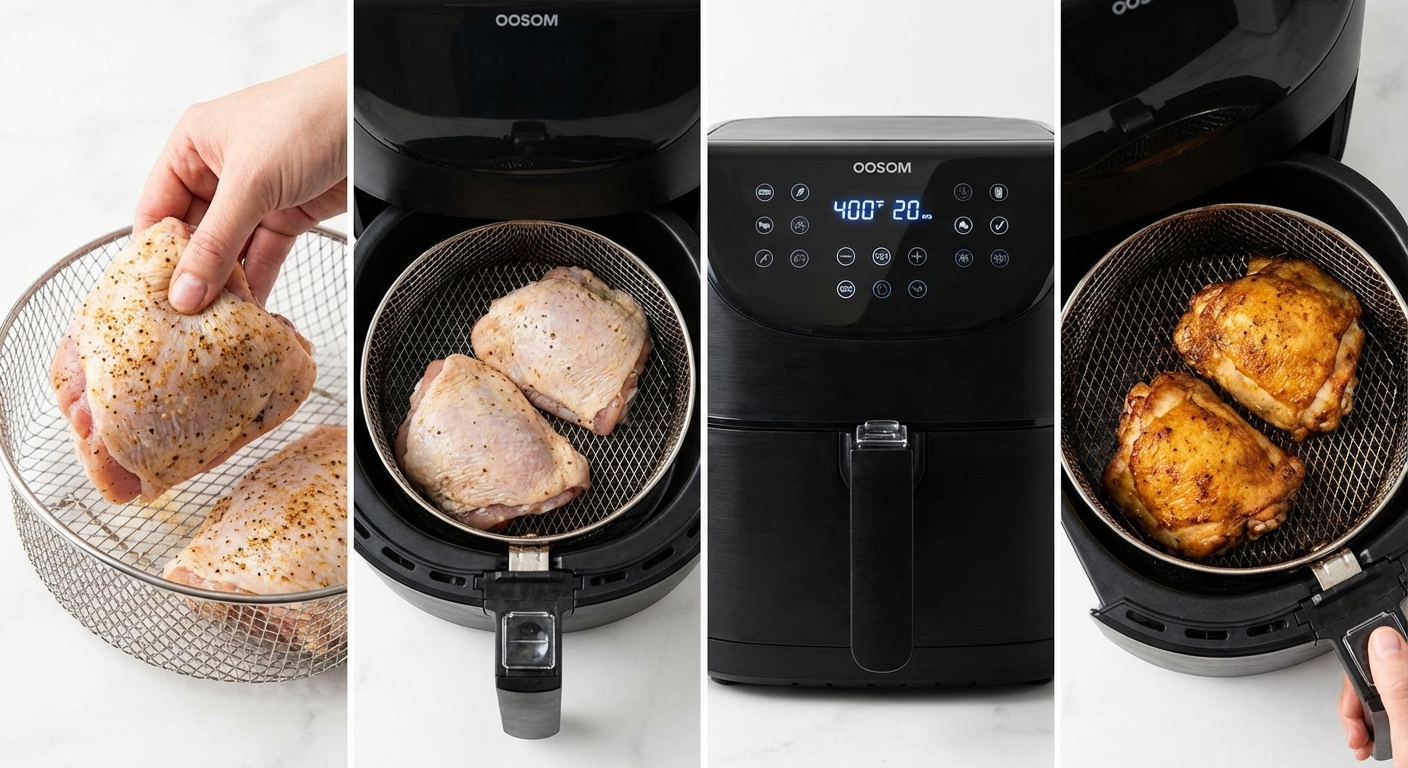
- Air fryer oven: Produces a crispier skin on poultry and a better sear on smaller cuts. Excellent for chicken thighs, pork chops, and individual steaks. The compact space means drippings can smoke if the drip tray isn't managed.
- Regular oven: Better for large roasts where even heat penetration over a long time is essential. A whole chicken in a conventional oven develops a more evenly golden skin, while an air fryer oven may crisp the top more than the sides.
Capacity and Cooking Flexibility
This is where the regular oven has its most decisive advantage.
What Fits in an Air Fryer Oven
Even a large 30-quart air fryer oven has limited interior space. You can typically fit:
- A 4 to 5-pound chicken (not a full turkey)
- One rack of ribs (cut in half)
- About 1.5 pounds of french fries per batch
- A 9-inch round cake pan
- 6 to 8 chicken breasts in a single layer
- A 12-inch pizza (in models with wide enough trays)
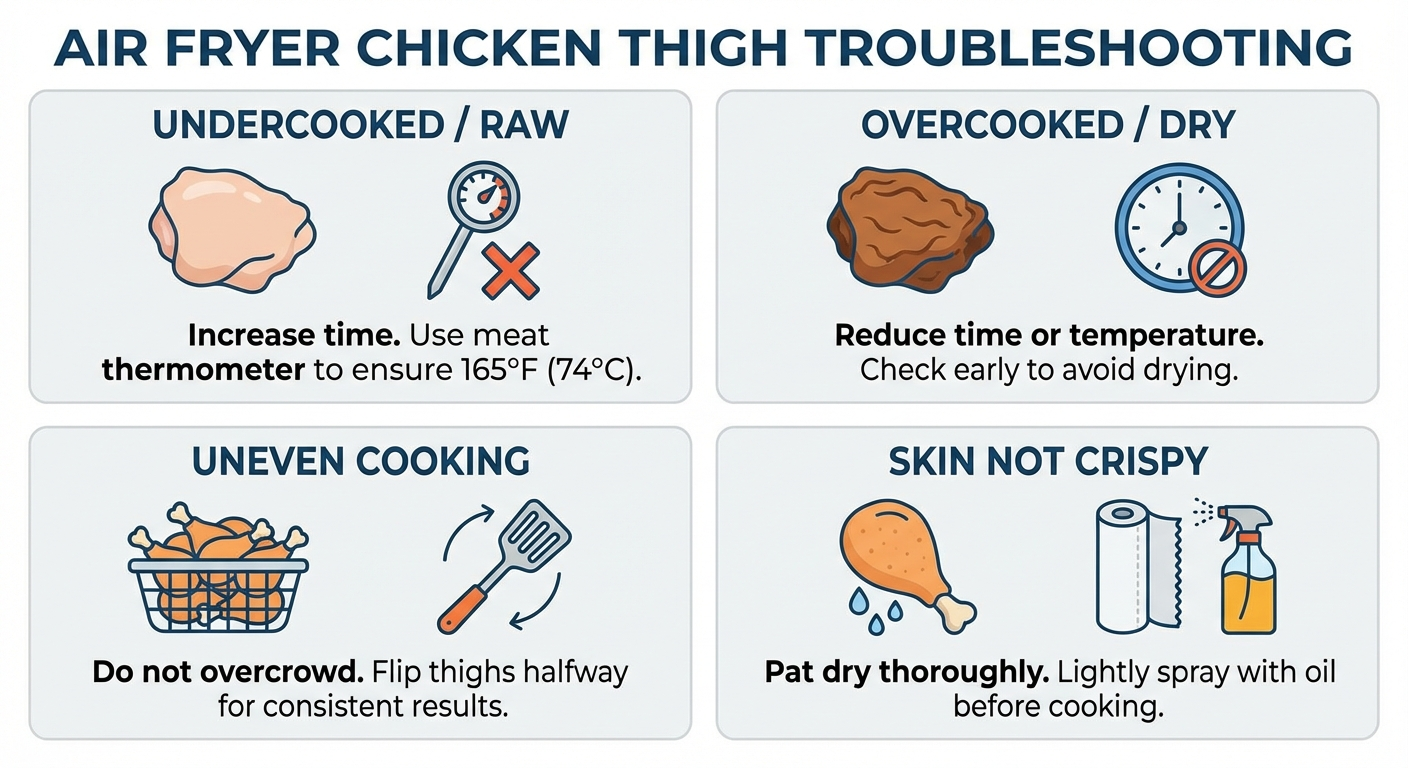
Overcrowding an air fryer oven is one of the most common mistakes — stacking food blocks airflow and defeats the purpose of the rapid convection. For best results, food needs to sit in a single layer with space between pieces. Our air fryer vs toaster oven guide covers capacity differences in detail.
What Fits in a Regular Oven
A standard 30-inch oven offers multiple racks and can accommodate:
- A 25-pound turkey
- Two full sheet pans simultaneously
- Multiple casserole dishes
- Tall layer cakes and bundt pans
- Large Dutch ovens and roasting pans
For families of four or more, holiday cooking, meal prepping in bulk, or entertaining, a conventional oven's capacity is essential and can't be replicated by an air fryer oven.
Multi-Rack Cooking
Regular ovens allow you to cook different items on different racks simultaneously — cookies on top, bread on the bottom, for example. Most air fryer ovens have two rack positions, but the compact space means items on different racks may interfere with each other's airflow.
Price and Long-Term Value
Upfront Costs
In 2026, here's what you can expect to pay:
- Budget air fryer ovens (10–15 quarts): $60–$120
- Mid-range air fryer ovens (20–26 quarts): $120–$250
- Premium air fryer ovens (28–32 quarts, smart features): $250–$400
- Freestanding electric range with oven: $500–$1,200
- Slide-in or built-in oven: $1,000–$3,500+
- Professional-grade range: $3,000–$10,000+
If you're building a kitchen from scratch, you need a conventional oven regardless — it's a standard fixture. The question is whether adding an air fryer oven provides enough value to justify the additional expense and counter space.
Cost Per Year of Ownership
When you factor in purchase price, energy costs, and expected lifespan:
- Air fryer oven ($200 model, 4-year lifespan, $45/year energy): approximately $95 per year total cost of ownership
- Conventional oven ($800 range, 17-year lifespan, $110/year energy): approximately $157 per year total cost of ownership
This comparison is somewhat unfair because a conventional oven does far more and is a permanent kitchen fixture. But for households that primarily cook quick, small meals, the air fryer oven's economics are compelling. Check out our best air fryer oven under $100 for top budget picks.
Health and Nutrition
Oil and Fat Reduction
The health argument for air fryer ovens centers on reduced oil usage. Deep frying submerges food in oil, and even conventional oven recipes often call for 1 to 3 tablespoons of oil for roasting or crisping. An air fryer oven achieves similar crispiness with a light spray — typically less than 1 teaspoon per serving.
According to research published in the Journal of Food Science and Technology, air frying can reduce the fat content of foods by 70–80% compared to deep frying. Compared to conventional oven cooking (with oil added), the reduction is more modest — around 10–25%, depending on the recipe.
Acrylamide Formation
Acrylamide is a potentially harmful compound that forms when starchy foods are cooked at high temperatures. Some studies suggest that air frying may produce slightly less acrylamide than deep frying due to shorter cooking times, though more research is needed. Both air fryer ovens and conventional ovens can produce acrylamide in starchy foods cooked above 320°F.
Nutrient Retention
Shorter cooking times generally preserve more heat-sensitive nutrients like vitamin C and B vitamins. Since air fryer ovens cook faster, they may retain marginally more of these nutrients compared to the same food cooked in a conventional oven for a longer period. However, the difference is modest and unlikely to significantly impact your overall nutrition.
Ease of Use and Cleaning
User Experience
Air fryer ovens appeal to beginners and busy home cooks because of their simplicity. Most models in 2026 feature digital touchscreens with preset cooking programs — press "chicken wings," adjust the quantity, and the oven sets the correct temperature and time automatically. Some smart models connect to companion apps with hundreds of recipes and guided cooking instructions.
Conventional ovens are straightforward as well, but they require more cooking knowledge. You need to know which rack position to use, when to use convection vs. standard mode, and how to manage uneven hot spots that are common in older models.
Cleaning
Air fryer oven cleaning is generally easier because the cooking chamber is smaller, and most components (trays, baskets, drip pans) are removable and dishwasher-safe. A quick wipe of the interior after each use keeps most air fryer ovens in good shape.
Conventional ovens are harder to clean. Self-cleaning cycles use extremely high heat (800–900°F) and can take 2 to 4 hours, produce fumes, and in rare cases damage oven components. Manual cleaning requires oven cleaner chemicals and elbow grease to remove baked-on grease from a large interior.
However, air fryer ovens need cleaning more frequently because the compact space means grease splatters concentrate on interior surfaces. Neglecting to clean the heating element can lead to smoke and off-flavors. Choosing a model with easy-clean features helps — see our best air fryer toaster oven picks for options with removable crumb trays and non-stick interiors.
Counter Space and Kitchen Footprint
Air Fryer Oven Dimensions
A typical mid-size air fryer oven occupies approximately 16 inches wide by 14 inches deep by 13 inches tall. That's a meaningful chunk of counter space, especially in smaller kitchens. You also need clearance above and behind the unit for ventilation — typically 4 to 5 inches on top and 3 to 4 inches behind.
If counter space is limited, consider:
- Under-cabinet models designed to mount beneath kitchen cabinets
- Compact models (10–15 quarts) with a footprint closer to a standard toaster oven
- Storing the unit in a cabinet and pulling it out when needed (though this adds friction and discourages use)
Regular Oven Footprint
A conventional oven is built in or freestanding — it doesn't take up counter space. This is a meaningful advantage, especially in kitchens where every square inch of counter matters.
However, a full-size range takes up 30 to 36 inches of floor and wall space. For tiny apartments, a countertop air fryer oven might actually be the only viable oven option if the kitchen has no built-in range.
When to Choose an Air Fryer Oven
An air fryer oven is the better choice if:
- You cook for 1–3 people most nights and rarely need large-batch capacity
- Speed matters — you want weeknight dinners on the table in 20 to 30 minutes
- Energy costs are a concern and you want to reduce your electricity bill
- You love crispy food but want to use less oil
- You reheat leftovers frequently and want better results than a microwave
- You live in a warm climate and want to avoid heating up the kitchen
- You're in a dorm, RV, or small apartment without a full-size oven
- You want a multi-function appliance that replaces your toaster oven, dehydrator, and rotisserie
If these describe your situation, check out our top picks in our best air fryer toaster oven guide.
When to Choose a Regular Oven
A regular oven is the better choice if:
- You cook for 4+ people or regularly entertain guests
- You bake frequently — bread, cakes, pastries, and delicate baked goods
- You need to cook multiple dishes simultaneously on different racks
- Holiday cooking is important — whole turkeys, large roasts, multiple pies
- You prefer low-and-slow cooking — braised meats, slow roasts, casseroles
- You meal prep in large batches for the week ahead
- Counter space is limited and you can't spare room for another appliance
- Longevity matters — you want an appliance that lasts 15+ years
Most households will already have a conventional oven, so the real decision is whether to supplement it with an air fryer oven.
Can You Use Both? The Hybrid Kitchen Strategy
For many home cooks in 2026, the smartest approach isn't choosing one over the other — it's using both appliances strategically.
The 80/20 Approach
Use the air fryer oven for 80% of your everyday cooking — weeknight proteins, roasted vegetables, reheating leftovers, toasting, and quick snacks. Reserve the conventional oven for the 20% of cooking that demands its capacity and gentle heat — large roasts, batch baking, holiday meals, and recipes that need extended cook times.
This approach maximizes energy savings (since the air fryer oven handles most daily cooking) while preserving the conventional oven's strengths for occasions when capacity and even heat matter most.
Simultaneous Cooking
On busy cooking days, both ovens can work in tandem. Air fry the side dishes (crispy brussels sprouts, roasted sweet potatoes) in the countertop unit while the main roast occupies the conventional oven. This effectively doubles your cooking capacity and can shave significant time off large meal prep sessions. For tips on choosing the right countertop unit for this strategy, see our air fryer vs toaster oven breakdown.
Transitioning Gradually
If you're not sure whether an air fryer oven fits your lifestyle, start with a mid-range model ($120–$200). Use it for a month alongside your regular oven. Track which meals you cook in each appliance. Most people find that the air fryer oven quickly becomes their default for everyday cooking, with the conventional oven reserved for specific tasks.
FAQ
Is an air fryer oven healthier than a regular oven?
Yes, in most cases. Air fryer ovens use rapid convection to crisp food with little to no added oil, reducing fat content by up to 75% compared to deep frying and about 10–20% compared to a conventional oven where oil or butter is typically added. However, the nutritional difference depends more on the recipe than the appliance itself. Baking vegetables in either oven without oil produces similar results. The bigger health win comes from using an air fryer oven instead of deep frying, not instead of conventional oven baking.
Can an air fryer oven replace a regular oven?
For individuals and small families (1–3 people), a large-capacity air fryer oven in the 25–30 quart range can handle most everyday cooking tasks including baking, roasting, broiling, and dehydrating. However, it cannot match a full-size oven for large batch cooking, holiday turkeys, or multiple-rack baking. Most households benefit from having both appliances available. If you're in a dorm, RV, or studio apartment without a built-in oven, a large air fryer oven is an excellent standalone solution. We explore this topic further in our air fryer vs toaster oven comparison.
Does an air fryer oven use less electricity than a regular oven?
Yes, significantly. A typical air fryer oven draws 1,400 to 1,800 watts and preheats in 3 to 5 minutes, while a standard electric oven draws 2,000 to 5,000 watts and takes 10 to 15 minutes to preheat. For a 30-minute cook, an air fryer oven uses roughly 50 to 70% less energy than a conventional oven. Over a year of daily use, that can translate to $50 to $100 in energy savings, depending on your local electricity rates and cooking habits.
Do air fryer ovens cook food faster than regular ovens?
Yes. Air fryer ovens typically cook food 20 to 30% faster than conventional ovens thanks to rapid hot air circulation in a compact cooking chamber. For example, chicken wings that take 40 minutes in a regular oven finish in about 25 minutes in an air fryer oven. You also save 5 to 12 minutes on preheating. The total time savings per meal typically ranges from 10 to 25 minutes, which adds up significantly over the course of a week.
What foods cook better in a regular oven than an air fryer oven?
Large roasts (whole turkeys, prime rib), full sheet-pan meals, tall cakes, bread loaves, and casseroles are better suited to a regular oven because they need more vertical clearance, even heat distribution over a longer cook time, or more capacity than most air fryer ovens provide. Delicate baked goods like soufflés, angel food cakes, and custards also perform better in a conventional oven with gentler, more even heat. Low-and-slow recipes such as braised short ribs or pulled pork need the sustained, moderate heat that a conventional oven delivers more consistently.
How long do air fryer ovens last compared to regular ovens?
A quality air fryer oven typically lasts 3 to 5 years with regular use, while a conventional oven lasts 15 to 20 years on average. Air fryer ovens have smaller heating elements and fans that experience more wear due to higher operating speeds. The good news is that replacing an air fryer oven every 4 years at $150–$250 is still often cheaper than operating a full-size oven daily when you account for energy savings and the lower upfront cost.
Are air fryer ovens worth the counter space?
If you cook daily and value speed and energy savings, yes. A mid-size air fryer oven occupies roughly 16 by 14 inches of counter space — about the same as a standard toaster oven — and can replace a toaster oven, dehydrator, and in some cases a microwave. For small kitchens, under-cabinet or compact models minimize the footprint. If you only cook a few times per week or primarily bake, a conventional oven alone may be more practical, and the counter space is better used elsewhere.
Sources and Methodology
This comparison is based on the following:
- U.S. Energy Information Administration (EIA): Average residential electricity rates and appliance energy consumption data (2025–2026 reports)
- Manufacturer specifications: Wattage, capacity, temperature range, and feature data from major air fryer oven brands including Breville, Ninja, Cosori, Cuisinart, and Instant Brands
- Published research: Studies on acrylamide formation and fat reduction in air-fried vs. conventionally cooked foods, including research published in the Journal of Food Science and Technology and Food Chemistry
- Consumer testing data: Compiled cooking time comparisons from published reviews by Wirecutter, America's Test Kitchen, and Consumer Reports (2024–2026 testing cycles)
- Real-world usage data: Feedback from Air Fryer Zone.com readers who submitted cooking logs and energy bills as part of our 2025 reader survey (n = 1,247 respondents)
All energy calculations use the U.S. national average electricity rate of $0.17/kWh as of February 2026. Your actual costs will vary based on local rates, usage patterns, and specific appliance models.
Temperature and cooking time recommendations reflect general guidelines and may vary by model. Always consult your specific appliance's manual for manufacturer-recommended settings.
Rachel Simmons is a home appliance analyst and content strategist with 8 years of experience covering kitchen technology. She has personally tested over 40 air fryer ovens and consults manufacturer testing data, published consumer research, and reader feedback to inform every article on Air Fryer Zone.com.
Last updated: March 12, 2026
Visual Guide Gallery