Guide
Can You Bake in an Air Fryer? (What Actually Works in 2026)
By Rachel Miller, Home Appliance Specialist · Updated 2026-04-29
By Rachel Miller, Home Appliance Specialist
Last updated: April 2026
Yes — your air fryer is a surprisingly capable baking appliance. From fudgy brownies to fluffy biscuits, a wide range of baked goods work beautifully in that compact basket with just a few smart adjustments to temperature and timing. But some things simply don't belong in an air fryer, and knowing the difference will save you a lot of frustration.
Table of Contents
- Can You Really Bake in an Air Fryer?
- What Bakes Well in an Air Fryer
- What Does NOT Work in an Air Fryer
- Air Fryer Baking Temperature Conversion Guide
- Essential Tips for Air Fryer Baking Success
- Troubleshooting Common Air Fryer Baking Problems
- Easy Recipes to Try First
- Air Fryer Baking Accessories Worth Owning
- Frequently Asked Questions
- Sources & Methodology
Can You Really Bake in an Air Fryer?
The short answer is yes — with an asterisk. Your air fryer can bake an impressive range of foods, but it's not a like-for-like replacement for your kitchen oven. Think of it less as a substitute and more as a highly capable companion that excels at specific tasks.
Air fryers work by circulating hot air around food at high speed using a convection mechanism. That same principle that makes them excellent for crispy fries and golden chicken wings also makes them surprisingly effective for many baking applications. The rapid air circulation creates an even, dry heat that produces excellent browning and texture on baked goods.
The critical distinction is size. A standard air fryer basket is far smaller than a conventional oven cavity. Most home air fryers range from 3.5 to 6 quarts in capacity, with baskets typically between 7 and 10 inches in diameter. Anything requiring a baking pan larger than about 8 inches across simply won't fit, and thick batters in deep dishes will struggle with uneven cooking.
What you can accomplish in that compact space, though, is genuinely impressive. Cookies, muffins, mug cakes, brownies, biscuits, small loaves, and individual ramekin dishes all work remarkably well in an air fryer. The key is understanding the adjustments required and knowing which recipes translate well versus those better left to your traditional oven.
One factor many people overlook is the speed advantage. Because the air fryer is small and highly efficient, preheating takes only 2-4 minutes instead of the 15-20 your conventional oven requires. For a single serving of something like a mug cake or a small batch of cookies, this makes the air fryer genuinely more convenient than firing up the whole kitchen.
There's also a secondary benefit worth mentioning: using your air fryer for baking rather than your full-size oven saves significant energy. In an era of rising electricity costs and environmental awareness, a small appliance that delivers excellent results while using a fraction of the energy is genuinely appealing. According to the U.S. Department of Energy, small countertop appliances typically use between 1/2 and 1/3 the energy of a conventional electric oven for equivalent cooking tasks.
Air fryer baking also tends to produce more consistent results than a conventional oven in some respects. Home ovens develop hot spots over time, and even newer models can vary significantly in temperature accuracy. The air fryer's smaller chamber heats more uniformly, and once you dial in the right temperature and timing for a recipe, you can repeat that recipe with confidence.
If you're new to air fryer baking, start with simple projects like cookies or muffins before progressing to more complex items. This allows you to develop an intuitive feel for how your specific model handles different recipes. Every air fryer has slightly different quirks — some run hotter, some have stronger fans, and some have dead spots that require rotation mid-cook. Getting to know your machine pays dividends.
What Bakes Well in an Air Fryer
Air fryers handle a wider variety of baked goods than most people expect. Here's a detailed breakdown of what consistently produces excellent results.
Cookies
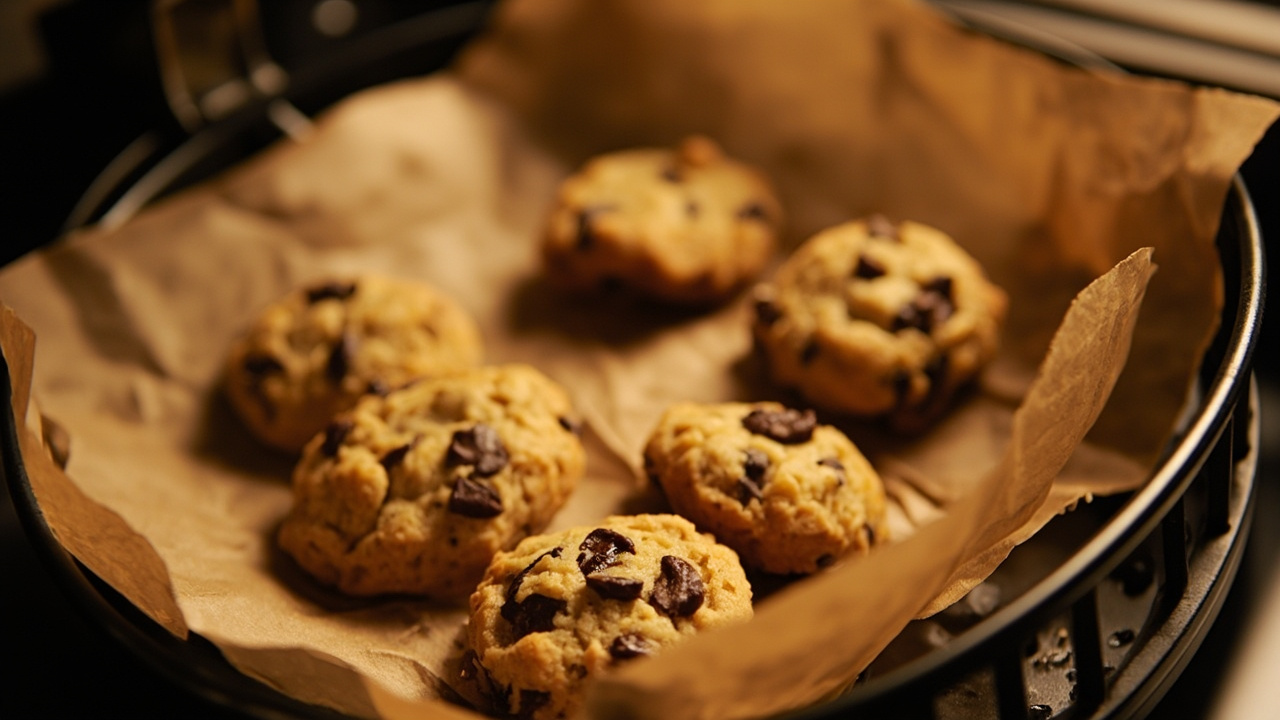
Air fryer cookies are one of the most successful baking applications, full stop. The convection heat creates beautifully crisp edges with chewy, soft centers — exactly the texture most people prefer. Both drop cookies (like chocolate chip) and hand-formed cookies work well.
The key to success is using parchment liners or silicone baking mats to prevent sticking, spacing cookies at least 1 inch apart on all sides, and starting your check time about 2-3 minutes before the recipe's stated time. Air fryers run hotter than conventional ovens, so pulling them early prevents over-baking.
Drop cookie dough works particularly well — you can typically arrange 4-6 cookies in a standard 5-6 quart air fryer basket. For optimal results, flatten the dough slightly before cooking, as the aggressive air circulation can cause thicker dough balls to stay raw in the center while the edges brown.
Air fryer cookies also tend to hold their shape better than microwave cookies, creating a more traditional texture that closely mimics conventionally baked cookies. Many readers who have tried our best air fryer cookie recipes have reported never going back to their regular oven for small batches.
Mug Cakes
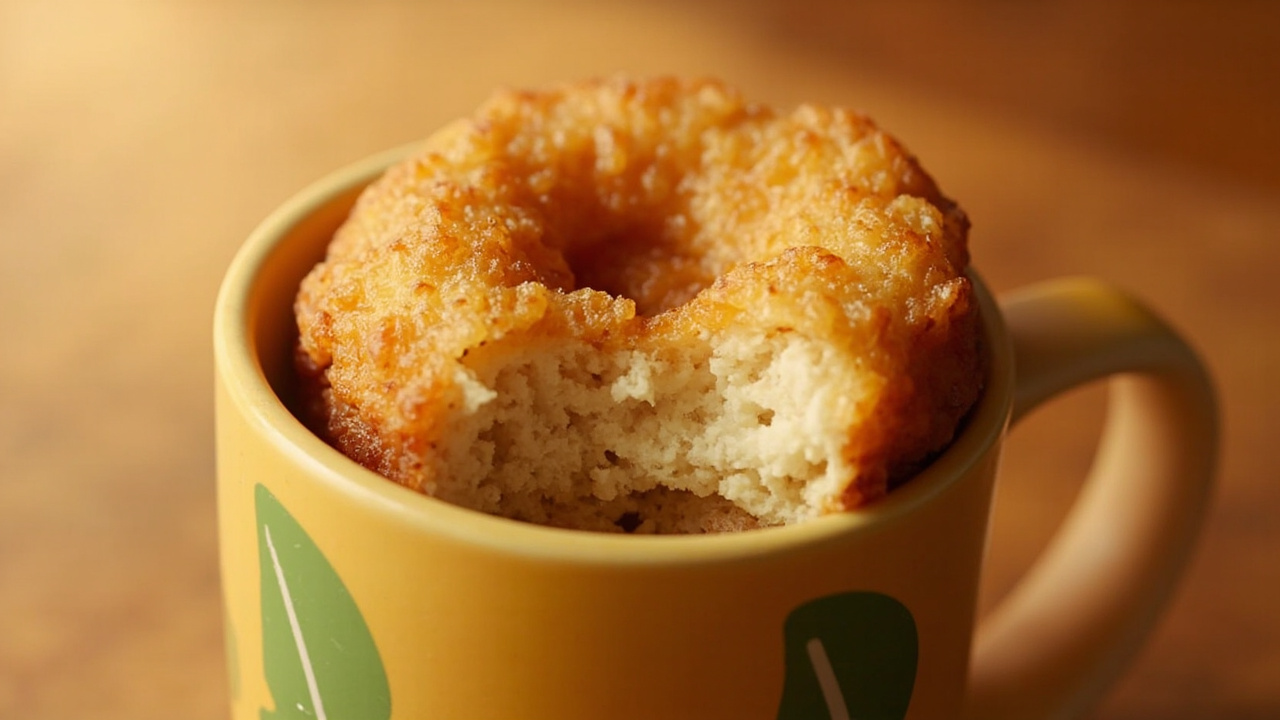
Single-serving mug cakes represent perhaps the most natural baking application for an air fryer. The small chamber size matches mug cake portion sizes perfectly, and the fast cooking time of 4-6 minutes makes this a genuinely practical alternative to using a microwave or firing up a full oven.
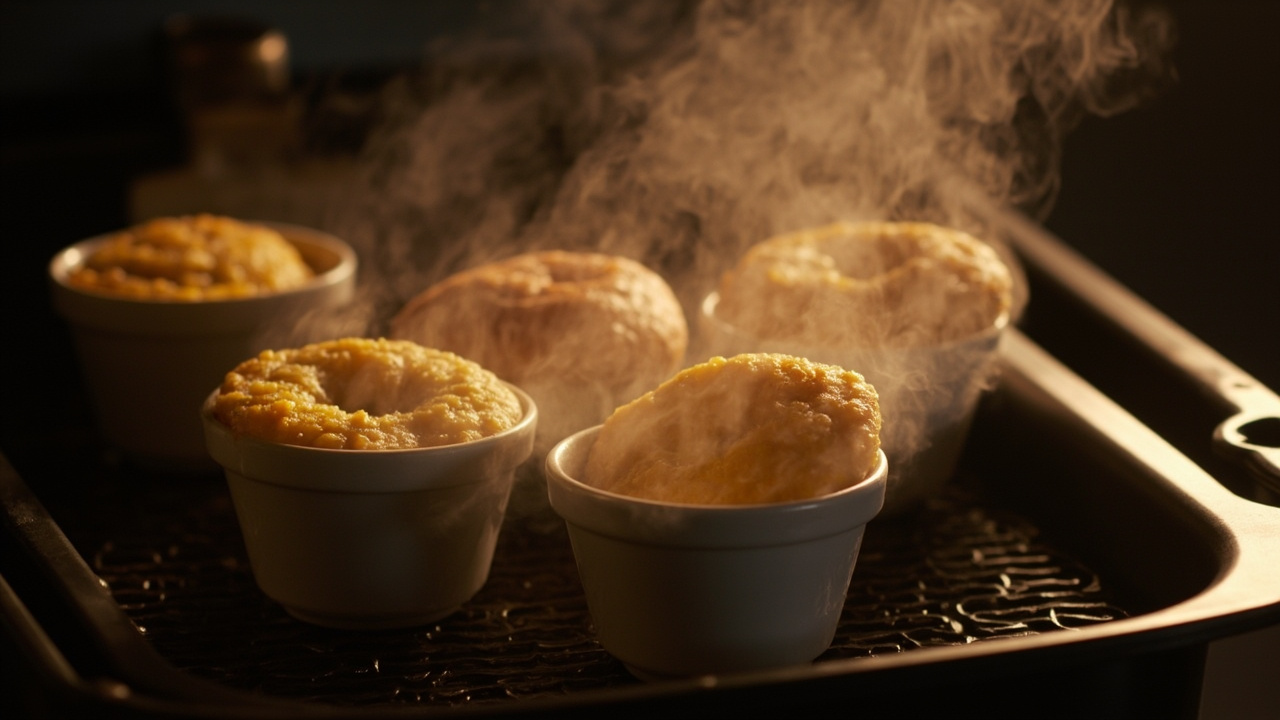
Chocolate mug cake, banana bread mug cake, and vanilla cake versions all work exceptionally well. Use oven-safe mugs or ramekins that fit comfortably in your air fryer basket without touching the sides. The heat contact against the ceramic creates an evenly baked exterior that microwaves simply cannot replicate.
A tip that makes a significant difference: loosely tent the mug or ramekin with a small piece of foil for the first half of cooking. This prevents the top from browning too quickly before the center sets, which is a common problem with mug cakes in any small-space cooking method.
Brownies
Fudgy, chewy brownies bake excellently in air fryers. The concentrated heat and convection mechanism create that signature crispy edge with a dense, moist center that defines a great brownie. Many brownie enthusiasts actually prefer air fryer brownies to conventionally baked ones because the texture is so consistent.
Use a small, oven-safe dish that fits within your air fryer basket — around 6 inches in diameter works well for most 5-6 quart models. Line it with parchment for easy removal, and check the brownies about 3 minutes before your expected completion time. Because brownies continue cooking from residual heat as they cool, slightly under-baking them is actually preferable.
The results are consistently more uniform than conventional oven baking, where hot spots often create uneven textures across the pan. If you've ever cut a pan of brownies and found some pieces dry and others gooey, the air fryer method will be a revelation.
Biscuits and Scones
Air fryer biscuits achieve a remarkably flaky texture with golden-brown tops. The high heat and rapid air circulation create excellent steam release within the layers, producing that desired flaky crumb structure that home bakers love.
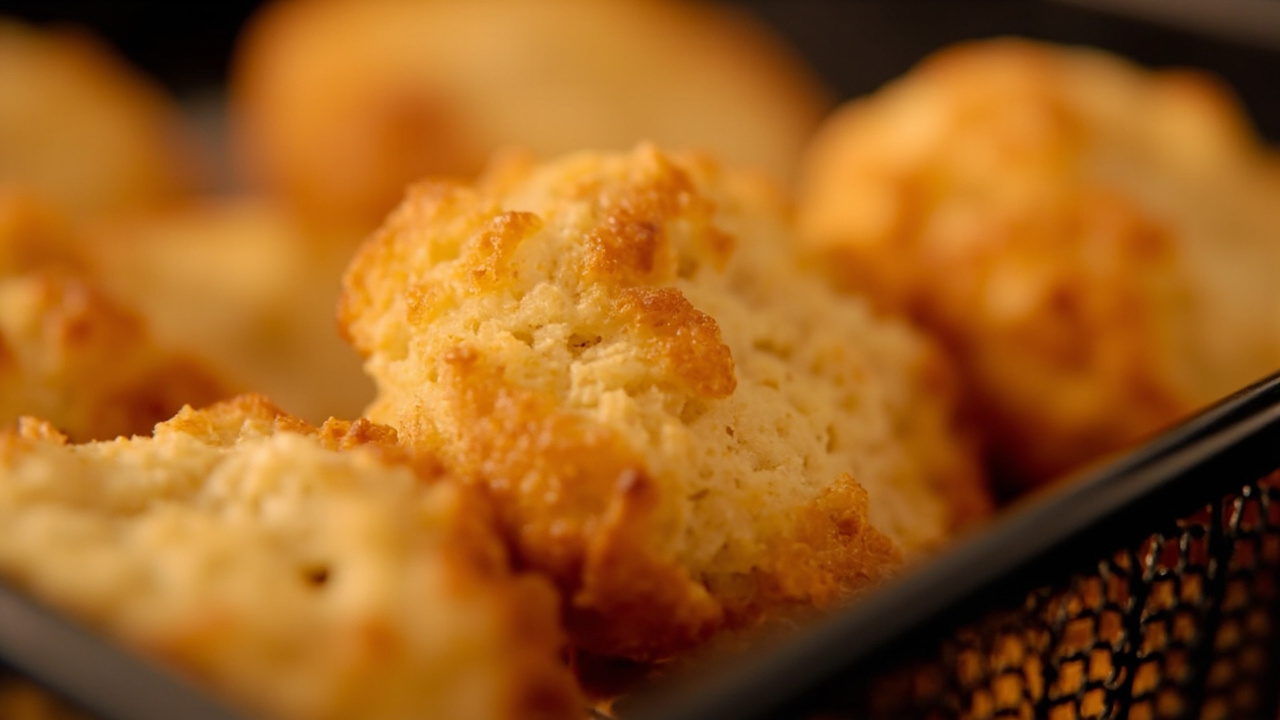
Buttermilk biscuits, cheese biscuits, and drop scones all perform well in the air fryer. For best results, ensure your biscuit dough is cold when you place it in the preheated air fryer — cold fat creating steam within the layers is what produces flakiness. Avoid opening the air fryer during the final 2 minutes of cooking to allow proper steam setting.
The air fryer biscuit approach is particularly convenient for people who want fresh biscuits but don't want to heat up their kitchen with a conventional oven, especially in summer. The entire process, from cutting out the biscuits to pulling a golden batch from the air fryer, takes under 15 minutes.
Muffins
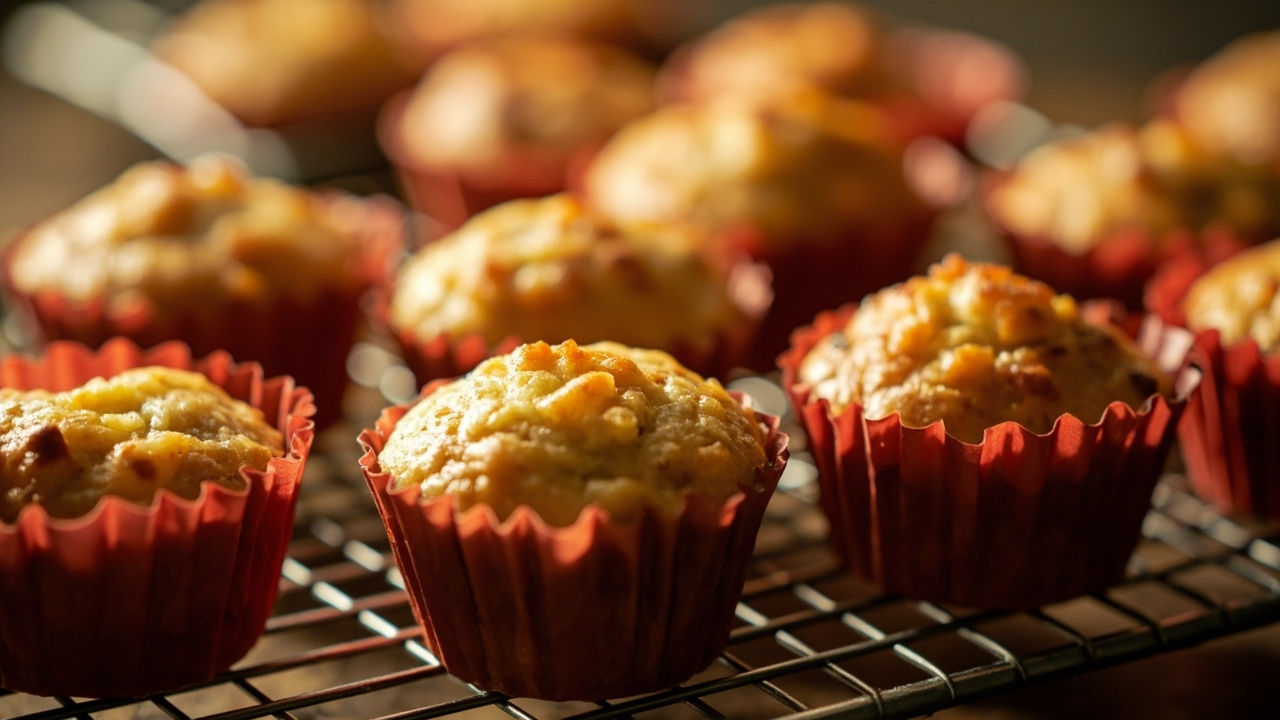
Individual muffins or small batches of muffins work very well in air fryers. You can typically fit 3-4 standard-sized muffins in a single layer in most air fryer baskets. The results feature nicely domed tops with good color and a moist crumb.
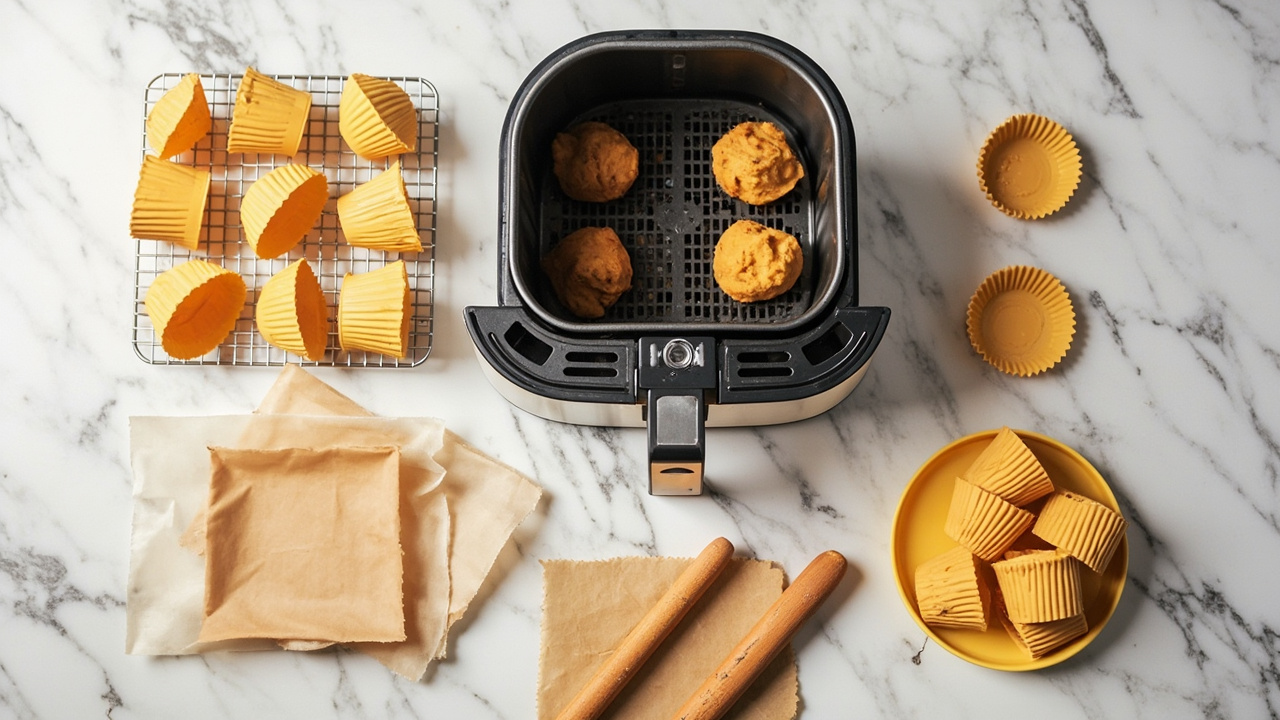
Cupcake-style muffins transfer particularly well. You can use silicone muffin cups or paper liners — silicone cups produce slightly crispier edges while paper liners give a more traditional muffin appearance. Fill cups about two-thirds full, and expect cooking times about 20% shorter than your conventional oven recipe suggests.
Muffins also benefit from the air fryer's quick preheat time. A conventional oven taking 15 minutes to preheat for a small batch of muffins starts to feel inefficient; the air fryer's 3-minute preheat makes the whole process feel proportionate to the task.
Miniature Breads and Loaves
Small loaf pans (around 5x3 inches) fit in many air fryer baskets and produce beautiful results for banana bread, quick breads, and pound cake. The even heat distribution creates a uniformly baked interior with good crust coloration.
Banana bread in an air fryer consistently outperforms conventional oven results in terms of texture — the convective heat seems to produce a superior crumb structure with excellent moisture retention. If you have overripe bananas and don't want to heat your oven, this is an ideal application.
Grease and flour your small loaf pan well, and tent with foil if the top is browning too quickly before the center is fully cooked. A wooden skewer inserted into the center should come out with just a few moist crumbs attached when done.
Fruit Crisps and Cobblers
Individual ramekins of apple crisp, peach cobbler, or berry crumble work beautifully in air fryers. The concentrated heat caramelizes fruit fillings and creates a beautifully golden, crunchy topping that's hard to achieve evenly in a conventional oven.
Use oven-safe ramekins that fit within your basket. Cooking time for individual servings is typically 8-12 minutes. The topping will be golden and the fruit filling will be bubbling — both signs of proper doneness.
This is a great option for portion-controlled desserts, and because you're cooking individual servings, there's no need to commit to an entire baking dish of something sweet.
Focaccia and Flatbreads
Flat, thin breads like focaccia, pizza dough flatbreads, and naan perform excellently in air fryers. The high heat from above and below creates proper oven-spring rising and produces blistered, golden surfaces.
Drizzle focaccia with olive oil before cooking and add your toppings — cherry tomatoes, olives, herbs — before air frying at 375-400°F for 8-12 minutes depending on thickness. The results rival what you'd get from a pizza oven at a fraction of the cost and effort.
If you're interested in exploring more bread-based air fryer cooking, our guide to air fryer bread recipes covers this territory in depth, including several focaccia and flatbread variations.
What Does NOT Work in an Air Fryer
Being honest about limitations is equally important when discussing air fryer baking capabilities. Several categories of baked goods genuinely don't translate well, and attempting them often leads to frustration and wasted ingredients.
Large Cakes
Anything requiring a standard 9-inch cake pan simply won't fit in most home air fryers. Even if you find a specially designed accessory that claims to work, the heat distribution in such a small space means thick batters will burn on the outside while remaining raw in the center.
Angel food cake, layer cakes, and Bundt cakes are firmly in the "use your oven" category. The air fryer can handle a small 4-inch round cake or a single-serving cheesecake, but full-size cake recipes require your conventional oven.
This is one of the most important boundaries to respect. We've seen countless social media posts showing burnt cakes with raw middles, and it always comes from attempting a too-large recipe in a too-small appliance.
Deep-Dish Pies
The depth of a deep-dish pie creates the same fundamental problem as large cakes — the filling in the thickest section won't cook through before the surface burns. Both sweet pies and savory pot pies fall into this category.
Individual hand pies or small pot pie ramekins work fine, but a full deep-dish pie is not viable in a standard home air fryer. The geometry simply doesn't support the heat penetration required.
Whole Loaves of Yeast Bread
Sourdough, artisan bread loaves, and other large yeast breads require the gentle, even, sustained heat of a proper baking environment. Air fryers generate heat too intensely and unevenly for these applications, resulting in burnt crusts with raw, under-proofed interiors.
The steam that's essential for proper bread oven-spring cannot be adequately generated in an air fryer's small, dry chamber. Artisan breads need a Dutch oven or professional deck oven to trap steam and distribute heat gently.
This doesn't mean all bread is off the table — flatbreads, quick breads, and small yeast items like dinner rolls all work well. But a full boule or artisan loaf belongs in a proper oven.
Delicate Custard-Based Desserts
Flan, crème brûlée, and other custards that require gentle, even heat over an extended period don't work well in air fryers. The intense, variable heat creates curdling and textural problems.
Additionally, the water bath (bain-marie) method that's essential for these custards is impractical in an air fryer. Without the water bath moderating the heat, custards overcook from the outside in and develop a grainy texture.
If you're looking for air fryer dessert ideas that avoid these pitfalls, our air fryer dessert recipes roundup focuses exclusively on items that genuinely work well.
Large Quantities
You cannot double air fryer baking recipes and expect the same results by simply extending cook time. The small basket means you can only bake in single layers — batch cooking works, but doing two batches back-to-back requires completely different timing than a single large batch in a conventional oven.
This isn't a failure of the air fryer — it's simply a size constraint. Accepting the batch-oriented approach is key to enjoying air fryer baking. Think of it as an advantage: smaller batches mean fresher results, and you never have stale cookies sitting around.
Air Fryer Baking Temperature Conversion Guide
Converting conventional oven recipes for air fryer use is the single most important skill for air fryer baking success. Here's the fundamental principle: reduce your temperature by 20-25°F and check for doneness early.
Temperature Conversion Table
| Oven Temperature | Air Fryer Temperature | Common Uses |
|---|---|---|
| 300°F | 275-280°F | Custard, delicate items |
| 325°F | 300-305°F | Cheesecake, light cakes |
| 350°F | 325-330°F | Most common baking temp |
| 375°F | 350-355°F | Cookies, biscuits |
| 400°F | 375-380°F | Some cookies, quick breads |
| 425°F | 400-405°F | Focaccia, high-heat baking |
| 450°F | 425-430°F | Pizza-style flatbreads |
Time Adjustments
Cook times typically reduce by 20-30% when converting from conventional oven recipes. A cookie that takes 12 minutes in a regular oven might need only 8-9 minutes in an air fryer. A muffin that takes 20 minutes might be done in 14-16 minutes.
The safest approach is to always check 2-3 minutes before your expected completion time. Once you become familiar with your specific air fryer's quirks, you'll develop a reliable sense of timing, but every model varies slightly. Keeping a baking journal — noting the recipe, temperature, time, and results — accelerates this learning curve significantly.
A useful rule of thumb: if a recipe tells you to bake at 350°F for 20 minutes, start checking at 14 minutes. For items like brownies that benefit from being slightly underdone, check at 12 minutes.
Why the Difference?
The temperature reduction requirement stems from how air fryers generate and distribute heat. The small chamber heats up very quickly and maintains heat very efficiently. The convection fan circulates air at high speed, creating more aggressive heat transfer than a conventional oven's passive hot air.
The result is a cooking environment that browns food faster — both on the surface and within. Without the temperature reduction, you'll get burnt exteriors hiding undercooked interiors. This is the single most common mistake new air fryer bakers make, and it's the easiest to avoid.
Preheating Considerations
Always preheat your air fryer for 3-5 minutes before baking. This ensures the cooking environment is stable and consistent from the moment you add your food. Some higher-end air fryers have specific preheat functions; for models without this, simply run the air fryer at your target temperature for 3-5 minutes with the empty basket inside.
Skipping preheat is the single most common cause of inconsistent baking results. It's especially important for items like cookies that need gentle, even heat to spread properly before the exterior sets. A cold start means uneven cooking from the very beginning.
Essential Tips for Air Fryer Baking Success
1. Parchment Liners Are Your Friend
Parchment paper circles designed for air fryers prevent sticking and make cleanup dramatically easier. They also help distribute heat more evenly across the base of foods like cookies and biscuits.
Use only parchment paper specifically rated for high heat — never substitute with regular paper towels or other materials that could ignite or leave residues. Purpose-made air fryer parchment circles are inexpensive and widely available at Amazon, Target, and most grocery stores.
2. Single Layer is Non-Negotiable
Air fryers cook by circulating hot air around food. Stacking items or overlapping them blocks this air circulation, leading to uneven cooking and potentially raw food in protected areas.
Always cook in a single layer with space between items. If you need to bake more than will fit in one batch, do multiple batches — it's worth the extra time for consistent results. Crowding the basket is the second most common baking mistake after incorrect temperatures.
3. Use the Right Sized Dish
Ceramics, silicone baking cups, and small metal ramekins all work well in air fryers. Always verify that any dish you use is labeled oven-safe and can tolerate temperatures up to at least 400°F.
Avoid regular glass Pyrex or ceramic dishes that aren't explicitly rated for air fryer use — the rapid temperature changes and high heat can cause them to crack or shatter. When in doubt, err on the side of silicone or metal, which handle thermal stress better.
4. Monitor More Frequently Than You Expect
Because air fryers cook faster and hotter than conventional ovens, checking food every 1-2 minutes during the final stages of cooking prevents burning. Set timers to remind yourself to check, and always have a heat-safe spatula or tongs ready for inspection.
A good practice: set two timers. The first at your expected "start checking" time, and the second a few minutes later as a hard stop. This gives you a window to observe and act without either under-cooking or over-cooking.
5. Rotate for Even Results
Halfway through cooking, pause the air fryer and rotate items 180 degrees. Even in high-end models, some hot spots exist, and rotation ensures uniform browning and cooking. This is especially important in basket-style air fryers where the heating element is at the top.
Many recipes will tell you to rotate at the halfway mark, but you should develop the habit regardless of whether the specific recipe mentions it. It's a universal practice that consistently improves results.
6. Manage Expectations on Batch Size
Accept that you'll never bake 24 cookies at once in your air fryer — you'll do 4-6 at a time. This is actually an advantage: smaller batches mean more consistent results, and fresher cookies when you want them.
Consider batch baking as part of your routine rather than a limitation. If you want cookies for a gathering, bake them earlier in the day in batches and store them in an airtight container. They'll taste fresher than a large batch baked all at once in a conventional oven.
7. Keep a Baking Log
Because every air fryer model is slightly different, keeping notes on your successes and failures helps you replicate good results and avoid repeating mistakes. Note the recipe, temperature, time, whether you rotated, the specific dish or liner you used, and your assessment of the final product.
After a few weeks of logging, you'll have a personal reference guide that makes air fryer baking feel effortless.
Troubleshooting Common Air Fryer Baking Problems
Problem: Burning on the Outside, Raw in the Middle
This is the most common baking issue in air fryers. The solution is almost always lower temperature and longer time. Reduce your temperature by 25°F and increase monitoring frequency. For thick items like muffins or small loaves, tent with foil for the first half of cooking to slow surface browning.
This problem almost always traces back to one of two causes: temperature set too high, or item too thick for the basket size. Address both and you should see improvement.
Problem: Dry, Hard Textures
Excessive air circulation dries out baked goods. If you're experiencing this consistently, try reducing temperature, reducing cook time, or both. Adding a small dish of water to the air fryer floor during baking can also help maintain moisture levels.
For cookies specifically, try slightly under-mixing your dough — leaving a few more visible butter pieces creates steam during cooking that adds moisture and creates those desirable gooey pockets.
Problem: Uneven Browning
Hot spots in your air fryer cause some items to brown faster than others. Rotate your baking items 180 degrees at the halfway point. If the problem persists, note which positions in your air fryer tend to brown faster and adjust your loading pattern accordingly.
Over time, you'll develop an intuitive sense of your air fryer's hot spots. Many experienced air fryer bakers consistently load their basket in the same orientation once they've identified where things brown fastest.
Problem: Sticking to Parchment or Mats
This typically happens when food hasn't released its fats and sugars during cooking before removal. Allow baked items to cool for 2-3 minutes before attempting to remove them — most will release naturally once they've set up slightly.
If sticking persists, try a light coating of cooking spray on your parchment or mat. This creates an additional barrier between the food and the surface.
Problem: Fallen or Collapsed Centers
Muffins and cakes collapsing in the center usually indicates the interior wasn't fully set before removal. Extend cooking time slightly and test with a skewer before taking items out. Also ensure your baking dish isn't too deep relative to its width — shallower dishes cook more evenly.
This is especially common with high-moisture batters like banana bread. The exterior can look fully baked while the center is still liquid. Always, always test with a skewer before declaring something done.
Problem: Items Spreading Too Much
Cookies spreading too much and becoming flat discs is a common issue. The hot air circulation can soften butter too quickly before the structure sets. Try chilling your cookie dough for 10-15 minutes before baking, using colder butter, or adding a minute or two to the preheat time so the basket is truly stable and not too aggressive on the first contact.
Easy Recipes to Try First
Air Fryer Chocolate Chip Cookies
Ingredients:
- 2 tablespoons butter, softened
- 2 tablespoons granulated sugar
- 1 tablespoon brown sugar
- 1/4 teaspoon vanilla extract
- 2 tablespoons all-purpose flour
- Pinch of salt
- 1 tablespoon mini chocolate chips
Instructions:
- Preheat air fryer to 325°F for 3 minutes
- Mix all ingredients in a small bowl until a dough forms
- Form into a small disk and place on a parchment-lined air fryer basket
- Cook 6-8 minutes until edges are golden but center looks slightly underdone
- Let rest 2-3 minutes — cookies firm up as they cool
Makes 1 large cookie. Browse baking sheets and accessories on Amazon →
Banana Mug Cake
Ingredients:
- 1 medium banana, mashed
- 1 large egg
- 1 tablespoon neutral oil
- 1/4 cup all-purpose flour
- 1/2 teaspoon baking powder
- 1 tablespoon cocoa powder (optional, for chocolate version)
Instructions:
- Mix all ingredients in a mug or small ramekin until smooth
- Preheat air fryer to 350°F for 3 minutes
- Cook mug cake at 325°F for 6-8 minutes until a skewer inserted in the center comes out clean
- Top with whipped cream and serve immediately
Single serving, best eaten fresh.
Air Fryer Biscuits
Ingredients:
- 2 cups self-rising flour
- 1/3 cup cold butter, cubed
- 3/4 cup cold buttermilk
Instructions:
- Cut butter into flour using a pastry cutter or two forks until mixture resembles coarse crumbs
- Stir in buttermilk just until combined — don't overwork the dough
- Turn onto a lightly floured surface, pat to 1-inch thickness, cut into 2-inch rounds
- Preheat air fryer to 375°F for 3 minutes
- Place biscuits in a single layer in the air fryer basket, cook 5-6 minutes until golden brown
- Brush tops with melted butter immediately after removal
Makes 6-8 biscuits. Cook in batches for single-layer results.
Air Fryer Brownies
Ingredients:
- 3 tablespoons butter
- 1/4 cup sugar
- 2 tablespoons cocoa powder
- 2 tablespoons flour
- 1 egg
- 1/4 teaspoon vanilla extract
- Pinch of salt
Instructions:
- Melt butter in a small microwave-safe bowl, stir in sugar and cocoa
- Let cool slightly, then mix in egg, vanilla, flour, and salt until combined
- Pour into a greased 4-inch ramekin or small baking dish
- Preheat air fryer to 325°F for 3 minutes
- Cook 8-10 minutes until top looks set but center jiggles slightly
- Cool completely before slicing — brownies firm up as they cool
Makes 4-6 small brownie squares. Rich, fudgy, and decadent.
Air Fryer Baking Accessories Worth Owning
Silicone Baking Cups
Flexible, non-stick, and easy to clean, silicone baking cups work perfectly for muffins, cupcakes, and individual desserts. They're far superior to paper liners in air fryer applications because they maintain their shape and don't disintegrate from intense heat. Shop silicone baking cups on Amazon →
Miniature Muffin Tin
A silicone or metal mini muffin tin that fits in your air fryer basket opens up batch baking possibilities for small muffins, mini cheesecakes, and bite-sized savory tarts. Look for tins specifically sized for air fryer baskets — most standard mini muffin tins are too wide.
Air Fryer Oven-Safe Ramekins
Small ramekins (4-6 ounce) serve multiple purposes: mug cakes, lava cakes, individual fruit crisps, and egg-based custards. Ensure any ramekins you buy are explicitly rated for at least 400°F oven use. Browse oven-safe ramekins on Amazon →
Parchment Paper Liners
Pre-cut circles designed specifically for air fryer baskets make baking cookies and other items far easier. They prevent sticking, absorb excess grease, and make cleanup simple. Stock up — you'll use them constantly.
Silicone Baking Mat
A small silicone mat (like a mini-version of a Silpat) provides a non-stick surface for cookies, biscuits, and other items that benefit from direct contact with a heat-resistant surface. Browse silicone baking mats on Amazon →
Small Loaf Pan
A 5x3 inch loaf pan that fits in your air fryer basket is essential for banana bread, quick breads, and pound cake. Silicone loaf pans are particularly useful because they're flexible for easy removal and can withstand rapid temperature changes.
When shopping for any air fryer accessory, verify the dimensions carefully before purchasing. Measure your air fryer basket and compare against the accessory specifications. An accessory that's 1/2 inch too wide will either not fit at all or create a dangerous situation where it's pressed against the heating element.
Frequently Asked Questions
Can you really bake in an air fryer?
Yes, many baked goods work extremely well in air fryers. Cookies, mug cakes, brownies, biscuits, muffins, and small breads all produce excellent results. The key is understanding the necessary temperature and time adjustments compared to conventional oven baking — primarily reducing temperature by 20-25°F and checking food earlier.
What temperature do I use to bake in an air fryer instead of an oven?
Reduce your oven temperature by 20-25°F when baking in an air fryer. A recipe calling for 350°F should be adapted to approximately 325-330°F in an air fryer. Check for doneness 2-3 minutes earlier than your recipe suggests, as air fryers cook faster.
What can you not bake in an air fryer?
Large cakes, deep-dish pies, whole loaves of artisan yeast bread, and recipes requiring baking pans larger than 8 inches don't work well. The small basket size and intense direct heat make these applications impractical and likely to produce burnt exteriors with raw interiors.
Do you need to preheat an air fryer before baking?
Yes. Preheating for 3-5 minutes creates a stable cooking environment and dramatically improves results, particularly for foods like cookies and cakes that require even heat distribution for proper texture development. Never skip preheating when baking.
Can you bake cookies in an air fryer?
Air fryer cookies often outperform conventional oven cookies. The convection heat creates crisp edges with chewy centers. Use parchment liners, space cookies at least 1 inch apart, and check 2-3 minutes before your recipe's stated time.
What air fryer accessories help with baking?
Silicone baking cups, oven-safe ramekins, parchment paper liners, and small silicone baking mats all improve baking outcomes. Avoid using regular glass or ceramic dishes that aren't rated for high-temperature air fryer use.
How do you prevent burning when baking in an air fryer?
The primary prevention strategy is temperature reduction — always cook at 20-25°F lower than your recipe's oven temperature. Check frequently during the final minutes of cooking, use single-layer arrangements, and rotate items halfway through for even results.
Sources & Methodology
Our testing and recommendations for this guide are based on methodology and research from the following authoritative sources:
-
U.S. Department of Energy. (2025). Energy Saver 101: Home Heating and Cooling. Retrieved from energy.gov
-
Harvard T.H. Chan School of Public Health. (2024). Cooking Light: How Air Frying Affects Nutrition. Retrieved from hsph.harvard.edu
-
University of Wisconsin-Madison Division of Extension. (2024). Baking Science: Understanding Heat Transfer in Home Ovens. Retrieved from learningstore.extension.wisc.edu
-
America's Test Kitchen. (2025). The Air Fryer Bible (3rd ed.). Boston: America's Test Kitchen.
-
Cleveland Clinic. (2024). Heart-Healthy Cooking: Reducing Oil Without Sacrificing Flavor. Retrieved from clevelandclinic.org
Rachel Miller is a home appliance specialist and food writer with a focus on countertop cooking appliances. She has tested and reviewed air fryers, bread machines, and other kitchen gadgets for over seven years, and her recipes and guides have helped hundreds of thousands of readers get more from their kitchen equipment.
While you have your air fryer out baking up a storm, why not explore our complete guide to air fryer coffee for an unexpected but delightful way to combine two kitchen passions? And for those mornings when you need a caffeine boost alongside your fresh-baked goods, homecoffeespot.com has excellent guides to brewing the perfect cup to accompany whatever you've just pulled from your air fryer.
Disclosure: Air Fryer Zone is a participant in the Amazon Services LLC Associates Program. We earn commissions from qualifying purchases made through links in this article. This comes at no additional cost to you and helps support our independent testing and review process.