Guide
Cold Brew vs Iced Coffee: What's the Difference?
By Rachel Moore, Coffee & Home Brewing Writer · Updated 2026-03-11
Cold brew and iced coffee both arrive cold in your glass, but they're completely different drinks made with different methods, different grind sizes, and producing dramatically different flavour profiles. Here's exactly what separates them — and how to make both brilliantly at home.
Table of Contents
- The Short Answer: Two Different Brewing Methods
- What Is Iced Coffee?
- What Is Cold Brew?
- Cold Brew vs Iced Coffee: A Direct Comparison
- Taste Differences: What to Expect
- Caffeine Content: Which Has More?
- Acidity: Cold Brew Wins for Sensitive Stomachs
- How to Make Iced Coffee at Home
- How to Make Cold Brew at Home
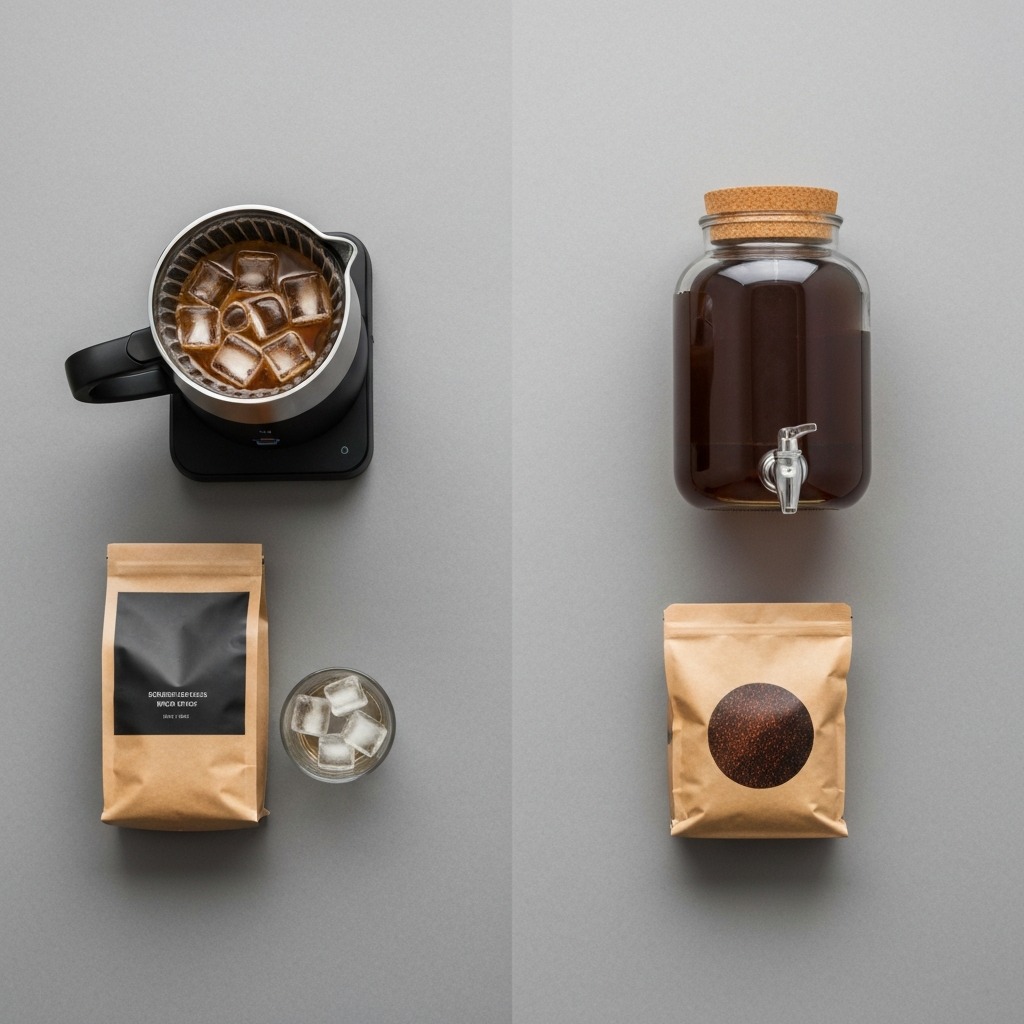
- Cold Brew Concentrate vs Ready-to-Drink
- Which One Is Right for You?
- Frequently Asked Questions
The Short Answer: Two Different Brewing Methods
Iced coffee is hot coffee (brewed any way you like — drip, espresso, pour-over) that is cooled and served over ice. Cold brew is coffee steeped in cold or room-temperature water for 12–24 hours, never heated. Same ingredient (coffee + water), completely different process, completely different result.
This distinction matters because the temperature of water used to extract coffee fundamentally changes the compounds that end up in your cup — the acids, the aromatics, the bitterness, the sweetness.
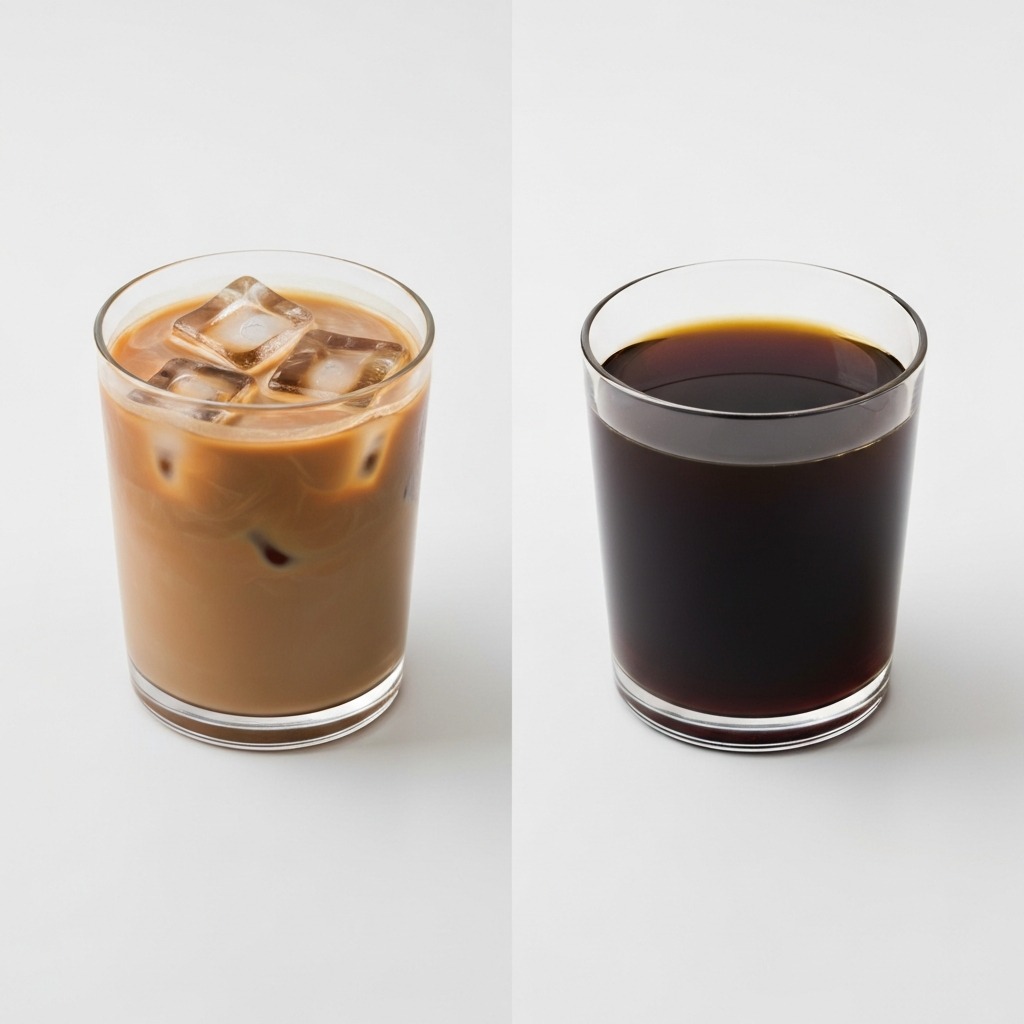
What Is Iced Coffee?
Iced coffee is exactly what it sounds like: coffee that's brewed hot and then chilled. The most common methods:
- Drip-brewed iced coffee: Brew a standard pot of coffee (using slightly more grounds than normal to account for ice dilution), let it cool, then pour over ice.
- Espresso-based iced coffee: Pull one or two shots of espresso, pour immediately over ice, add milk or water. This is the base for iced lattes and iced Americanos.
- Japanese iced coffee: Brew directly over ice using a pour-over method. The hot coffee is immediately chilled as it drips onto the ice, which preserves volatile aromatics that get lost when coffee cools slowly.
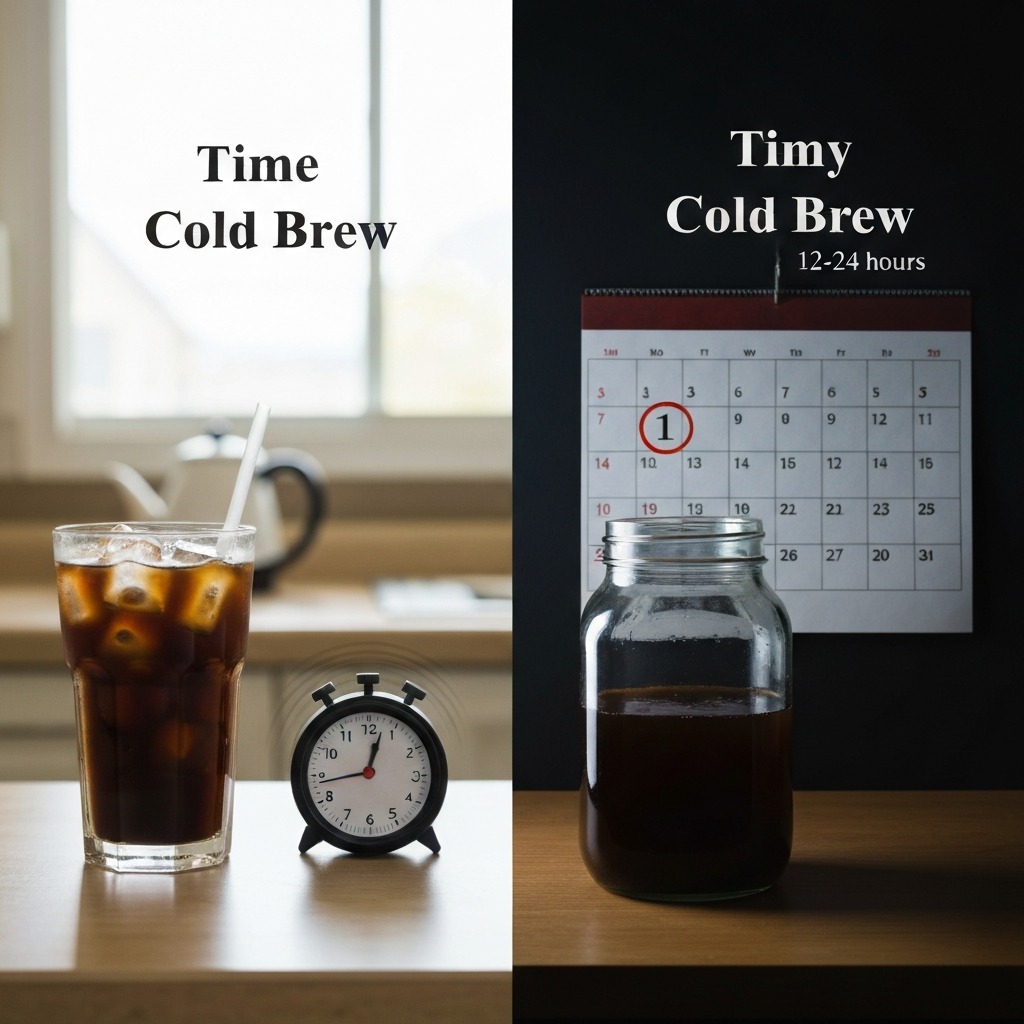
Time to make: 5–10 minutes.
Flavour profile: Retains the brightness, acidity, and aromatic complexity of hot-brewed coffee, but can taste watered-down if the ice melts too quickly without a strong enough brew.
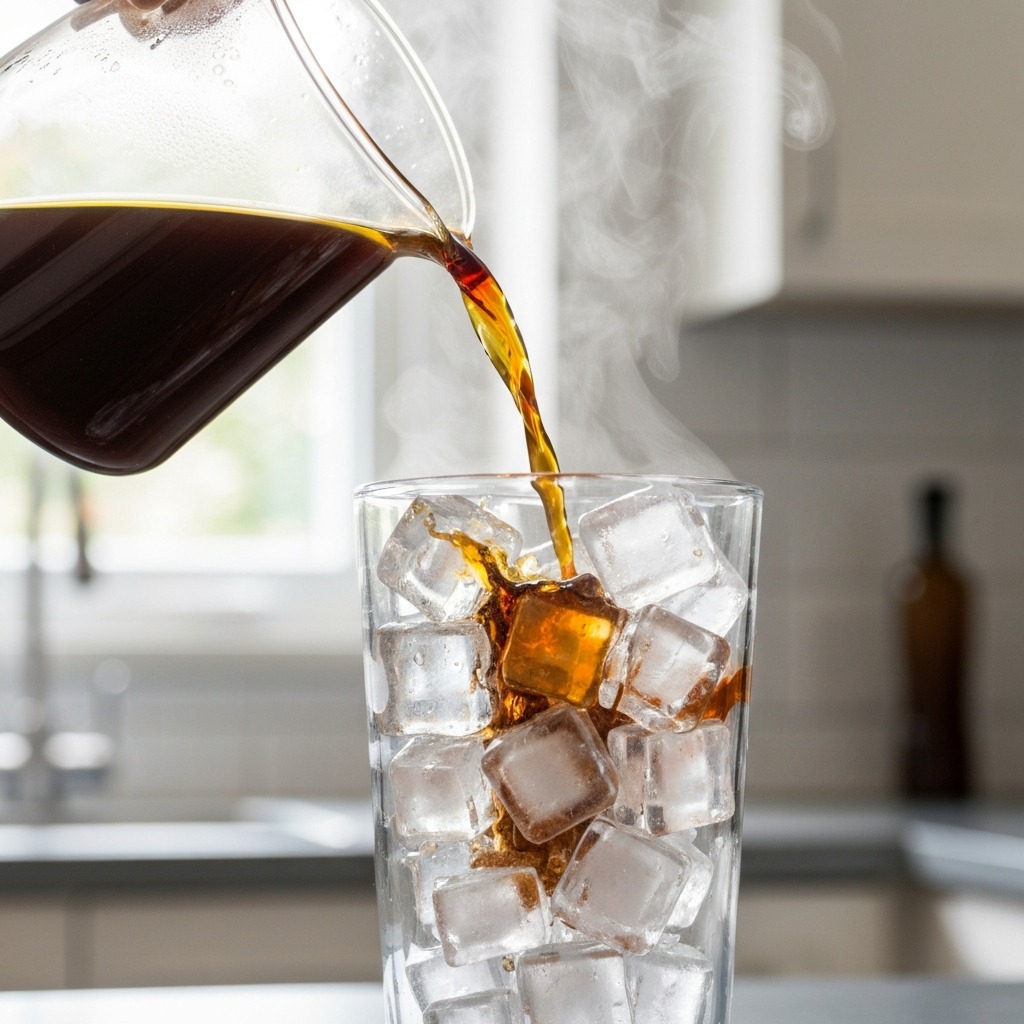
What Is Cold Brew?
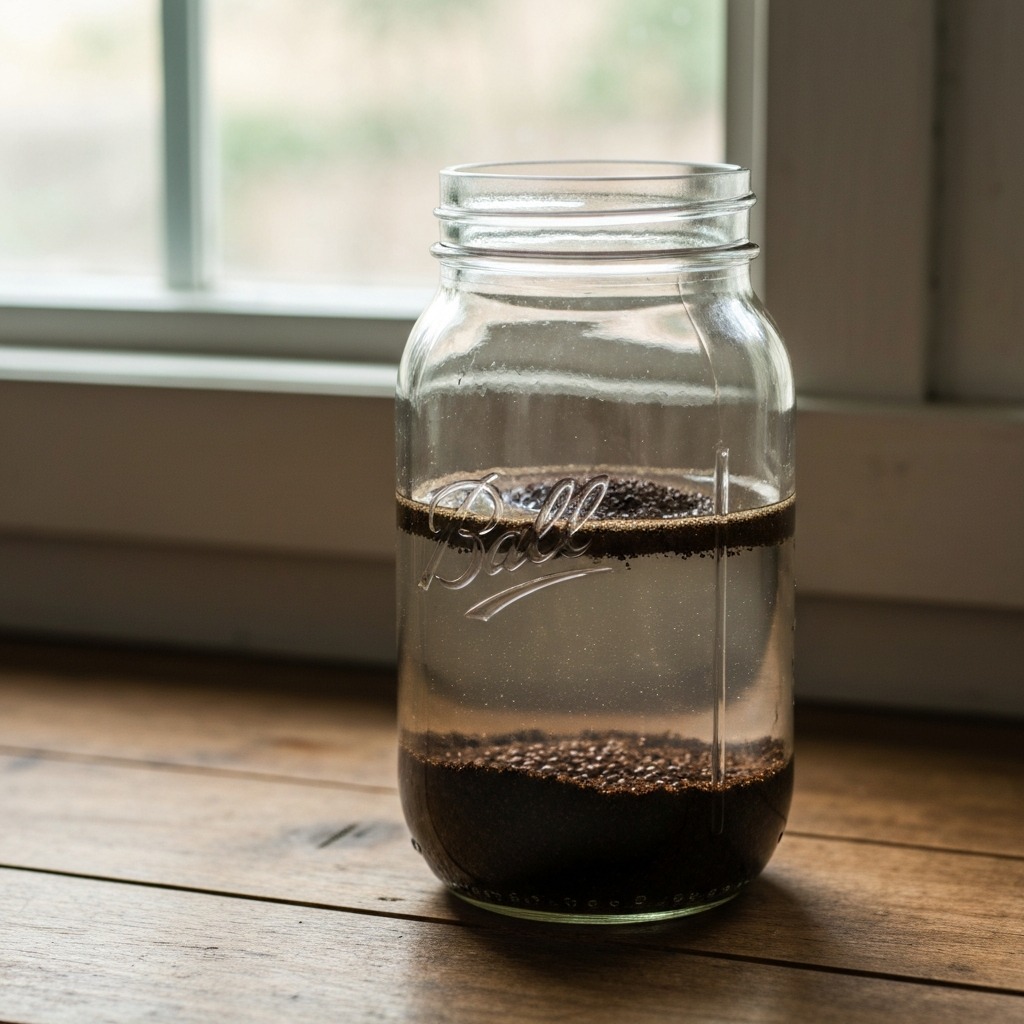
Cold brew is made by combining coarsely ground coffee with cold or room-temperature water and leaving it to steep for an extended period — typically 12 to 24 hours in the fridge. The cold water slowly extracts from the coffee grounds, but because of the lower temperature, the extraction process is slower and fundamentally different from hot brewing.
Time to make: 12–24 hours (mostly passive).
No heat is used at any stage. This is cold brew's defining characteristic.
The result is a coffee concentrate (when made with a 1:4 or 1:5 ratio) or a ready-to-drink brew (at 1:8 ratio) that is:
- Noticeably smoother and less acidic than hot-brewed coffee
- Naturally sweeter in flavour
- Less aromatic (fewer volatile compounds extracted)
- Higher in caffeine per fluid ounce when served as concentrate
Cold brew can be made in a standard jar with a mesh strainer, or with purpose-built cold brew makers. Commercial cold brew is also widely available, though making it at home is significantly cheaper.
Cold Brew vs Iced Coffee: A Direct Comparison
| Feature | Cold Brew | Iced Coffee |
|---|---|---|
| Brewing method | Cold water, long steep (12–24h) | Hot brewed, then chilled |
| Time to prepare | 12–24 hours | 5–10 minutes |
| Acidity | Low | Higher (similar to hot coffee) |
| Sweetness | Naturally sweeter | Can taste sharper/brighter |
| Caffeine | Higher per oz (concentrate) | Standard per oz |
| Aroma | Muted | More complex aromatics |
| Cost | Cheap to make at home | Cheap to make at home |
| Shelf life | Up to 2 weeks (concentrate) | Best same-day |
| Equipment needed | Jar + strainer | Coffee maker or espresso machine |
Taste Differences: What to Expect
This is where the real difference lies, and where personal preference takes over.
Cold Brew Tastes Like...
Cold brew is smooth. It has a chocolatey, rounded, slightly sweet flavour even without added sugar. The absence of heat means that the bitter and acidic compounds that characterise hot coffee are largely absent. Some people describe it as "coffee-flavoured chocolate milk" — and they're not wrong if you've added milk.
Cold brew also has a slightly muted aroma compared to hot coffee. The volatile compounds responsible for coffee's classic smell are aromatics that evaporate or don't extract efficiently in cold water. You get flavour, not fragrance.
Iced Coffee Tastes Like...
Iced coffee, especially espresso-based, retains all the aromatic complexity of hot coffee. You get the bright acidity, the fruity notes (in lighter roasts), the caramel sweetness (in medium roasts), and the full range of what your coffee bean and brewing method produces.
The challenge with iced coffee is dilution. As ice melts, it waters down the drink. The fix is straightforward: brew stronger than usual, use large ice cubes (which melt more slowly), or — the best solution — brew using the Japanese method directly onto ice.
Which Tastes Better?
Neither is objectively better. If you prefer smooth, low-acid, sweet coffee: cold brew. If you prefer bright, aromatic, complex coffee: iced coffee. Many coffee drinkers keep both in their repertoire depending on mood.
[INTERNAL LINK: anchor text "how to choose coffee beans for cold brew" -> guide on coffee bean selection for different brewing methods]

Caffeine Content: Which Has More?
The answer is nuanced.
Cold brew concentrate (made at 1:4 ratio) contains approximately 2–3x the caffeine of regular hot-brewed coffee per fluid ounce. If you drink it undiluted (which most people don't), it's significantly stronger.
When diluted for drinking (typically 1:1 with water or milk), cold brew often ends up with a similar or moderately higher caffeine content than a standard cup of drip coffee.
Iced coffee based on a double espresso shot contains approximately 120–140mg of caffeine. Drip-based iced coffee varies based on how much coffee was used.
Practical answer: If you're caffeine-sensitive, pay attention to your cold brew dilution ratio. A splash of cold brew concentrate over a full glass of milk is mild. A half-glass of concentrate over ice is intense.
🎬 Video Reference Suggestion: "How Much Caffeine Is in Cold Brew? Concentrate vs Diluted Explained" — a 3-minute explainer comparing caffeine in cold brew, iced coffee, espresso, and regular drip.
Acidity: Cold Brew Wins for Sensitive Stomachs
One of cold brew's most well-documented properties is its low acidity. Research suggests cold brew coffee has a pH of around 6.3 compared to approximately 5.5 for hot-brewed coffee.
This matters for:
- People with acid reflux or GERD who love coffee but suffer from heartburn
- Anyone with a sensitive stomach who finds hot coffee harsh
- People with tooth enamel sensitivity (coffee acidity can erode enamel over time)
If you love coffee but your stomach doesn't love you back, cold brew is worth trying. Many people who thought they couldn't drink coffee find cold brew sits comfortably.
[INTERNAL LINK: anchor text "best coffee for acid reflux" -> guide to low-acid coffee options]
How to Make Iced Coffee at Home
Method 1: Strong Drip Iced Coffee (Easiest)
- Brew your drip coffee using 1.5x your normal amount of grounds (the extra strength compensates for ice melt)
- Let it cool for 10–15 minutes at room temperature
- Pour over a full glass of ice
- Add milk, cream, or sweetener to taste
- Stir and serve immediately
Method 2: Japanese Iced Coffee (Best Flavour Preservation)
- Fill your glass or carafe with ice (use the ice as part of your total water measurement)
- Set up your pour-over or drip maker to brew directly onto the ice
- Use a 1:15 coffee-to-total-water ratio (counting ice as ~75% water)
- Brew hot water through the coffee and straight onto ice
- Serve immediately — aromatics are preserved by rapid chilling
Method 3: Espresso Iced Coffee
- Pull a double shot of espresso (60ml)
- Fill a large glass with ice
- Pour the hot espresso over the ice
- Add cold milk, cream, oat milk, or water to taste
- Optional: add sweetener while espresso is still warm
How to Make Cold Brew at Home
Cold brew is remarkably simple to make at home and costs a fraction of café prices.
What You Need
- Coarsely ground coffee (similar to French press grind)
- Cold filtered water
- A large glass jar (1L or larger)
- A fine mesh strainer, cheesecloth, or cold brew filter bag
The Basic Recipe
Ratio: 1 cup (100g) of coarsely ground coffee to 4 cups (950ml) of cold water for concentrate, or 8 cups for ready-to-drink strength.
- Add ground coffee to your jar
- Pour cold filtered water over the grounds
- Stir gently to ensure all grounds are wet
- Cover and refrigerate for 14–20 hours (start with 16 hours)
- Strain through a fine mesh strainer lined with a coffee filter or cheesecloth
- Store concentrate in a sealed glass jar in the fridge — use within 2 weeks
- Dilute 1:1 with cold water, milk, or plant milk before serving
Tweaking Your Cold Brew
- Shorter steep (12h): Lighter, less intense, lower caffeine
- Longer steep (20–24h): More intense, slightly more bitter, higher caffeine
- Coarser grind: Slower extraction, less bitterness
- Room temperature steeping: Faster extraction (8–12 hours), slightly different flavour profile
[INTERNAL LINK: anchor text "best coffee to water ratio for cold brew" -> article on cold brew ratios and techniques]
Cold Brew Concentrate vs Ready-to-Drink
When you make cold brew at home or buy it commercially, you'll encounter two forms:
Concentrate (typically 1:4 ratio):
- Strong, meant to be diluted before drinking
- More economical (makes more drinks per batch)
- Often labelled "2x" or "concentrated"
- Dilute 1:1 with water or milk to drink
Ready-to-Drink (typically 1:8 ratio):
- Brewed weaker, drunk straight over ice
- Convenient, no diluting required
- More common in commercial bottled cold brews
If you're making cold brew at home, starting with a concentrate ratio gives you more flexibility — you can adjust strength on-the-fly by varying your dilution.
Which One Is Right for You?
Choose cold brew if:
- You have acid reflux or a sensitive stomach
- You prefer smooth, sweet, chocolatey coffee flavour
- You want to batch-make coffee for the week
- You're making coffee drinks for guests (concentrate is easy to scale)
- You don't mind the 12–24 hour prep time
Choose iced coffee if:
- You want coffee now, not tomorrow
- You love the full aromatic complexity of hot-brewed coffee
- You prefer bright, acidic, fruity coffee flavours
- You already have an espresso machine or pour-over setup
- You want to replicate café iced lattes at home
Or make both: Cold brew concentrate keeps for 2 weeks. Keep a jar in the fridge for weekdays, and make fresh iced coffee when you want something more aromatic on weekends.

Frequently Asked Questions
Is cold brew stronger than iced coffee? Cold brew concentrate is typically 2–3x stronger in caffeine than regular brewed coffee before dilution. When diluted for drinking, cold brew usually has a similar or slightly higher caffeine content than iced coffee made with espresso or drip coffee.
Is cold brew less acidic than iced coffee? Yes. Cold brew coffee is generally 60–70% less acidic than hot-brewed coffee, including iced coffee made from cooled hot brew. The cold water extraction process extracts fewer acidic compounds from the coffee grounds.
How long does cold brew last in the fridge? Undiluted cold brew concentrate can last up to 2 weeks in the fridge in an airtight container. Diluted cold brew should be consumed within 3–5 days for best quality.
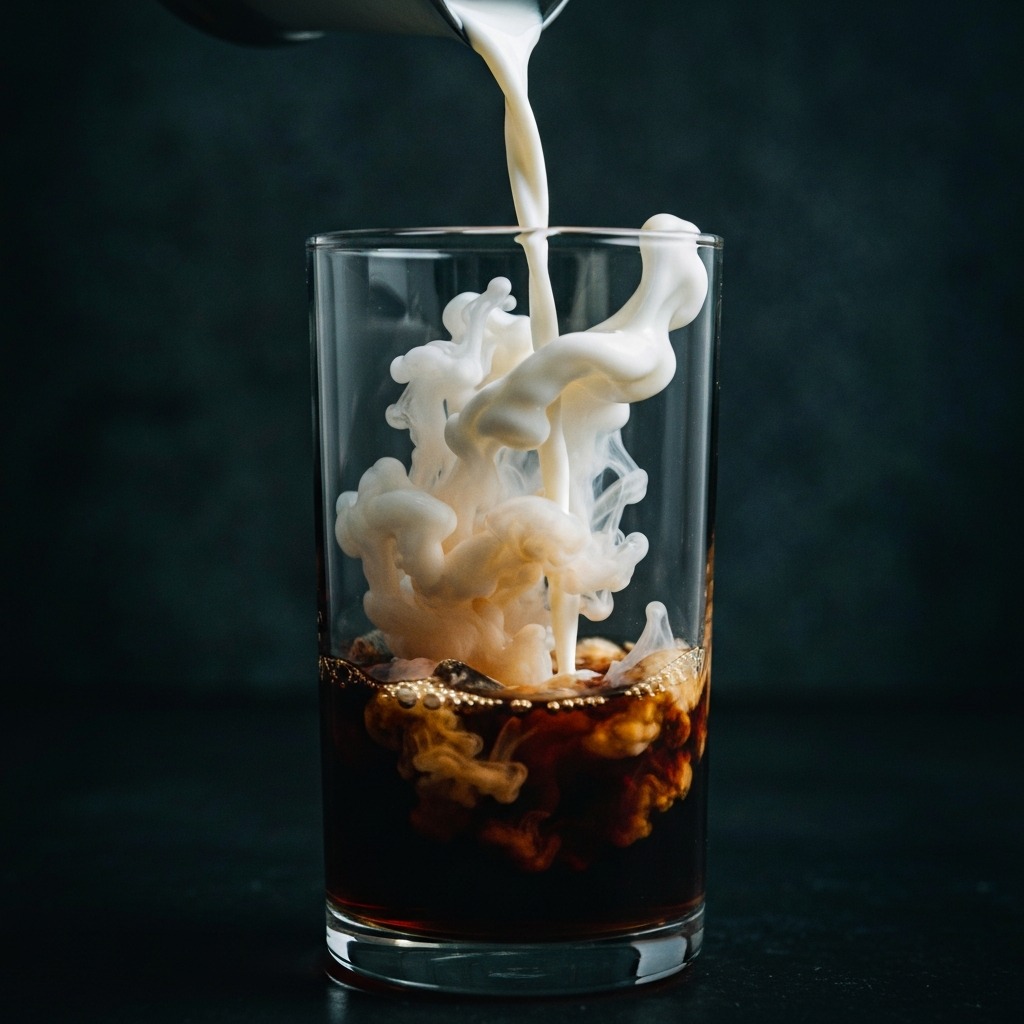
Can you make iced coffee with cold brew? Absolutely. Cold brew poured over ice is one of the most popular ways to serve it. You can also use cold brew as the base for iced lattes, iced vanilla coffees, or any cold coffee drink.
What coffee grounds are best for cold brew? Coarsely ground coffee is best for cold brew. Fine grounds over-extract during the long steep, producing bitterness. A coarse grind with a medium or dark roast produces the smoothest result.
What is the easiest way to make iced coffee at home? Brew a strong cup of coffee (use double the grounds you normally would), let it cool for 10–15 minutes, then pour over a glass full of ice. Add milk, cream, or sweetener to taste.
Both cold brew and iced coffee deserve a place in your coffee repertoire. Start with cold brew if you're new to either — the forgiving preparation and smooth result make it an excellent beginner project.
[INTERNAL LINK: anchor text "best home coffee equipment for beginners" -> beginner home coffee setup guide] [INTERNAL LINK: anchor text "French press vs pour-over for iced coffee" -> comparison article on brewing methods]