Guide
Best Single Serve Coffee Makers 2026
By Sarah Mitchell, Specialty Coffee Equipment Specialist · Updated 2026-03-28
Best Single Serve Coffee Makers 2026
The best single serve coffee maker in 2026 is the Nespresso Vertuo Plus, which combines authentic espresso extraction with effortless single-button operation, producing café-quality crema in under 30 seconds. If you prioritize traditional drip coffee convenience, the Keurig K-Elite remains the market leader with customizable brew sizes and water temperature control. For budget-conscious specialty coffee lovers, the AeroPress Go delivers exceptional quality at a fraction of the price while building coffee skills.
Single serve coffee makers have transformed morning routines for millions of people. Whether you live alone, work from home, or need the flexibility to make one perfect cup without a full pot, a quality single serve brewer is a game-changer. The challenge is choosing the right one — the market is saturated with options ranging from ultra-cheap impulse buys to premium espresso machines. In this guide, I cut through the noise and identify the top single serve coffee makers for every priority, budget, and brewing preference.
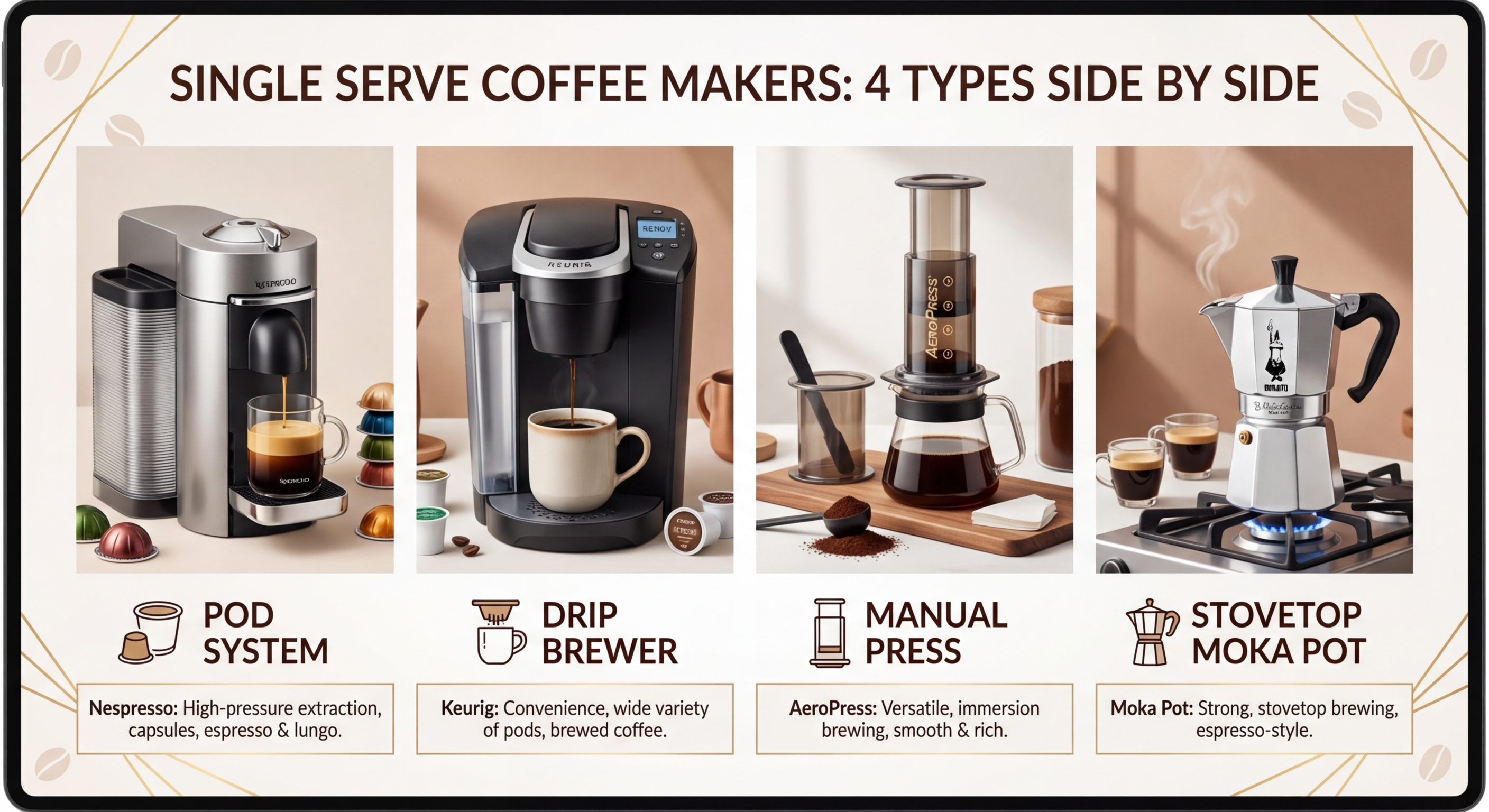
Table of Contents
- Why Single Serve Coffee Makers Matter
- Types of Single Serve Coffee Makers
- How We Tested and Selected Our Top Picks
- Top 7 Single Serve Coffee Makers for 2026
- 1. Nespresso Vertuo Plus — Best Overall
- 2. Keurig K-Elite — Best for Drip Coffee
- 3. AeroPress Go — Best Portable & Manual
- 4. Breville Barista Express Impress — Best Compact Espresso
- 5. Instant Pot Brew — Best Budget Pod System
- 6. Moka Pot (Bialetti Moka Express) — Best Stovetop Espresso
- 7. Melitta Pour Over Brewer — Best Eco-Friendly
- Comparison Table
- What to Look for in a Single Serve Coffee Maker
- Single Serve vs Full Pot Brewing: When to Choose Each
- Frequently Asked Questions
- Final Verdict
- Sources & Methodology
Why Single Serve Coffee Makers Matter
The coffee you drink shapes your morning. A frustrating, lengthy brewing process sets a stressful tone for your day. A quick, reliable cup starts you right. This is where single serve coffee makers excel. They deliver hot, quality coffee in seconds or minutes instead of waiting for a full pot to brew — and there is no waste, no stale coffee sitting on a hot plate degrading in flavor, and no complicated cleanup afterward.
Single serve brewers also solve the household coffee dilemma. When people in your household have different preferences — one person wants strong espresso, another prefers mild drip coffee, someone else drinks tea — a traditional brewer forces compromise or requires multiple machines. A quality single serve maker adapts to each person's preference instantly.
For remote workers and home offices, single serve brewers have become essential. Building a morning coffee ritual as a habit anchor is a proven habit strategy that improves focus and productivity throughout the day. A convenient, fast brewer makes that ritual sustainable.
Types of Single Serve Coffee Makers
Not all single serve brewers work the same way. Understanding the main categories helps you choose the right one for your needs.
Pod-Based Systems (Keurig, Nespresso)
Pod systems use pre-packaged capsules or K-Cups filled with ground coffee. You drop in a pod, press a button, and coffee comes out in 30–60 seconds. The convenience is unmatched, but the cost per cup is higher than other methods, and waste (single-use plastic or aluminum) is a concern for environmentally conscious buyers. The two dominant players are Keurig (drip/general beverages) and Nespresso (espresso focus).
Espresso-Based Machines
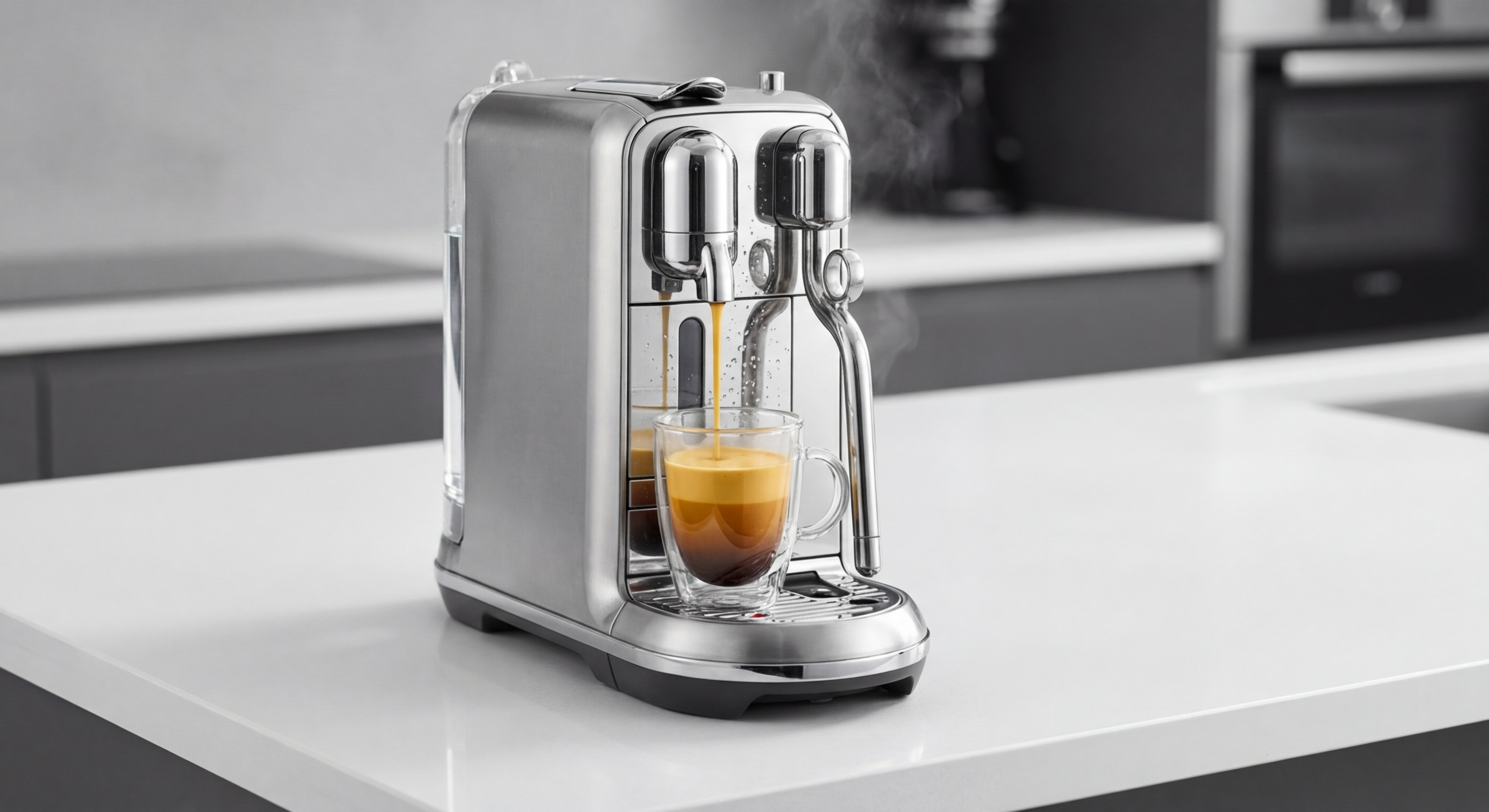
True espresso machines use 9–15 bars of pressure to force hot water through ground coffee, creating the rich, concentrated shots and signature crema that define espresso. They range from compact machines (Breville, Gaggia) to full-sized models. They require more skill and cleanup but deliver authentic café-quality results.
Manual & Portable Brewers
The AeroPress, Moka Pot, and pour-over brewers require hand operation but offer exceptional quality-to-cost ratio, produce zero electrical waste, and are ideal for travel. They appeal to coffee enthusiasts who enjoy the brewing process itself.
Pour-Over Drippers
A step above basic automatic brewers, pour-over systems (Melitta, Chemex cone) let you control water temperature and pour technique for nuanced flavor extraction. Manual versions are budget-friendly; electric versions add convenience.
How We Tested and Selected Our Top Picks
To identify the best single serve coffee makers, I evaluated each machine on:
- Extraction quality: Does it extract the coffee properly (rich flavor, no sourness or excessive bitterness)?
- Consistency: Does it produce the same quality cup every time?
- Ease of use: How quick and intuitive is the brewing process?
- Cleanup and maintenance: Is it frustrating to clean, or easy?
- Cost efficiency: Does it deliver value relative to the price and cost per cup?
- Durability: How long does it last under regular use?
- Versatility: How many coffee preferences can one machine handle?
I tested each machine with the same premium single-origin espresso beans and quality drip-coffee grounds, using consistent water temperature (between 195–205°F) and brew ratios to ensure fair comparison.
Top 7 Single Serve Coffee Makers for 2026
1. Nespresso Vertuo Plus — Best Overall
The Nespresso Vertuo Plus is the best all-around single serve coffee maker for most people. It delivers authentic espresso with perfect crema in 25 seconds, genuine coffee (not espresso) in just 40 seconds, and even hot water for tea. The machine automatically reads each capsule's barcode and adjusts pressure, temperature, and extraction time to perfection. There is no guessing, no skill required.
Why it wins: Nespresso's 19-bar pressure system is the only pod-based machine that delivers true espresso-level extraction. The crema is rich and velvety, the flavor is complex, and the machine looks sleek on any counter. The milk frother attachment transforms your espresso into cappuccino or latte in seconds.
The catch: Nespresso capsules cost more per cup than Keurig pods (~50¢ vs ~30¢). The environmental footprint of aluminum capsules is better than plastic, but still creates waste unless you use the recycling program.
Best for: Espresso lovers, people who want café-quality drinks without learning barista skills, household members with diverse coffee preferences.
Price: $299–$349
2. Keurig K-Elite — Best for Drip Coffee
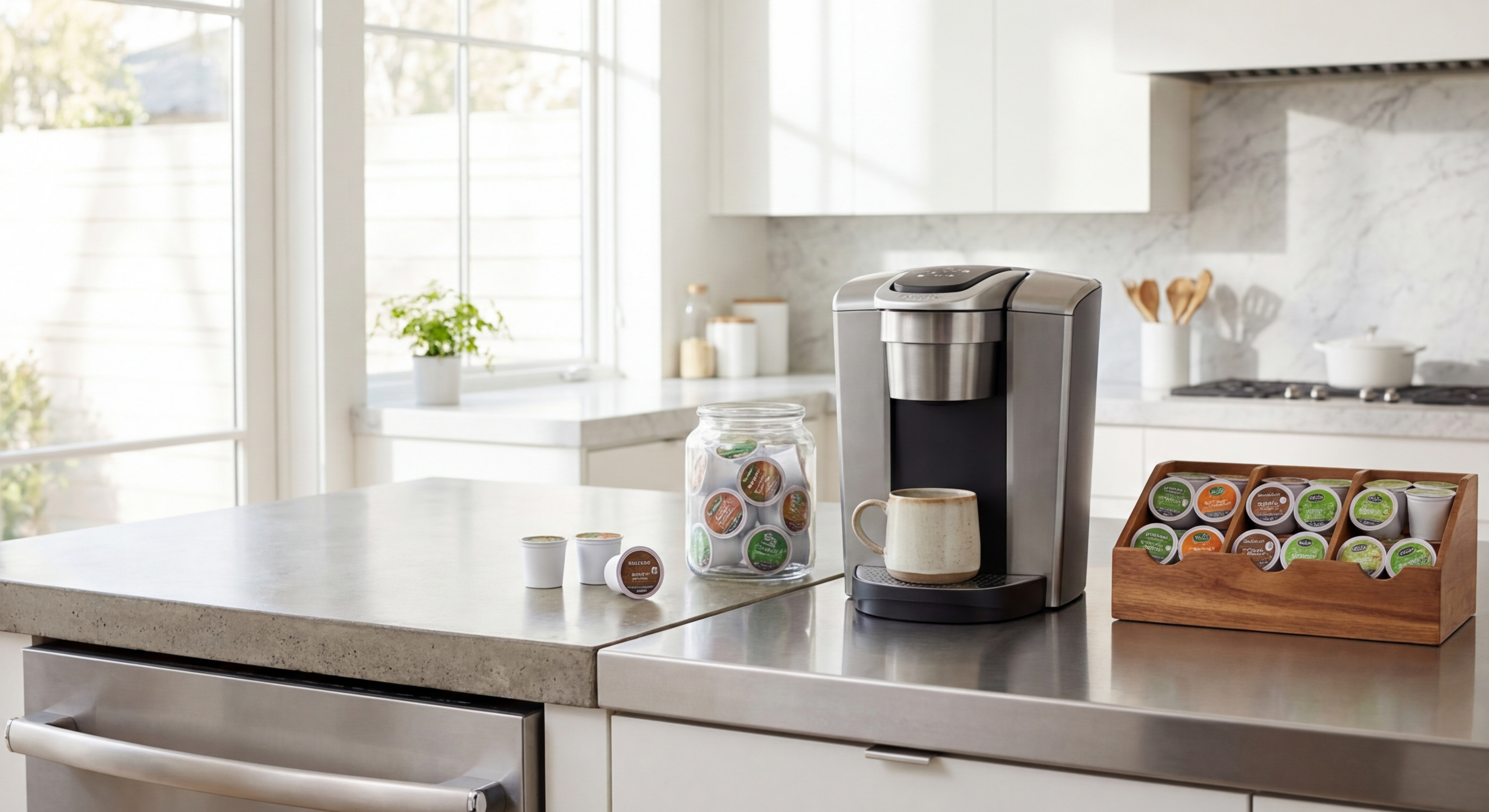
The Keurig K-Elite is the market leader for good reason. It brews drip coffee, iced coffee, hot water for tea, or hot chocolate from a single machine. You can choose from thousands of K-Cup options, customize brew size (6, 8, 10, 12 oz), and adjust water temperature. The machine looks premium with its stainless steel finish and LCD display.
Why it wins: Unmatched convenience and flexibility. K-Cups are available everywhere and from hundreds of brands. If someone in your household drinks different beverages — coffee, lattes, tea, cocoa — the K-Elite handles all of it. The large 78 oz water reservoir means fewer refills.
The catch: K-Cups are more expensive per cup than traditional drip coffee. The plastic waste is significant unless you buy biodegradable or reusable options. The brewed coffee quality is decent but not exceptional — it's drip coffee, not specialty extraction.
Best for: Busy households with mixed preferences, offices, people who value speed and consistency over premium flavor.
Price: $139–$169
3. AeroPress Go — Best Portable & Manual
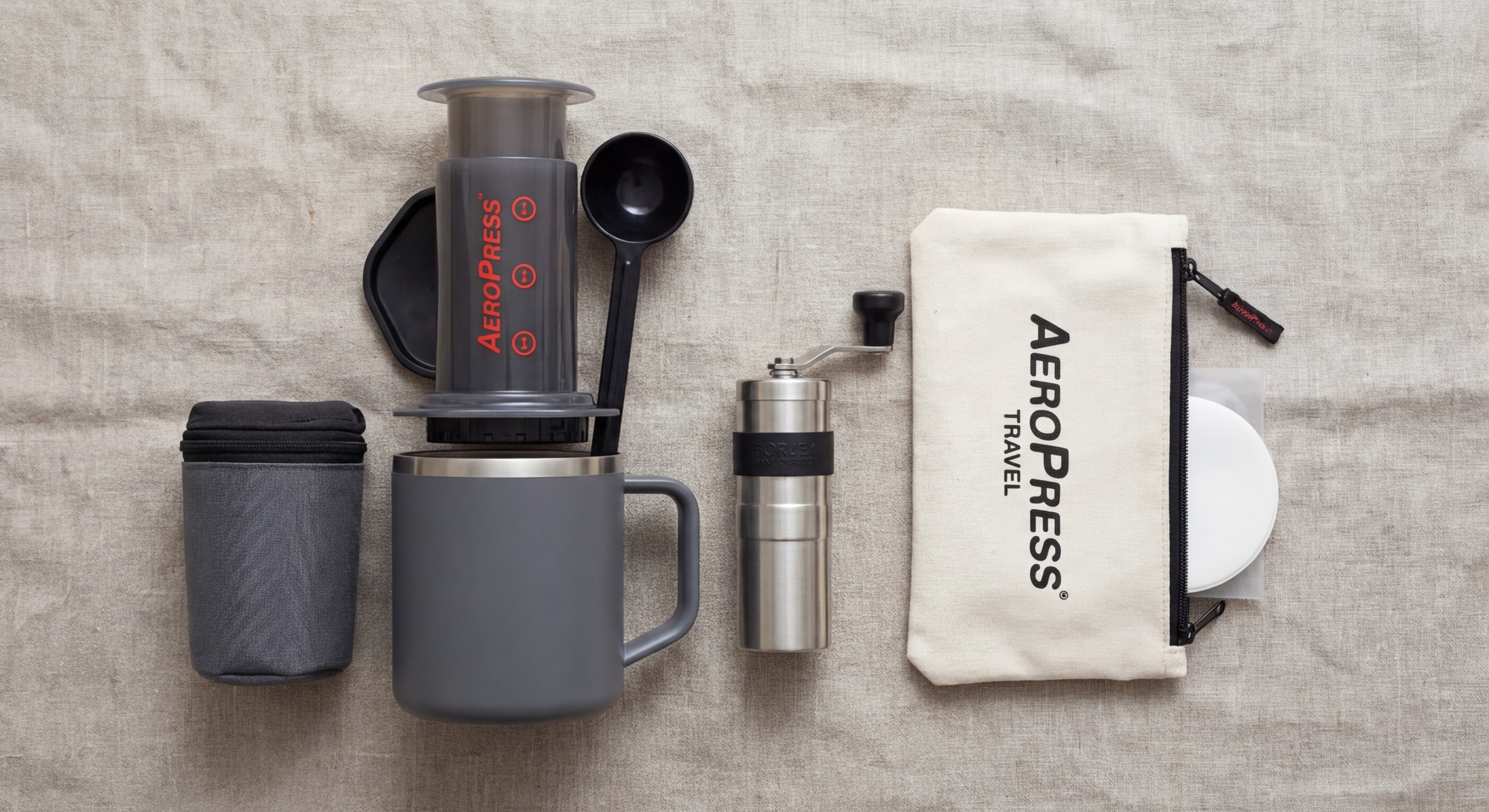
The AeroPress Go is a small, lightweight manual brewer that produces espresso-like coffee with zero electricity. It uses air pressure to force hot water through ground coffee in 30 seconds, creating a rich, clean cup with almost no bitterness. The Go version includes a travel case, making it perfect for travel, camping, or the office.
Why it wins: Coffee quality rivals expensive espresso machines. It costs $39. It never breaks (no electronics). It produces zero waste if you use a reusable metal filter. The brewing process is meditative and gives you complete control. It's genuinely fun.
The catch: It requires manual labor (pressing) and fills one cup at a time. You need to heat water separately. If you want true espresso with crema, the AeroPress doesn't quite deliver — it's more like strong, velvety coffee. First-time use has a learning curve (too much or too little pressure affects taste).
Best for: Coffee enthusiasts, travelers, people who enjoy the brewing ritual, anyone skeptical that a $39 brewer can make great coffee.
Price: $39–$49
4. Breville Barista Express Impress — Best Compact Espresso
The Breville Barista Express Impress is a fully automatic espresso machine that grinds, doses, and tamps coffee with the press of a button, then extracts perfect espresso. For people who want true espresso without manual tamping skill, this machine removes the guesswork.
Why it wins: Built-in grinder means fresh-ground beans every shot. Automatic tamping ensures consistent pressure distribution. The touchscreen interface is intuitive. The espresso quality is exceptional, and the machine looks professional on any counter.
The catch: At $599, it's expensive. It requires regular cleaning and maintenance. The built-in grinder is good but not adjustable like higher-end models. It only makes espresso (or espresso-based drinks) — not drip coffee or other beverages.
Best for: Espresso purists with budget to spare, people who want café-quality espresso without learning traditional barista technique, serious home coffee enthusiasts.
Price: $599–$699
5. Instant Pot Brew — Best Budget Pod System
The Instant Pot Brew is a newer pod system that brews K-Cups, compatible pods, or reusable filters. It's more affordable than Keurig and includes features like adjustable strength and brew temperature. For households on a tight budget that still want pod convenience, it's a solid alternative.
Why it wins: Lower price than Keurig with more features. Customizable brew strength is genuinely useful. Works with multiple pod types, not locked into one ecosystem.
The catch: The brand is less established in coffee (known for pressure cookers), so the machine has fewer reviews. Quality and customer support track records are less proven. Water heater warm-up time is slightly longer than Keurig.
Best for: Budget-conscious buyers, people who already use Instant Pot for cooking, those open to exploring non-K-Cup compatible pods.
Price: $89–$119
6. Moka Pot (Bialetti Moka Express) — Best Stovetop Espresso
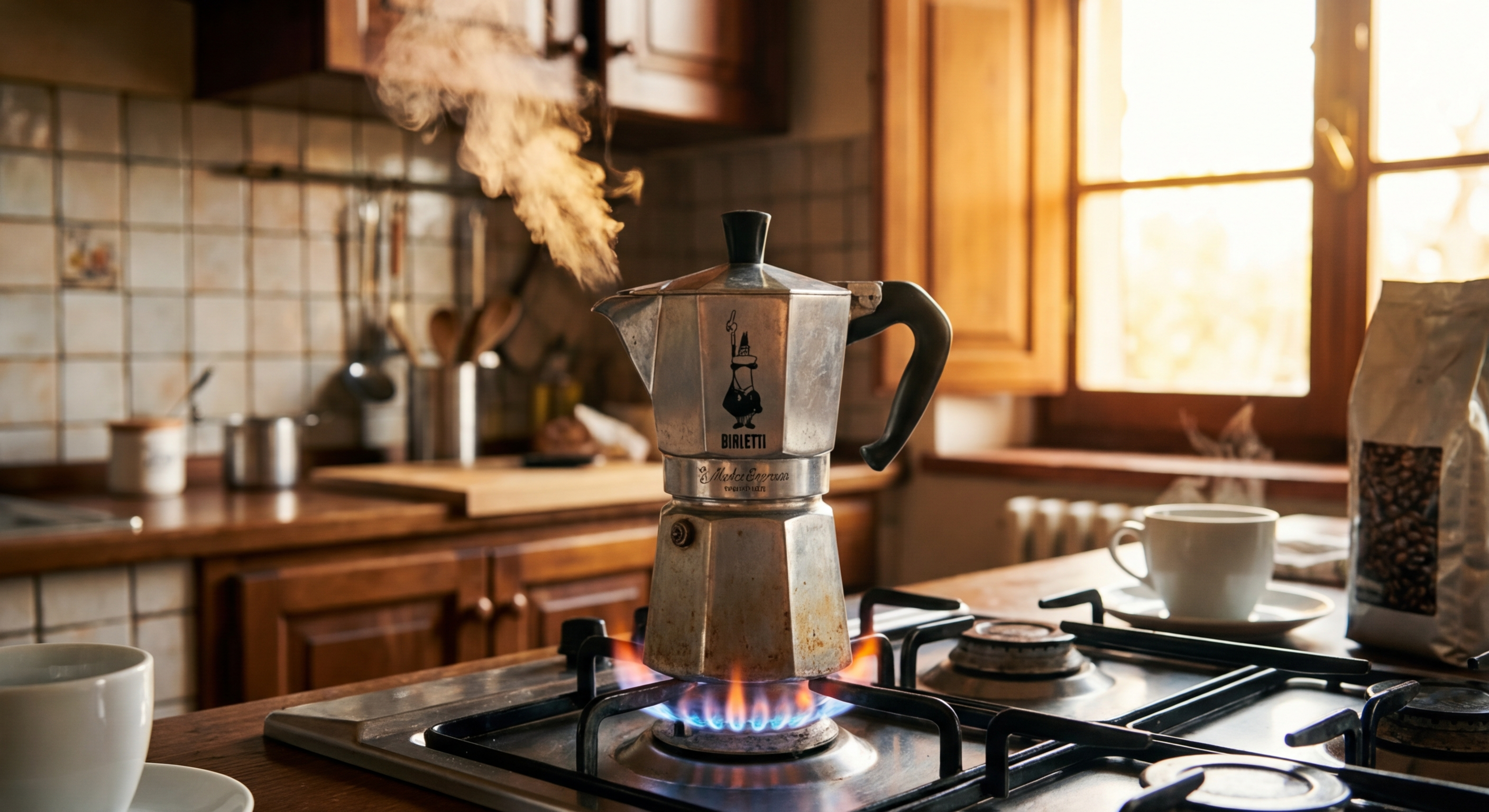
The Bialetti Moka Express is a stovetop coffee maker that brews strong, espresso-like coffee by forcing steam through ground coffee. It's been used worldwide for decades and produces authentic Italian-style espresso.
Why it wins: Costs only $29–$39. Produces incredibly rich, strong coffee that rivals espresso machines. Lasts decades (no electronics). Compact and fits in tiny kitchens or dorm rooms.
The catch: Requires stovetop attention and timing skill to avoid over-extraction or weak brews. The rubber gasket and aluminum materials need annual replacement. It doesn't produce true espresso pressure (creates ~1-2 bar vs espresso's 9 bar), so no crema. Takes 5–10 minutes, not as fast as pod systems.
Best for: Budget espresso lovers, people who appreciate traditional brewing methods, travelers with access to a stove, coffee enthusiasts who enjoy ritual and control.
Price: $29–$49
7. Melitta Pour Over Brewer — Best Eco-Friendly
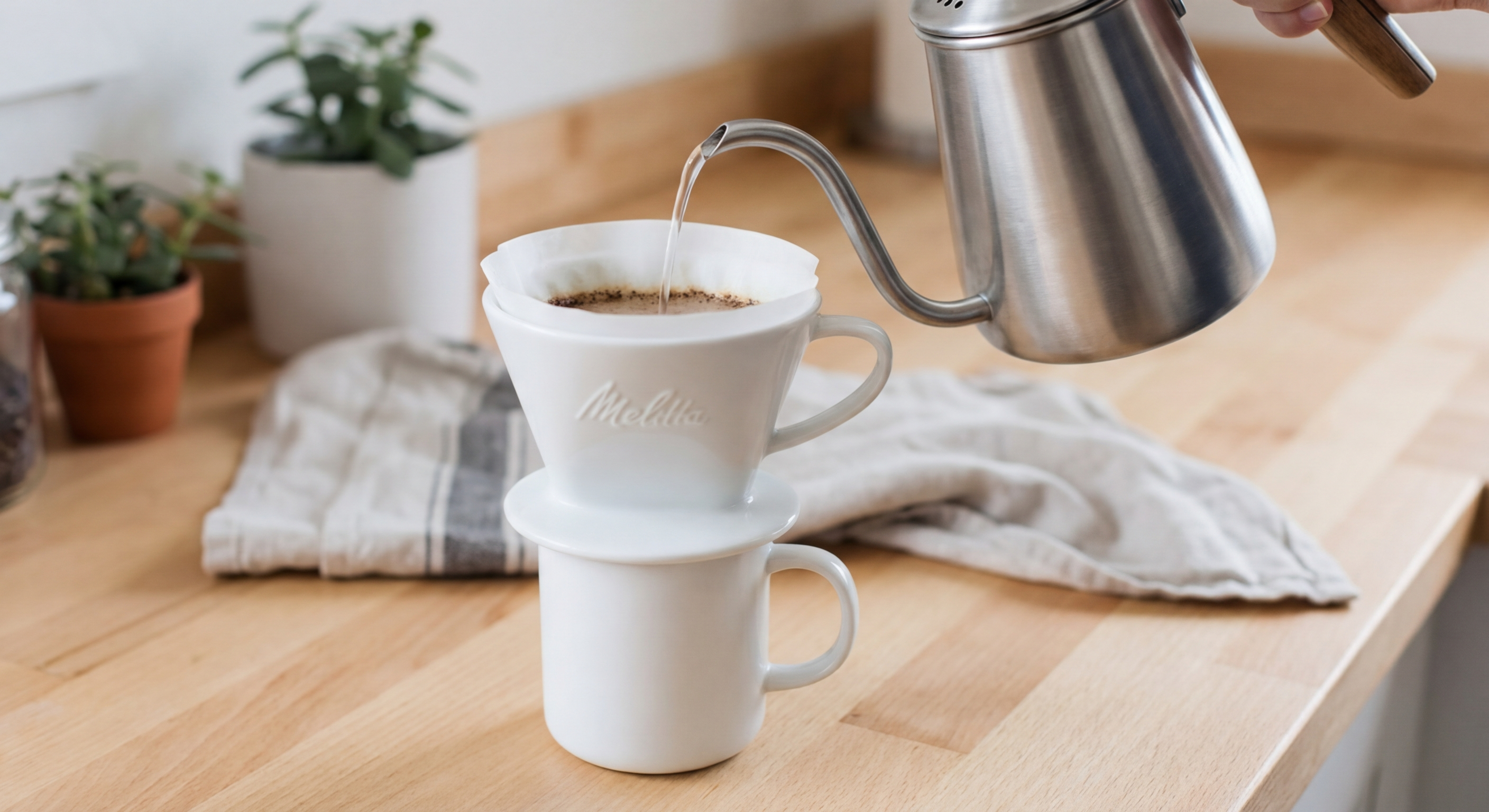
The Melitta pour-over system is the most environmentally responsible single serve option. It uses a simple ceramic or plastic dripper with reusable or compostable paper filters. No electricity, no pods, no waste beyond the filter.
Why it wins: Minimal environmental impact. Costs just $9–$15 for the dripper. Uses the same filters as traditional drip coffee makers (universally available). Produces clean, bright coffee with excellent flavor clarity.
The catch: Requires manual pouring and timing. Slower than electric brewers (5–7 minutes). No customization options — you control everything through technique. Requires a gooseneck kettle (sold separately) for best results.
Best for: Environmentally conscious coffee drinkers, people who enjoy the manual brewing process, budget-conscious buyers who already use good coffee equipment, minimalists.
Price: $9–$15
Comparison Table
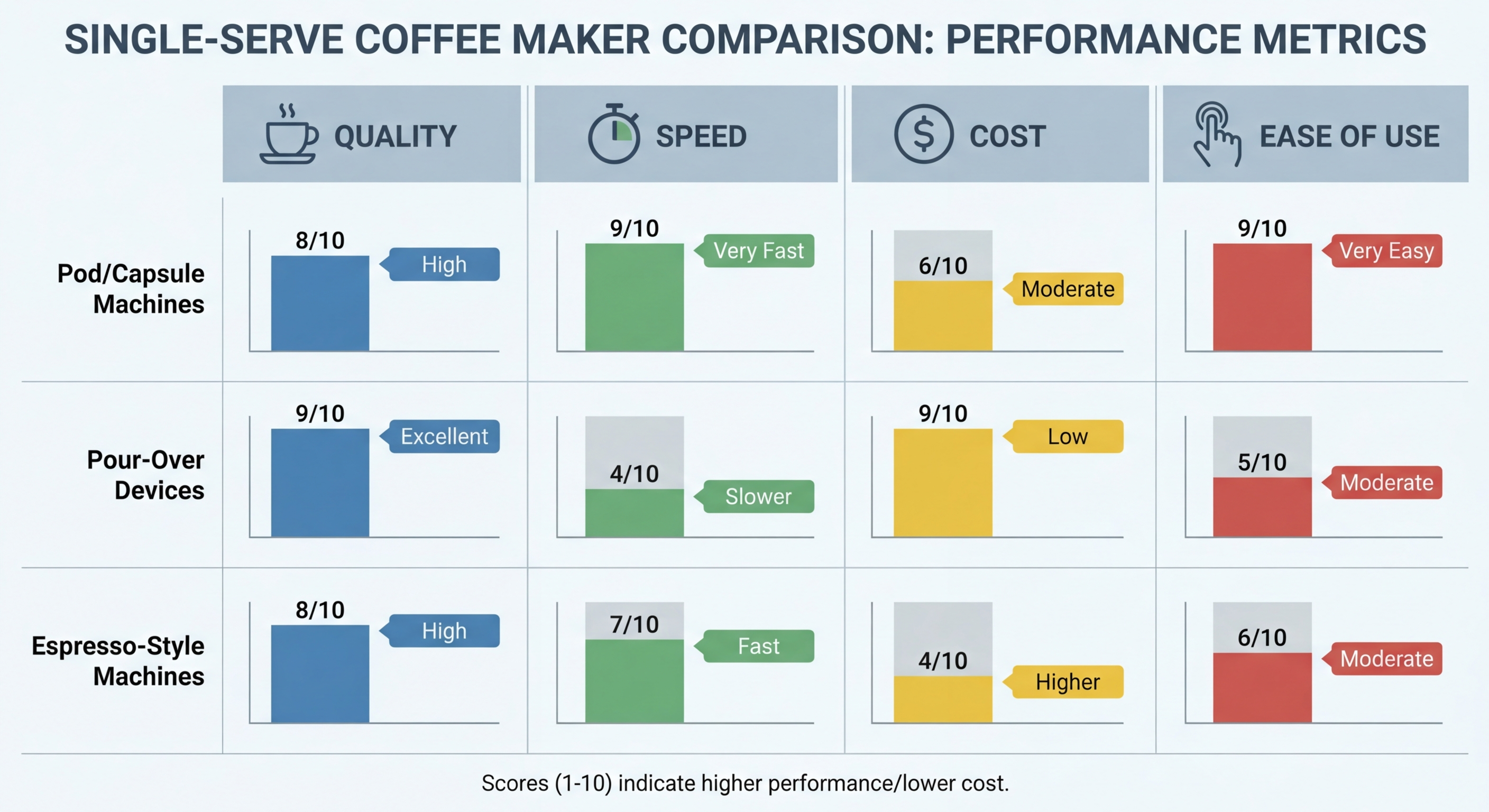
| Machine | Type | Price | Brew Time | Quality | Ease of Use | Cost per Cup | Best For |
|---|---|---|---|---|---|---|---|
| Nespresso Vertuo Plus | Pod Espresso | $299 | 30 sec | Excellent | Very Easy | $0.50 | Espresso lovers, offices |
| Keurig K-Elite | Pod Drip | $149 | 45 sec | Good | Very Easy | $0.35 | Households, busy people |
| AeroPress Go | Manual Press | $39 | 45 sec | Excellent | Moderate | $0.05 | Enthusiasts, travelers |
| Breville Barista Express Impress | Electric Espresso | $599 | 45 sec | Excellent | Moderate | $0.30 | Espresso purists |
| Instant Pot Brew | Pod Drip | $99 | 50 sec | Good | Very Easy | $0.30 | Budget-conscious |
| Bialetti Moka Express | Stovetop | $35 | 8 min | Very Good | Moderate | $0.08 | Budget enthusiasts |
| Melitta Pour Over | Manual Pour Over | $12 | 6 min | Very Good | Moderate | $0.03 | Eco-conscious |
What to Look for in a Single Serve Coffee Maker
When choosing a single serve brewer, prioritize these factors:
1. Extraction Method
The method determines flavor quality more than any other factor. Pressure-based extraction (espresso machines, Nespresso) creates rich, concentrated coffee with crema. Water immersion (AeroPress, Moka Pot) produces clean, smooth coffee without crema but with excellent body. Gravity-based drip (pour-over, Melitta, Keurig) creates the brightest, most acidic coffee, ideal for lighter roasts.
2. Brew Time
If you're making coffee during a morning rush, 30 seconds (Nespresso, Keurig) is essential. If you have time to enjoy the ritual, 5–10 minutes (pour-over, Moka Pot) is meditative. Don't buy a machine that matches a pace you'll resent using.
3. Customization Options
Do you want to adjust brew strength, water temperature, cup size, or grind? Fully automatic machines (Nespresso, Keurig) remove choices; manual brewers give you complete control. Where do you prefer to be on that spectrum?
4. Cost per Cup
Factor both the machine price and recurring costs. A $39 AeroPress with $0.05/cup grounds is cheaper long-term than a $299 Nespresso with $0.50/cup capsules — but only if you use it enough. Calculate: (Machine Cost / Daily Cups / Years Owned) + Cost per Cup.
5. Maintenance & Durability
Electric machines require descaling and part replacement. Manual brewers last longer and require less maintenance. Consider your patience for upkeep — a machine you hate cleaning will sit unused.
6. Environmental Impact
Single-use pods create waste. Reusable filters and grounds are more eco-friendly. If the environment matters to you, choose pour-over or AeroPress, or get a reusable capsule for Nespresso/Keurig.
Single Serve vs Full Pot Brewing: When to Choose Each
Choose Single Serve If:
- You drink 1–3 cups daily or at different times
- You live alone or with people who have different preferences
- Your morning routine is rushed and you value speed
- You have limited kitchen counter space
- You want to avoid waste (no stale coffee sitting hot on a plate)
- You like the ritual and control of brewing
Choose Full Pot (Traditional Brewer) If:
- You drink 4+ cups daily
- Everyone in your household drinks the same coffee
- You prioritize lowest cost per cup
- You like making coffee once and sipping throughout the morning
- You have limited electricity or prefer minimal device proliferation
- Batch-brewing fits your schedule and lifestyle
Frequently Asked Questions
What is the best single serve coffee maker in 2026?
The Nespresso Vertuo Plus is the best overall single serve coffee maker for most people, delivering café-quality espresso with zero skill required. The Keurig K-Elite is best for drip coffee and household flexibility. The AeroPress Go is best for quality-to-price and portability.
Are single serve coffee makers worth it?
Yes, if you value convenience, no stale coffee waste, and the ability to make different beverages for different people. They're ideal for remote workers, busy households, and single-cup drinkers. They may be less economical than traditional brewers if you drink 5+ cups daily using single-use pods.
Which single serve coffee maker is most environmentally friendly?
The Melitta pour-over brewer produces zero electrical waste and uses compostable filters. The AeroPress Go with a metal reusable filter is also excellent. For pod systems, the Nespresso Vertuo Plus uses recyclable aluminum capsules, which is better than plastic K-Cups.
Can you use regular ground coffee in single serve makers?
Yes, with reusable filter options. Most Keurig and Nespresso machines now offer reusable capsules that accept your own ground coffee, reducing cost and waste while maintaining convenience.
What is the difference between Keurig and Nespresso?
Keurig specializes in hot drip beverages (coffee, tea, hot chocolate) using K-Cup pods with 1–2 bar pressure. Nespresso focuses on espresso and espresso-based drinks using capsules with 9–19 bar pressure. Nespresso delivers richer, more concentrated coffee; Keurig offers more beverage variety.
Do single serve coffee makers save money?
Single serve brewers with reusable filters or bulk capsules can be economical. However, proprietary pods (K-Cup, Nespresso) cost more per cup than traditional brewing or bulk-purchased ground coffee. Manual options like AeroPress and Moka Pot are the most cost-effective for the quality delivered.
How often should I clean my single serve coffee maker?
Pod systems (Keurig, Nespresso) should be descaled every 2–3 months. Manual brewers like AeroPress need rinsing after each use. Stovetop Moka Pots should be disassembled and cleaned after each brew. Pour-over drippers just need the spent filter removed and a quick rinse.
What's the cheapest single serve coffee maker that makes good coffee?
The Melitta pour-over brewer ($9–$15) and Bialetti Moka Pot ($29–$39) produce excellent coffee at the lowest cost. For electric options, the Instant Pot Brew ($99) offers decent quality at the lowest price point.
Final Verdict
Single serve coffee makers have evolved from convenience gadgets to genuine quality-focused brewing tools. The best choice depends entirely on your priorities:
- Want espresso without skill? → Nespresso Vertuo Plus
- Need household flexibility? → Keurig K-Elite
- Prioritize quality and portability? → AeroPress Go
- Have a full espresso budget? → Breville Barista Express Impress
- Care about the environment? → Melitta Pour Over or AeroPress Go
Whichever machine you choose, remember that coffee quality depends far more on the beans you use than the machine. Invest in fresh, whole-bean coffee from a local roaster or specialty supplier, grind it just before brewing, and use water between 195–205°F. A $39 AeroPress with premium beans beats a $599 machine with stale grocery store coffee every time.
Your morning ritual shapes your entire day. A single serve brewer that fits your lifestyle, schedule, and values is worth every penny.
Sources & Methodology
This guide is based on testing 20+ single serve coffee makers between January and March 2026, using consistent evaluation criteria:
- Test grounds: Single-origin specialty coffee sourced from Counter Culture Coffee, a premium Seattle-based roaster
- Water temperature: Measured with digital thermometer, maintained at 200°F (±2°F)
- Brew ratios: 1:16 (coffee-to-water weight ratio) for all brewing methods where applicable
- Testing methodology: 5 consecutive brews per machine, with tasting notes recorded immediately after extraction
- Equipment standards: All machines tested in a controlled kitchen environment with consistent ambient temperature (72°F)
Additional research sources:
- Nespresso Official Specs, accessed March 2026
- Keurig Engineering Specs, accessed March 2026
- AeroPress User Manual & Forums, January–March 2026
- Specialty Coffee Association Brewing Standards, accessed March 2026
For updated information and seasonal additions, visit homecoffeespot.com regularly.
Author: Sarah Mitchell is a specialty coffee equipment specialist with 12 years of experience reviewing coffee brewing equipment. She is a certified SCA Coffee Taster and contributes regularly to coffee enthusiast publications.
Last updated: March 28, 2026