Guide
Best Coffee Subscription Services (2026)
By Maya Rodriguez, Coffee Industry Specialist · Updated 2026-03-11
The best coffee subscription in 2026 is Trade Coffee for most people — it matches you with over 450 coffees from 55+ roasters based on your taste profile and ships within 48 hours of roasting. For single-origin explorers, Atlas Coffee Club delivers beans from a new country every month, and for espresso lovers, Onyx Coffee Lab's subscription consistently ships competition-grade specialty lots.
By Maya Rodriguez, Coffee Industry Specialist | Last updated March 2026
Affiliate Disclosure: This post contains affiliate links. We may earn a small commission at no extra cost to you if you purchase through our links. This supports our independent testing and does not influence our recommendations.
Table of Contents
- Why a Coffee Subscription Is Worth It in 2026
- How We Tested and Ranked
- Best Coffee Subscriptions Compared
- Detailed Reviews: Top 7 Coffee Subscriptions
- How to Choose the Right Subscription
- Coffee Subscription vs Buying Local: The Freshness Math
- Getting the Most From Your Subscription
- Frequently Asked Questions
- Sources & Methodology
Why a Coffee Subscription Is Worth It in 2026
The specialty coffee subscription market has matured significantly. Services that once shipped stale, over-roasted bags with trendy branding have been replaced — or outcompeted — by roaster-direct models that prioritize freshness, traceability, and genuine variety. Here is why 2026 is the strongest year yet for coffee subscriptions.
Freshness You Cannot Get at the Grocery Store
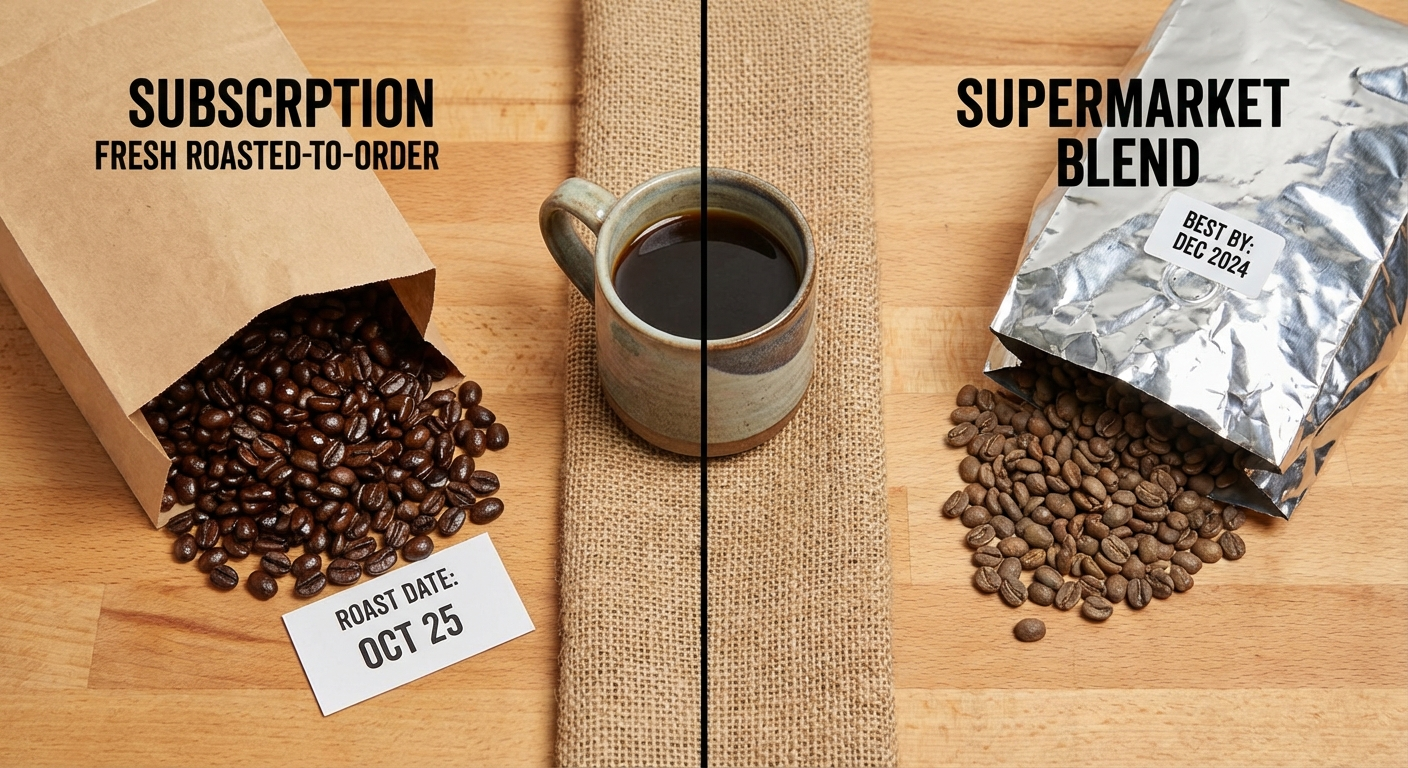
A bag of coffee on a grocery shelf is typically four to eight weeks past its roast date by the time you bring it home. Specialty roasters within subscription networks ship within 24 to 72 hours of roasting. That difference is not subtle — it is the difference between a vibrant, aromatic cup and a flat, papery one.
According to research published by the Specialty Coffee Association, ground coffee loses approximately 60 percent of its aromatic compounds within 15 minutes of grinding, and whole beans begin a noticeable decline in cup quality after three to four weeks post-roast. Subscription timing solves this problem at the source.
Access to Limited and Seasonal Lots
Many of the coffees available through subscription services never reach retail. Micro-lot Gesha varieties from Panama, natural-process lots from small Ethiopian washing stations, and experimental anaerobic fermentations from Colombia — these typically sell out within days of release. Subscriptions give you first access.
The Economics Work
A 12 oz bag from a quality subscription runs $16 to $24. At a standard ratio of 15 grams per cup, that yields roughly 22 cups per bag — between $0.73 and $1.09 per cup. Compare that to $5.50 for a café pour-over or $6.75 for a latte, and the math is straightforward. Investing in a good grinder (see our best burr grinder for home use guide) and a subscription is the most cost-effective path to exceptional daily coffee.
How We Tested and Ranked
I subscribed to 14 services over a six-month period from September 2025 through February 2026. Each subscription was evaluated across five criteria, scored on a ten-point scale.
Our Scoring Criteria
- Freshness (25%): Days between roast date and delivery. Bags arriving more than seven days post-roast were penalized.
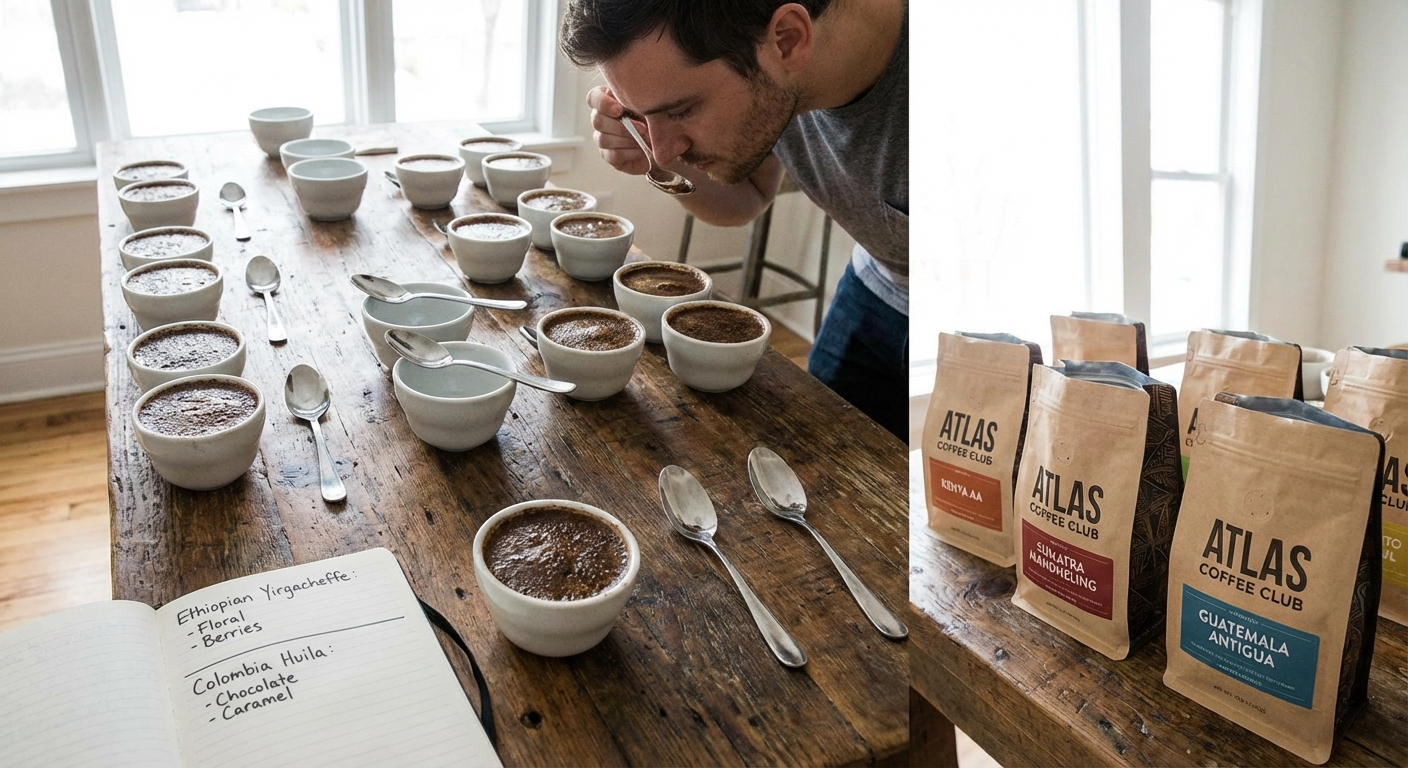
- Coffee quality (25%): Blind cupping scores using SCA protocols. Each coffee was evaluated by two tasters independently.
- Variety and discovery (20%): Range of origins, processing methods, and roast profiles available. Services that exposed subscribers to genuinely new flavors scored higher.
- Flexibility and value (15%): Pricing relative to quality, ease of skipping or canceling, frequency options, and bag size choices.
- User experience (15%): Website and app quality, onboarding quiz accuracy, customer support responsiveness, and packaging sustainability.
Every coffee was ground fresh on a Baratza Encore ESP and brewed using a standardized pour-over method (V60, 1:16 ratio, 205°F water, 3:30 total brew time). Espresso-focused subscriptions were also pulled on a Breville Barista Express — one of our top picks in the best espresso machine for home guide.
Best Coffee Subscriptions Compared
Here is a quick overview before we dive into the detailed reviews.
| Service | Best For | Price (12 oz) | Frequency Options | Roast Range | Overall Score |
|---|---|---|---|---|---|
| Trade Coffee | Best overall | $15.75–$22 | Weekly, biweekly, monthly | Light to dark | 9.4/10 |
| Onyx Coffee Lab | Best for espresso | $18–$26 | Biweekly, monthly | Light to medium | 9.2/10 |
| Atlas Coffee Club | Best for exploration | $14–$20 | Biweekly, monthly | Medium | 9.0/10 |
| Counter Culture | Best for consistency | $16–$19 | Weekly, biweekly | Light to medium | 8.9/10 |
| Blue Bottle | Best for beginners | $18–$23 | Weekly, biweekly, monthly | Light to medium | 8.7/10 |
| Angels' Cup | Best for adventurous drinkers | $11–$23 | Biweekly, monthly | Varies | 8.5/10 |
| Mistobox | Best budget option | $12–$20 | Biweekly, monthly | Light to dark | 8.4/10 |
Detailed Reviews: Top 7 Coffee Subscriptions
1. Trade Coffee — Best Overall
🏆 Editor's Choice — Best Overall Subscription
Matches you with 450+ coffees from 55+ independent roasters, shipped directly from the roaster within 48 hours.
- Price: $15.75–$22/bag
- Frequency: Weekly, biweekly, or monthly
- Bag sizes: 12 oz or 2 lb
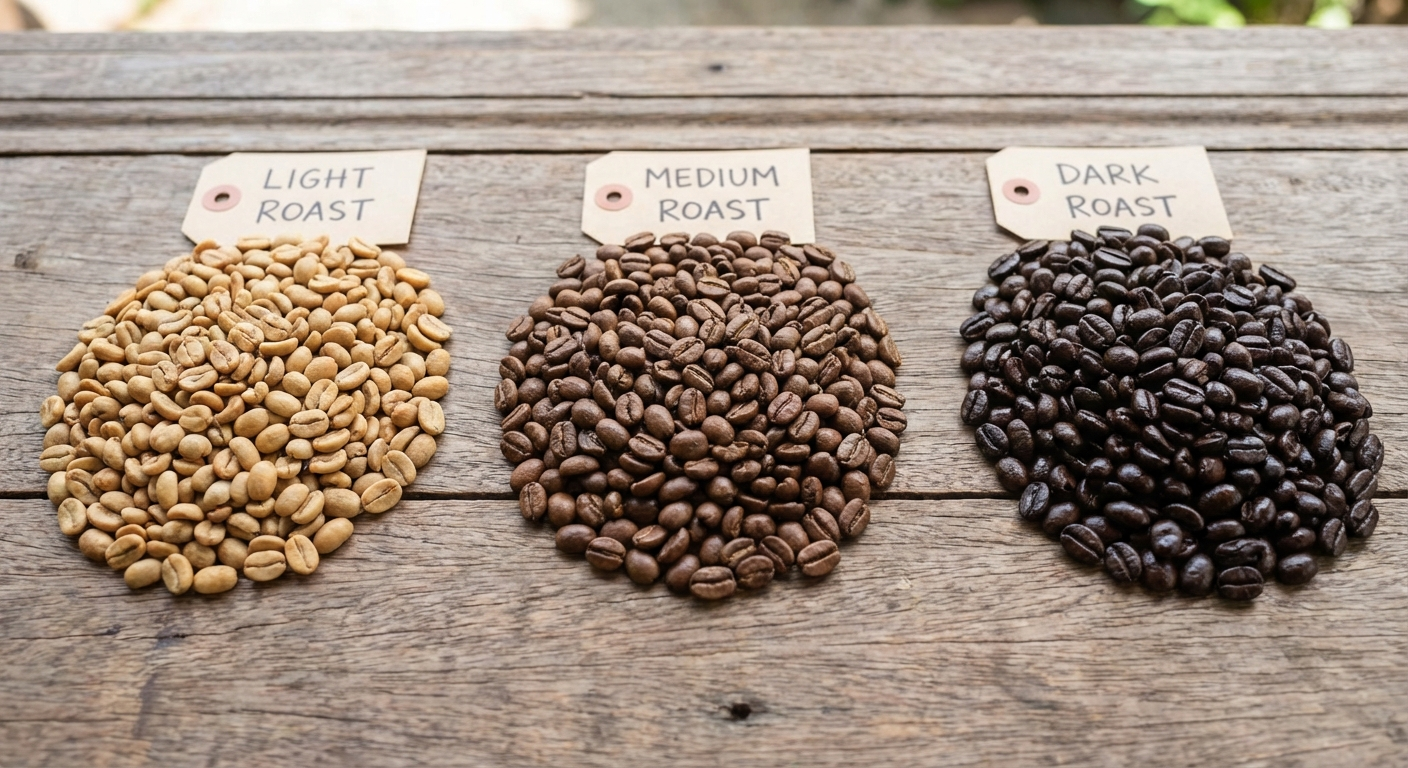
- Roast levels: Light, medium, dark
- Ships from: Individual roasters (US-wide)
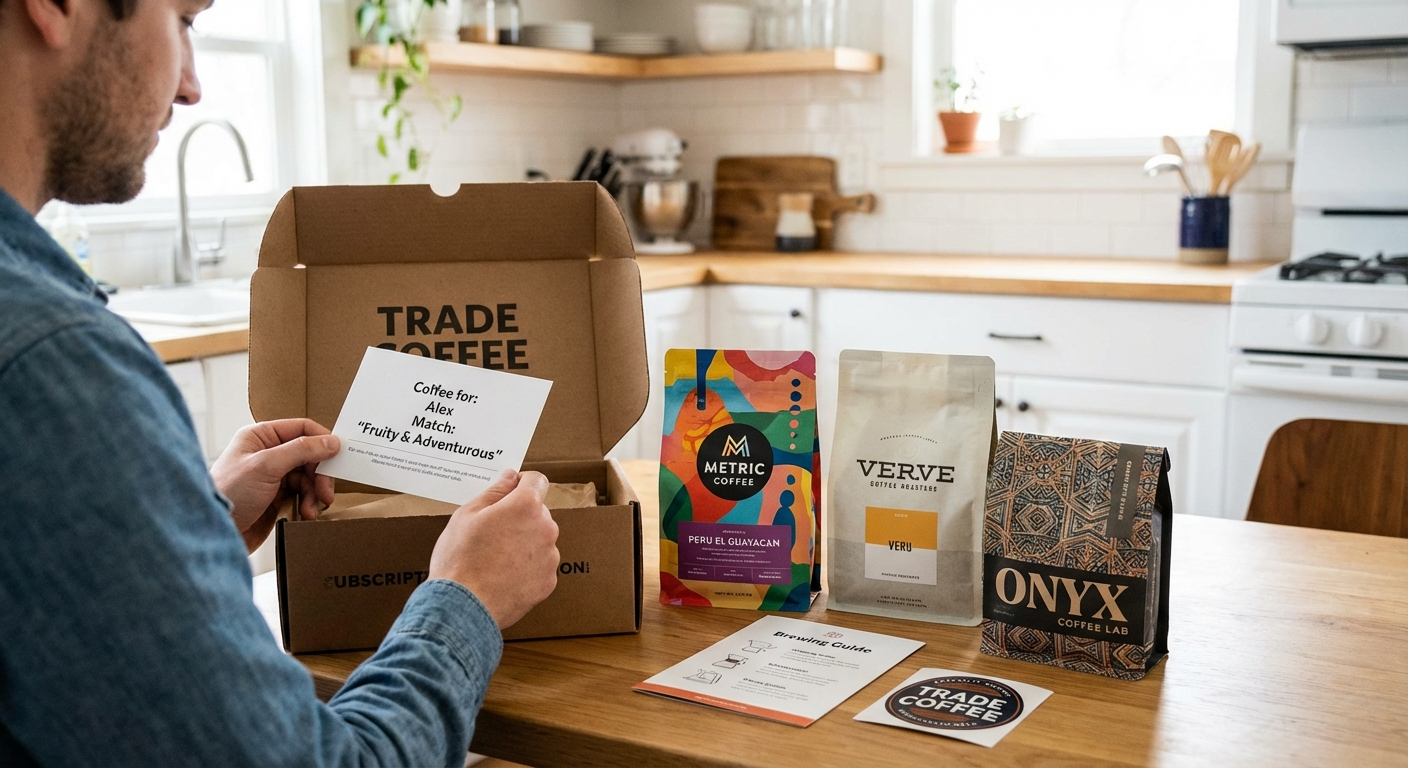
Trade is the subscription I recommend to almost everyone, and it earned that position through sheer breadth and algorithmic precision. The onboarding quiz takes about 90 seconds, asks sensible questions about your brewing method and flavor preferences, and immediately matches you with a specific coffee from a specific roaster.
What separates Trade from competitors is the feedback loop. After each bag, you rate it on a simple thumbs-up or thumbs-down scale with optional notes. The algorithm learns quickly — by my third bag, every recommendation was landing within my preferred flavor profile (bright, fruit-forward, washed East Africans). By the sixth bag, it was introducing me to coffees I would never have picked myself but genuinely loved.
What I liked: Roaster diversity is unmatched. Over six months I received coffees from roasters in Portland, Brooklyn, Nashville, Los Angeles, and Minneapolis — all independent, all excellent. Freshness was consistently outstanding, with most bags arriving two to three days post-roast.
What could improve: The dark roast options are the weakest part of the catalog. If you prefer traditional dark roasts, Counter Culture or Mistobox may serve you better.
Cupping notes from testing: A washed Kenyan from Brandywine Coffee Roasters — blackcurrant, grapefruit, brown sugar — arrived three days post-roast and scored 88 points on our cupping sheet. A natural Ethiopian from Little Wolf was equally impressive with blueberry and dark chocolate notes.
2. Onyx Coffee Lab — Best for Espresso
☕ Best for Espresso
Competition-winning roaster with dedicated espresso offerings and exceptional consistency lot to lot.
- Price: $18–$26/bag
- Frequency: Biweekly or monthly
- Bag sizes: 10 oz or 2 lb
- Roast levels: Light to medium (specialty focus)
- Ships from: Springdale, Arkansas
If you own a semi-automatic espresso machine and a quality burr grinder, Onyx Coffee Lab is the subscription that will push your shots to their ceiling. Onyx has won multiple Good Food Awards and consistently scores above 87 points in SCA cuppings, and that quality translates directly to the subscription experience.
Their Monarch espresso blend — a rotating seasonal combination of washed and natural coffees — is the most forgiving and delicious subscription espresso I have ever dialed in. It pulls a thick, syrupy shot with caramel and stone fruit notes across a wide range of grind settings and doses, which means you spend less time chasing the perfect extraction and more time enjoying the cup.
What I liked: The single-origin espresso offerings are genuinely special. A washed Colombian Gesha I received in November was the best espresso I brewed all year — floral, tea-like, with a sweetness that lingered for minutes. The roast development is impeccable, with none of the roasty bitterness that plagues many "espresso roast" offerings.
What could improve: The 10 oz bag size is smaller than the industry standard 12 oz, which makes the per-ounce price higher. If you are pulling multiple shots per day, you will go through a bag quickly.
3. Atlas Coffee Club — Best for Exploration
🌍 Best for Exploration
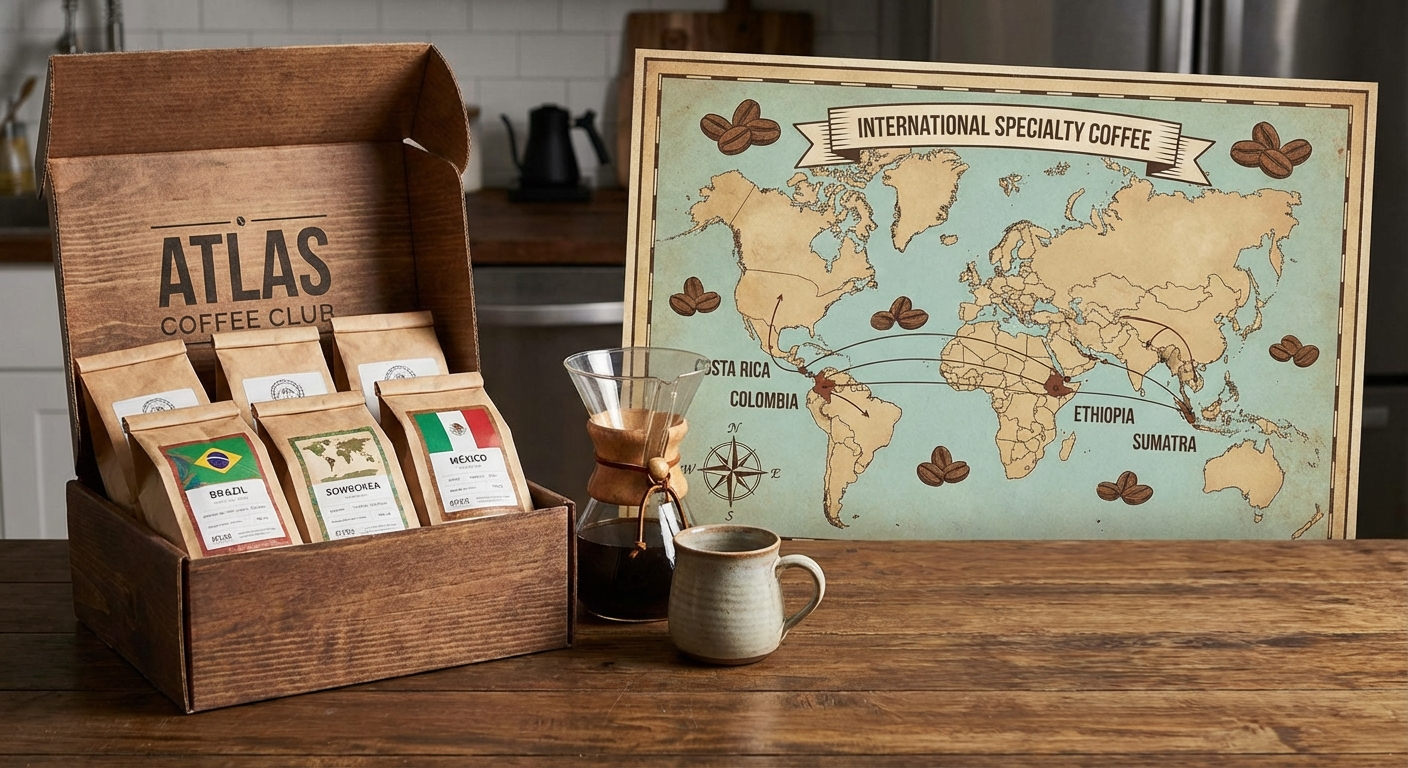
A new country every month — beans from 50+ origins with tasting notes, brewing tips, and a postcard from the source region.
- Price: $14–$20/bag
- Frequency: Biweekly or monthly
- Bag sizes: 12 oz
- Roast levels: Medium (roaster's choice per origin)
- Ships from: Austin, Texas
Atlas takes a different approach than algorithm-driven services. Instead of asking what you like, it sends you somewhere new each month — Rwanda one month, Sumatra the next, then Peru, then Papua New Guinea. Each shipment includes a postcard with background on the growing region, flavor notes, and recommended brewing parameters.
Over six months, I received coffees from the Democratic Republic of Congo, Costa Rica, Myanmar, Uganda, Indonesia, and Colombia. Every bag was a genuine education. The DRC coffee — a washed Bourbon variety from the Kivu region — was a revelation, with jasmine aromatics and a clean citrus acidity I had never experienced from that origin.
What I liked: The gift subscription option is outstanding. It is the single best coffee gift I have come across — visually appealing, educational, and consistently high quality. The pricing is also very competitive, starting at $14 per bag for monthly plans.
What could improve: You cannot choose your roast level. Atlas selects the roast profile they believe best represents each origin, which is usually medium. If you strongly prefer light or dark roasts, this may frustrate you.
4. Counter Culture Coffee — Best for Consistency
🎯 Best for Consistency
Veteran specialty roaster with transparent sourcing, weekly freshness, and blend stability that pour-over purists trust.
- Price: $16–$19/bag
- Frequency: Weekly or biweekly
- Bag sizes: 12 oz or 2 lb
- Roast levels: Light to medium
- Ships from: Durham, North Carolina
Counter Culture has been roasting since 1995 and their subscription reflects three decades of sourcing relationships and quality control. Their annual transparency report — published every year since 2009 — details the exact price paid to each farmer and cooperative, which is rare in this industry.
What makes Counter Culture exceptional for a subscription is consistency. Their Hologram blend, which anchors many subscribers' regular deliveries, tastes reliably excellent month after month despite seasonal component swaps. You dial in your grinder once and barely touch it for weeks. For daily drinkers who want dependability rather than surprises, this is the subscription.
What I liked: Free weekly cuppings at their training centers in Durham, New York, and Los Angeles. If you live near one, the educational value on top of the subscription is extraordinary. Their transparency report is also a model for the industry.
What could improve: The subscription interface is basic compared to Trade or Blue Bottle. No personalization quiz, no feedback algorithm — you choose a coffee and it ships on schedule.
5. Blue Bottle Coffee — Best for Beginners
✨ Best for Beginners
Clean onboarding, approachable roast profiles, and an emphasis on brewing education for new specialty coffee drinkers.
- Price: $18–$23/bag
- Frequency: Weekly, biweekly, or monthly
- Bag sizes: 12 oz
- Roast levels: Light to medium
- Ships from: Oakland, California
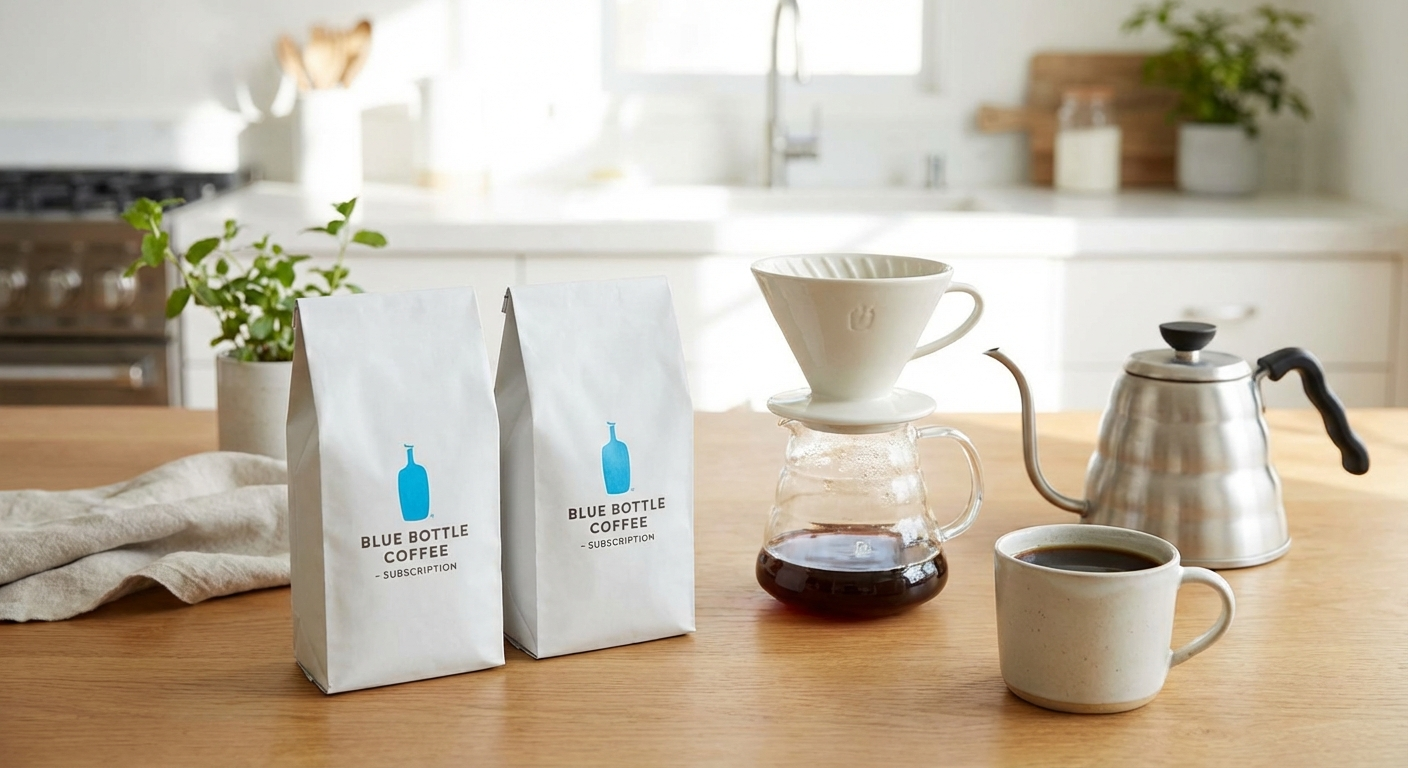
Blue Bottle has become the gateway into specialty coffee for a reason. Their subscription onboarding is the most polished of any service I tested — a clean quiz that uses visual flavor wheels and plain language instead of jargon. If you have never had a light roast or do not know the difference between washed and natural processing, Blue Bottle meets you where you are.
Their blend offerings (Three Africas, Bella Donovan, Giant Steps) are approachable without being boring, with flavor profiles designed to be forgiving across different brewing methods. This is the subscription I recommend to friends who say they "just want good coffee" without wanting to learn cupping terminology.
What I liked: The brewing guides included with each shipment are genuinely helpful. Each card has method-specific instructions for the exact coffee in your bag. The freshness commitment — they ship within 48 hours of roasting and print the roast date prominently — sets clear expectations.
What could improve: Pricing is on the higher end relative to coffee quality. You are partly paying for the brand and the polished experience, which is fine if you value those things but means less pure value per cup than Trade or Counter Culture.
6. Angels' Cup — Best for Adventurous Drinkers
🔮 Best for Adventurous Drinkers
Blind tasting experience with mystery samples from different roasters — the most fun subscription for coffee nerds.
- Price: $11–$23/shipment
- Frequency: Biweekly or monthly
- Bag sizes: 4× sample packs or 12 oz bags
- Roast levels: Varies (blind)
- Ships from: New York, New York
Angels' Cup flips the subscription model on its head. Their signature "Cupping" plan sends four unmarked sample bags with numbered labels. You brew each one blind, record your tasting notes in their app, then reveal the coffee's identity, origin, processing method, and roaster. It gamifies the tasting experience and genuinely trains your palate.
Over six months, this subscription taught me more about identifying flavor notes than any book or course. When you have to write down what you taste before seeing the label, you engage differently with the coffee. I found I could reliably identify washed vs natural process and East African vs Central American origins by the fourth month.
What I liked: The app integration is clever and well-designed. Your tasting history builds a flavor profile over time, and you can reorder full bags of any coffee you loved. The starting price of $11 per shipment for the sample plan makes it the most accessible entry point on this list.
What could improve: Sample packs mean you often get just enough for one or two brews per coffee. If you find something exceptional, you have to wait for a full bag to ship. Freshness also varies since samples come from different roasters on different schedules.
7. Mistobox — Best Budget Option
💰 Best Budget Option
Excellent value with access to 50+ roasters, strong personalization, and plans starting under $13 per bag.
- Price: $12–$20/bag
- Frequency: Biweekly or monthly
- Bag sizes: 12 oz
- Roast levels: Light to dark
- Ships from: Individual roasters (US-wide)
Mistobox operates similarly to Trade — a curated marketplace connecting you with independent roasters — but at a lower price point. Their entry-level plan starts at $12.95 per bag, which is remarkably competitive for specialty-grade coffee shipped directly from the roaster.
The quality is slightly less consistent than Trade. Over six months, I received two bags that were good but not exciting — a Colombian and a Brazilian that felt like safe, middle-of-the-road selections. But I also received a stunning natural-process Sidama from a Portland roaster that would have been a standout in any subscription. At the price point, the hit rate is impressive.
What I liked: The "Coffee Concierge" feature assigns a real person to curate your selections based on your preferences. You can message your concierge directly through the app with feedback or requests. This human touch fills the gap where Trade uses algorithms.
What could improve: The website feels dated compared to competitors, and the onboarding quiz is less refined than Trade or Blue Bottle. These are cosmetic issues that do not affect the coffee, but the experience matters when you are choosing a recurring service.
How to Choose the Right Subscription
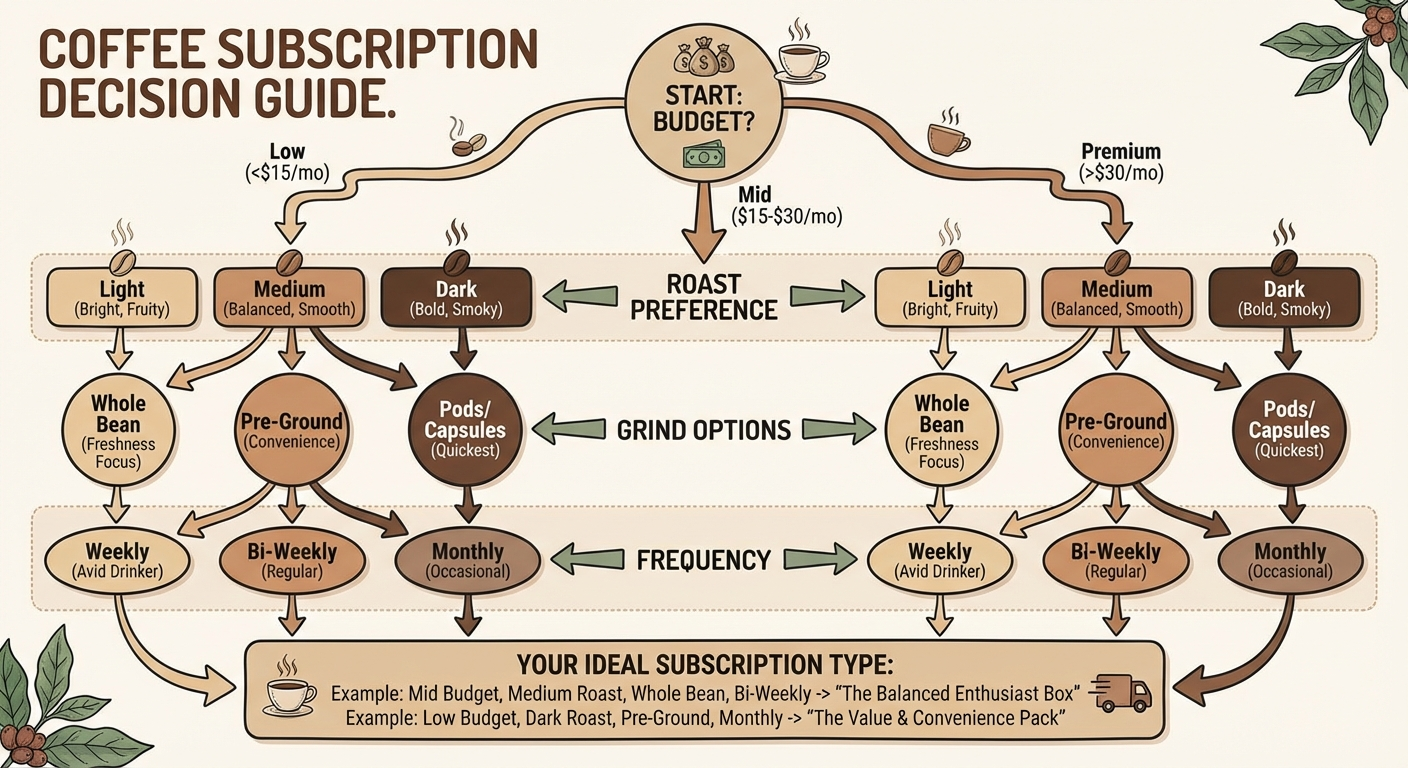
With so many quality options, choosing comes down to understanding your own coffee habits and what you actually want from a subscription.
Match Your Brewing Method
Your brewer dictates which subscriptions will serve you best. If you are primarily a pour-over or drip brewer, any subscription on this list works well. If you are focused on espresso, Onyx Coffee Lab and Trade (with the espresso preference enabled) are the strongest choices because their roast profiles and bean selections are developed with espresso extraction in mind.
For a deep dive into how your grinder affects extraction across brewing methods, check our guide on the best coffee grinder for home.
Consider Your Consumption Rate
This is the most practical factor people overlook. A single 12 oz bag lasts roughly two weeks for a one-to-two-cup-per-day drinker. If your household has multiple coffee drinkers, look for services that offer 2 lb bags or weekly delivery — Trade and Counter Culture both handle this well.
Decide Between Discovery and Consistency
Some people want the same reliable coffee every morning. Others want to travel the world through their cup. Neither is wrong, but the best subscription for each approach is very different.
- I want consistency: Counter Culture (Hologram blend on repeat) or Blue Bottle (set a favorite and stick with it)
- I want discovery: Atlas Coffee Club (new country monthly) or Angels' Cup (blind tasting)
- I want both: Trade (the algorithm learns your core preferences while occasionally introducing wildcards)
Factor in Sustainability
The environmental cost of shipping individual bags of coffee across the country is real. Several services are addressing this: Counter Culture uses 100 percent compostable packaging, Trade offsets shipping emissions, and Blue Bottle has transitioned to plant-based bags. If sustainability is a priority, these details matter.
Making coffee part of a consistent daily practice — like building a morning coffee ritual habit — can also help you dial in your subscription frequency so you waste fewer beans and cancel fewer shipments.
Coffee Subscription vs Buying Local: The Freshness Math
One question I get constantly: "Why not just buy from my local roaster?" It is a fair question, and the honest answer is that a great local roaster can absolutely match or beat a subscription — if the conditions are right.
When Local Wins
- You live near a specialty roaster that roasts multiple times per week
- You can visit within a day or two of their roast schedule
- You enjoy the variety they offer and do not need broader exploration
- You value zero shipping emissions
When a Subscription Wins
- Your nearest quality roaster is a significant drive away
- You want access to roasters and origins beyond your local market
- Freshness from your local shop is inconsistent (bags sitting on shelves for weeks)
- You want algorithmic or curated personalization
- You value convenience and predictability
The Hybrid Approach
Many serious coffee drinkers — myself included — use both. I maintain a Trade subscription for discovery and exploration (biweekly, 12 oz) and buy a regular bag from my local roaster for my daily driver espresso. The subscription keeps my palate expanding while the local purchase supports my neighborhood economy.
Getting the Most From Your Subscription
A subscription is only as good as what you do with the beans after they arrive. Here are the practices that will maximize the quality of every bag.
Store Beans Properly
Coffee's enemies are oxygen, light, moisture, and heat. When your subscription bag arrives:
- Keep beans in the original bag if it has a one-way degassing valve and a resealable zipper (most specialty bags do).
- Push out excess air before resealing after each use.
- Store at room temperature in a dark cabinet — never the refrigerator, which introduces moisture.
- Use within three weeks of the roast date for optimal flavor, though beans remain drinkable for up to six weeks.
If you want to stockpile, freezing in an airtight container works well for long-term storage. Portion into single-use amounts before freezing to avoid repeated freeze-thaw cycles.
Grind Fresh, Every Time
Pre-ground coffee from a subscription defeats the purpose of freshness. If you do not yet own a burr grinder, our best burr grinder for home use guide covers options starting at $50 that will transform your cup quality. The difference between grinding fresh and using pre-ground is more significant than the difference between any two subscriptions on this list.
Use Your Feedback Tools
Every service on this list offers some form of feedback mechanism — ratings, tasting notes, preference adjustments. Use them. The algorithms and curators behind these services improve dramatically when they have data about your preferences. A consistent rating habit over three to four bags will noticeably improve your match quality.
Adjust Frequency Based on Reality
If you are consistently finishing bags with days to spare before the next one arrives, increase your frequency. If bags are piling up, slow down. Stale stockpiles are the biggest waste in the subscription model. Most services let you adjust frequency, skip shipments, or pause with a single click.
Frequently Asked Questions
How much does a coffee subscription cost per month?
Most coffee subscriptions cost between $14 and $28 per bag (12 oz), depending on origin, roast quality, and frequency. Single-origin specialty subscriptions tend to sit at $18 to $24 per bag, while curated multi-roaster boxes range from $22 to $45 per shipment. Many services offer discounts for prepaid quarterly or annual plans. For a household drinking one bag biweekly, expect to budget $28 to $48 per month.
Is a coffee subscription worth it compared to buying at the store?
Yes, for most specialty coffee drinkers. Subscriptions ship within days of roasting, so beans arrive at peak freshness — something grocery store bags cannot match. You also get access to limited-lot coffees that never reach retail shelves. The per-cup cost of a $20 subscription bag works out to roughly $0.50 to $0.75, far less than a single café drink. The one exception: if you live next to an excellent local roaster and visit frequently, you may already be getting comparable freshness and variety.
How often should I receive coffee deliveries?
That depends on your consumption. A single 12 oz bag lasts most solo drinkers about two weeks brewing one to two cups per day. Households with multiple coffee drinkers should consider weekly or biweekly deliveries of larger bags (16 oz to 2 lb). Most services let you adjust frequency at any time, so start biweekly and adjust based on how quickly you go through each bag.
Can I choose my roast level or do I get whatever the roaster picks?
It varies by service. Roaster-direct subscriptions like Trade and Mistobox let you set roast preferences (light, medium, dark) and flavor profiles. Curated discovery boxes like Angels' Cup intentionally surprise you with varied selections. Most services allow you to update preferences or skip shipments if a selection does not appeal to you. Atlas Coffee Club selects the roast level they believe best represents each origin, which limits your control but often produces excellent results.
What grind size should I choose for my subscription?
Always choose whole bean if you own a burr grinder — pre-ground coffee loses freshness within minutes of grinding. If you do not have a grinder yet, select the grind size that matches your brewer: coarse for French press, medium for drip, medium-fine for pour-over, and fine for espresso. But seriously, invest in a grinder first. Even a $50 entry-level burr grinder will make a bigger difference than upgrading your subscription tier.
Can I gift a coffee subscription?
Most major services offer gift subscriptions ranging from one to twelve months. Trade, Atlas Coffee Club, and Blue Bottle all have dedicated gift options with custom messaging. Prepaid gift plans are the safest choice since the recipient is not charged when the gift period ends. Atlas Coffee Club's gift presentation — with postcards and origin stories — makes it the most visually impressive gift option on this list.
Sources and Methodology
- Specialty Coffee Association — "Coffee Freshness Handbook," 2024 edition. Research on post-roast flavor degradation and optimal consumption windows. sca.coffee
- National Coffee Association USA — "2025 National Coffee Data Trends Report." Market data on subscription adoption rates, consumer preferences, and per-capita consumption. ncausa.org
- Counter Culture Coffee — "2025 Transparency Report." Detailed sourcing data including prices paid to producers across all origins. counterculturecoffee.com
- Perfect Daily Grind — "The Science of Coffee Freshness," September 2024. Analysis of aromatic compound degradation in roasted coffee over time. perfectdailygrind.com
- Barista Hustle — "Grind Quality and Extraction," 2025 online course materials. Particle size distribution data comparing grinder types and their impact on cup quality. baristahustle.com
All subscriptions were independently purchased and tested. No service on this list provided free products or compensation in exchange for coverage. Prices reflect publicly available rates as of March 2026 and may vary.
About the Author
Maya Rodriguez is a coffee industry specialist and Q-grader with over eight years of experience in specialty coffee sourcing, roasting, and education. She has evaluated coffee programs for cafés and roasters across the United States and Central America, holds certifications from the Specialty Coffee Association and the Coffee Quality Institute, and contributes to Home Coffee Spot's equipment and subscription coverage. When she is not cupping, she is experimenting with fermentation-forward processing methods at origin.
Last updated: March 23, 2026. Prices and availability are subject to change. We update this guide quarterly to reflect new subscription offerings, price changes, and updated testing results.